One of the things that I find particularly annoying is the need to carry great bunches of keys. In my house at Sydney I had all the locks, front, back and garage, keyed alike. One key for everything.
For years now Moto Guzzi has had a single key system; one key for ignition, fuel cap, bags and topcase. For bikes supplied without the bags and topcase 3 spare cylinders where put in the toolkit. In the situation that the correct cylinders where not available I used to open spare replacement cylinders and key them to match the bike key.
It astonishes me that Morgan supply 3 different keys with the classic cars; one for the ignition, one for the fuelcap and one for the doors. With the volume of cars that they produce they could easily have matched locks and keys. In fact I have modified a fuel cap so that I can now open it with the ignition key. The keyway is very similar and I had to open it a little for the ignition key to enter but the rest was easy. Unfortunately the door locks are completely different and can not be modified to match the ignition key.
When I had my new dashboard fitted it was supplied with a lock that uses the same type of key as the door key. Naturally I set about matching the lock to the door key.
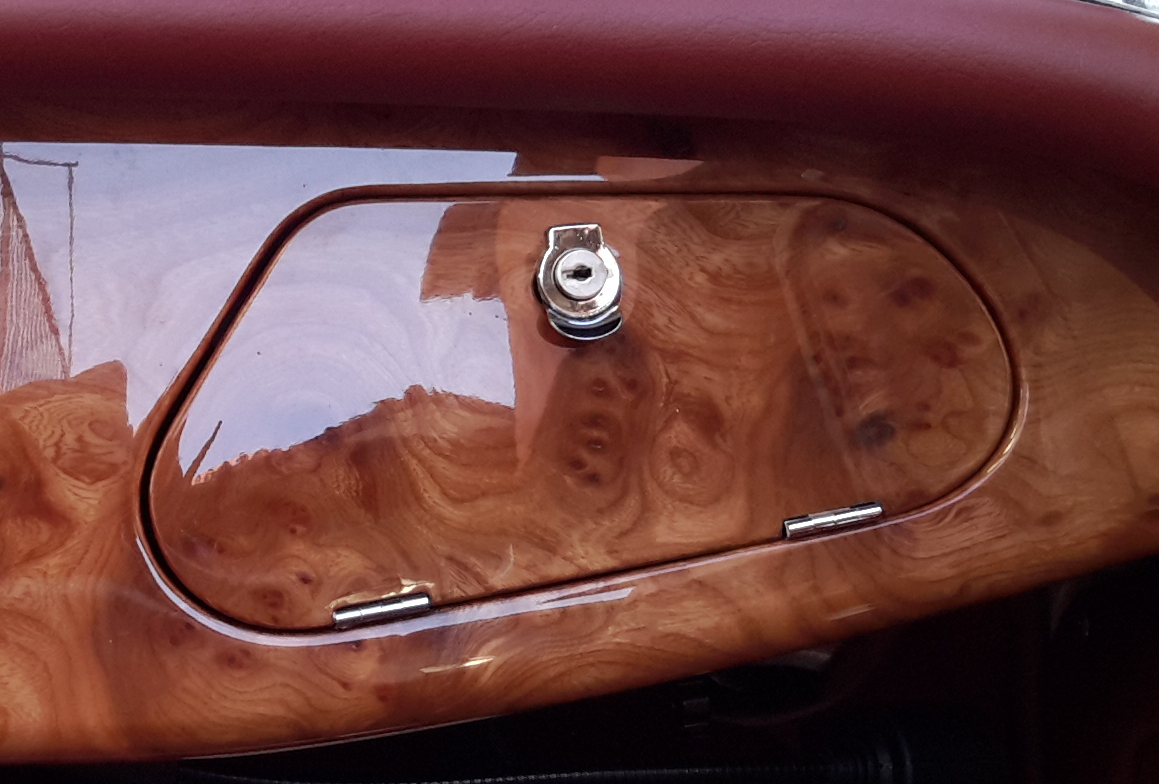
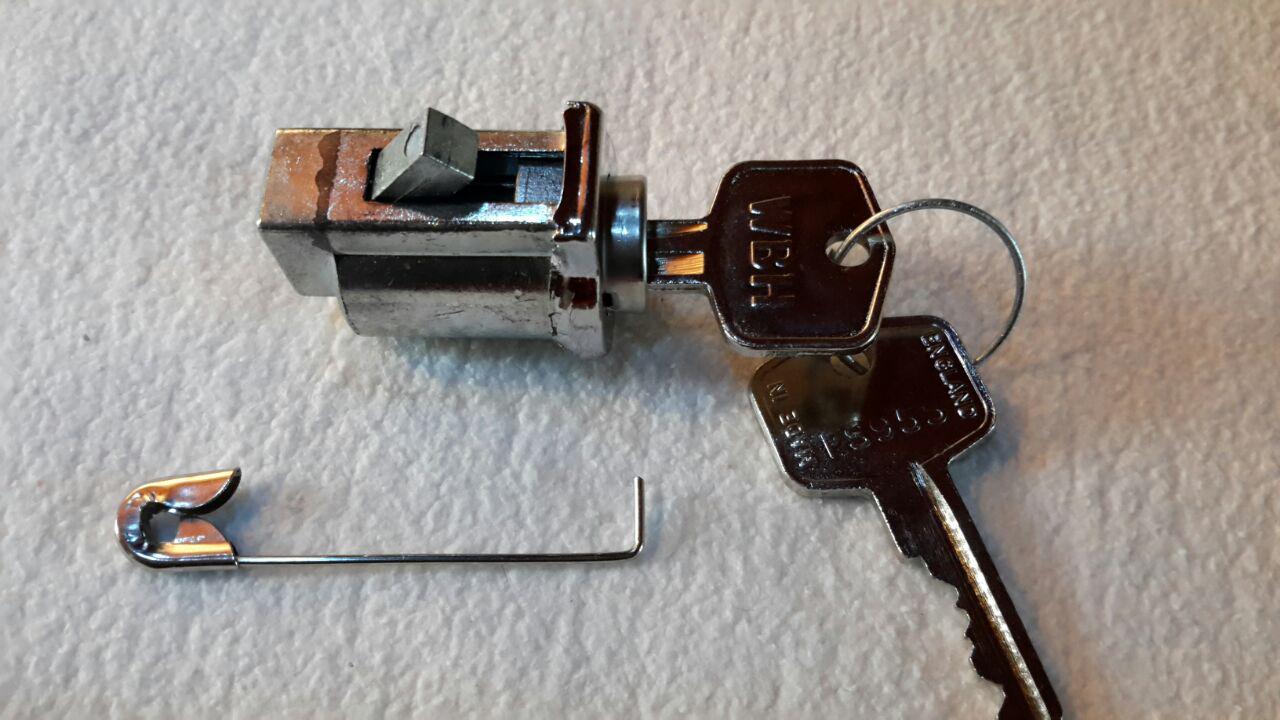 Match the glove box lock to the door lock key.
The lock cylinder uses a single sided key that operates a simple wafer lock.
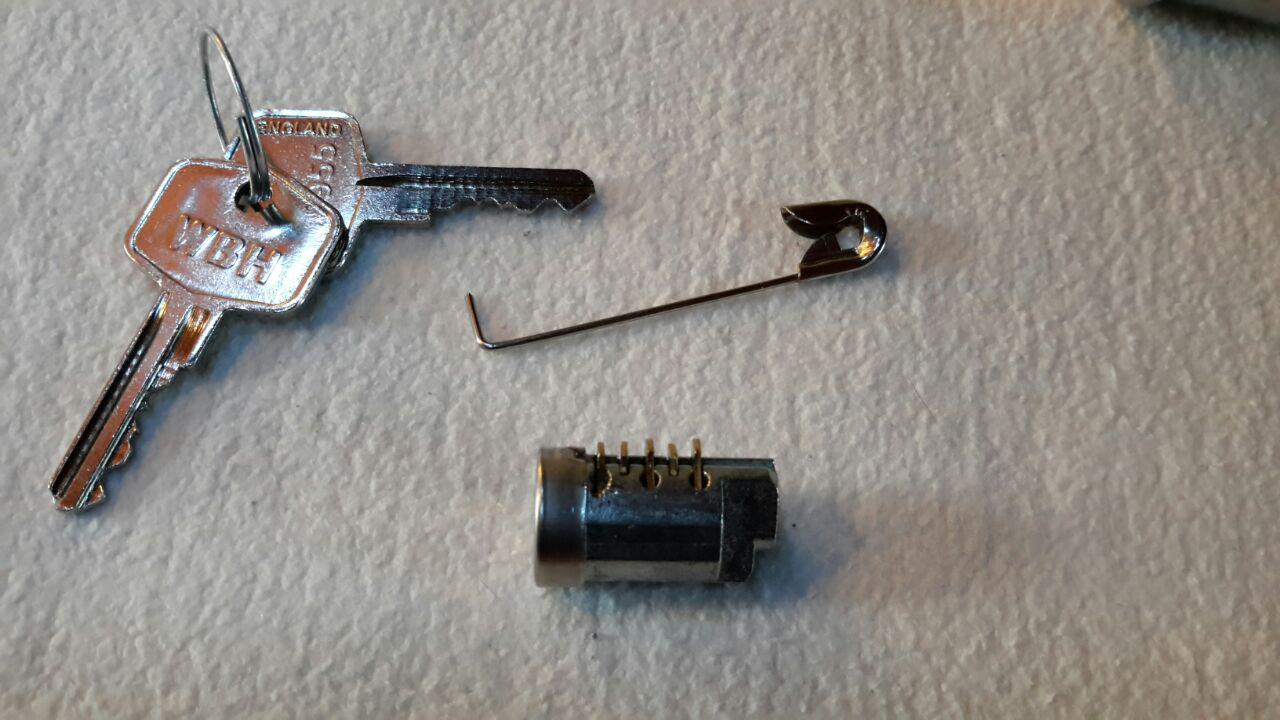
Without the inserted key wafers protrude from the inner cylinder. The lock body contains a groove inside which the wafers will engage.
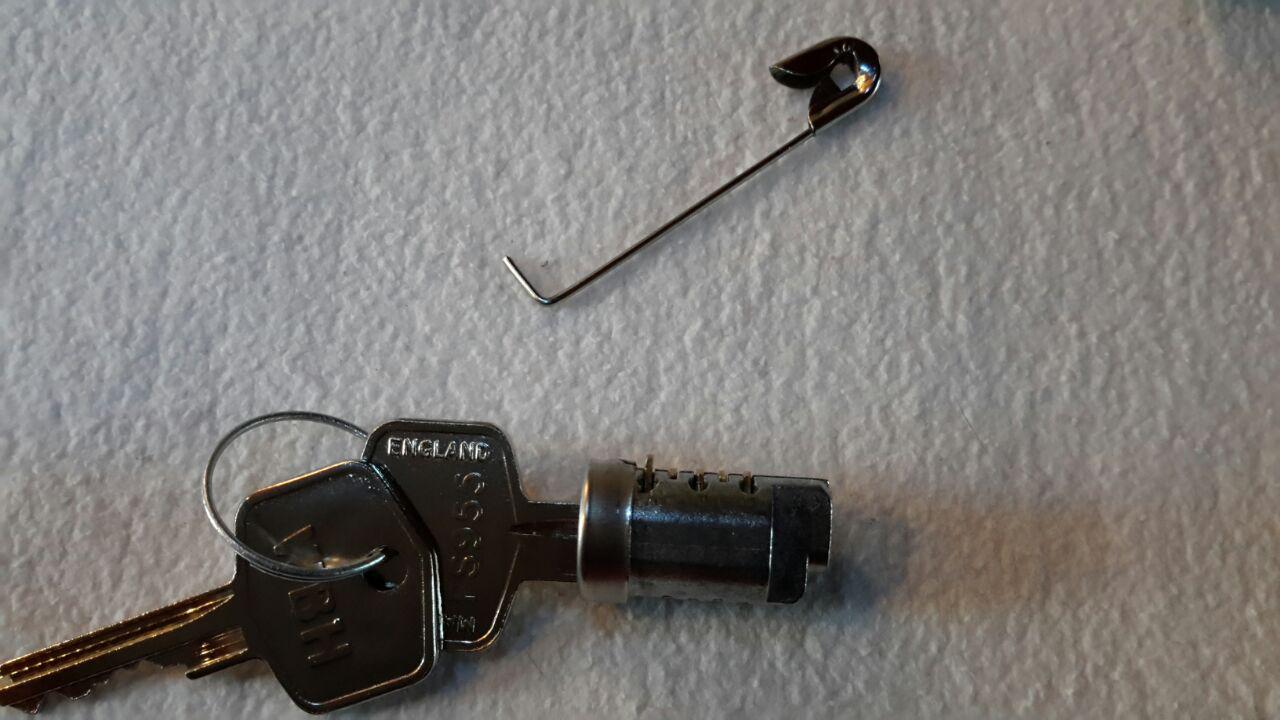
When the key is inserted, the wafers align with the internal cylinder, making it possible to rotate.
NB. The first wafer is used to retain the cylinder in the lock body. The tool I used is a safety pin cut and bent to suit, but you can use any thin, stiff wire.
The lock cylinder must first be rotated vertically. If it is in the unlocked position and the key is not available, you would need to use locksmith's tools to rotate the cylinder.
Once in place, remove the key. The tool is used through the slot under the spring catch. The point of the instrument should be positioned at the top and the used to depress the first wafer. The force of the spring behind the inner cylinder then pushes the cylinder out: see picture below.
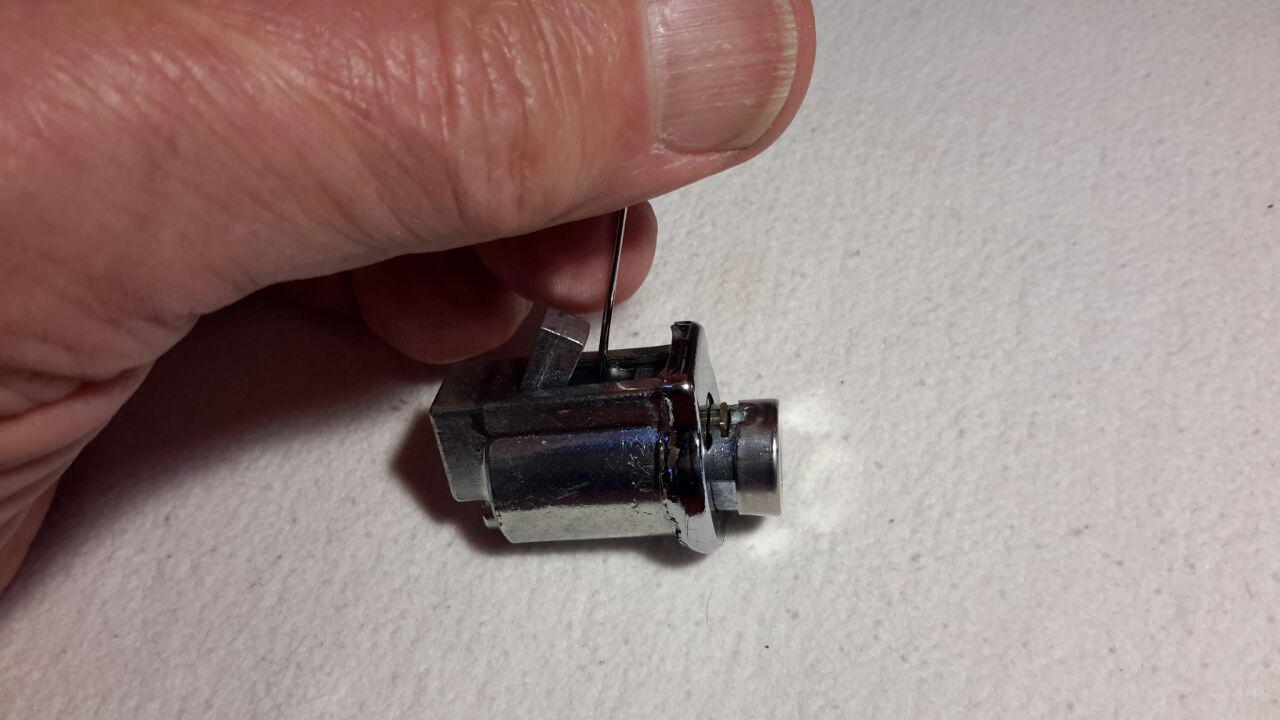
Normally all 5 wafers are operated by the key, but in the case of this lock the first wafer is open at the bottom and is used exclusively to hold the cylinder in the body. It should not be removed from the cylinder. The key, if available, can then be reinserted to remove the cylinder from the body. If the key is not available, each wafer should be pressed down with the tool to remove the cylinder.
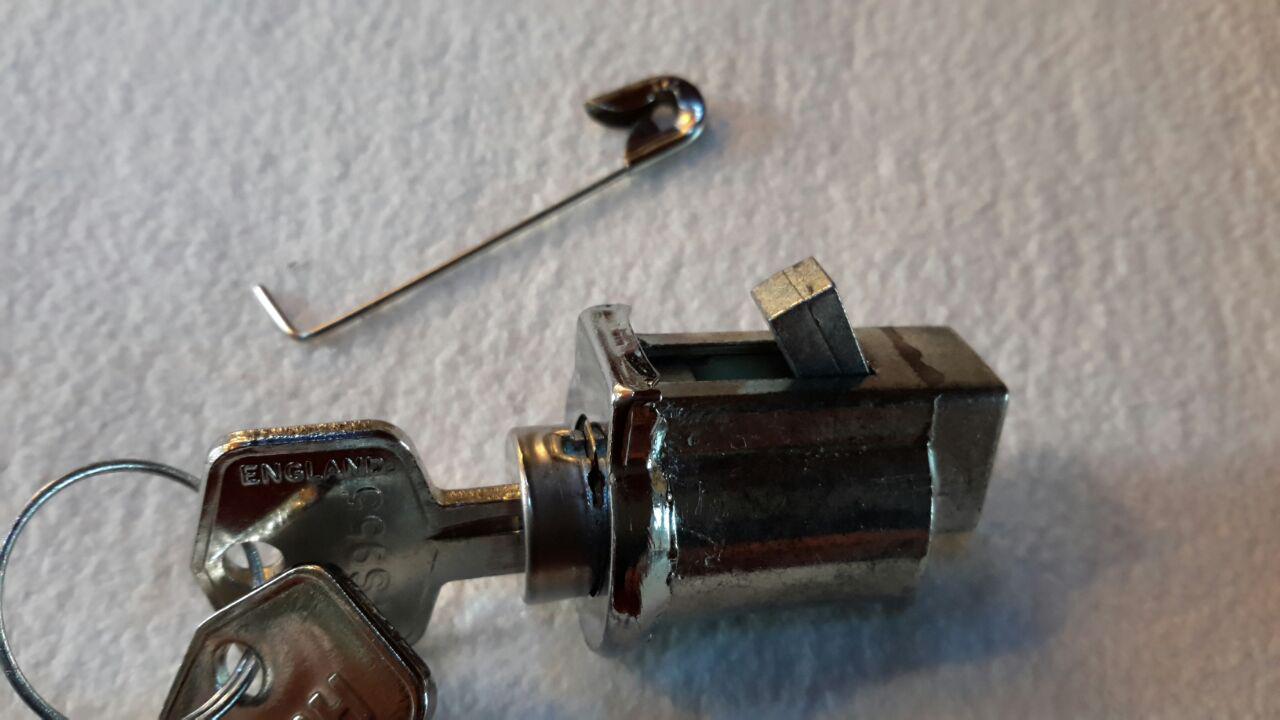
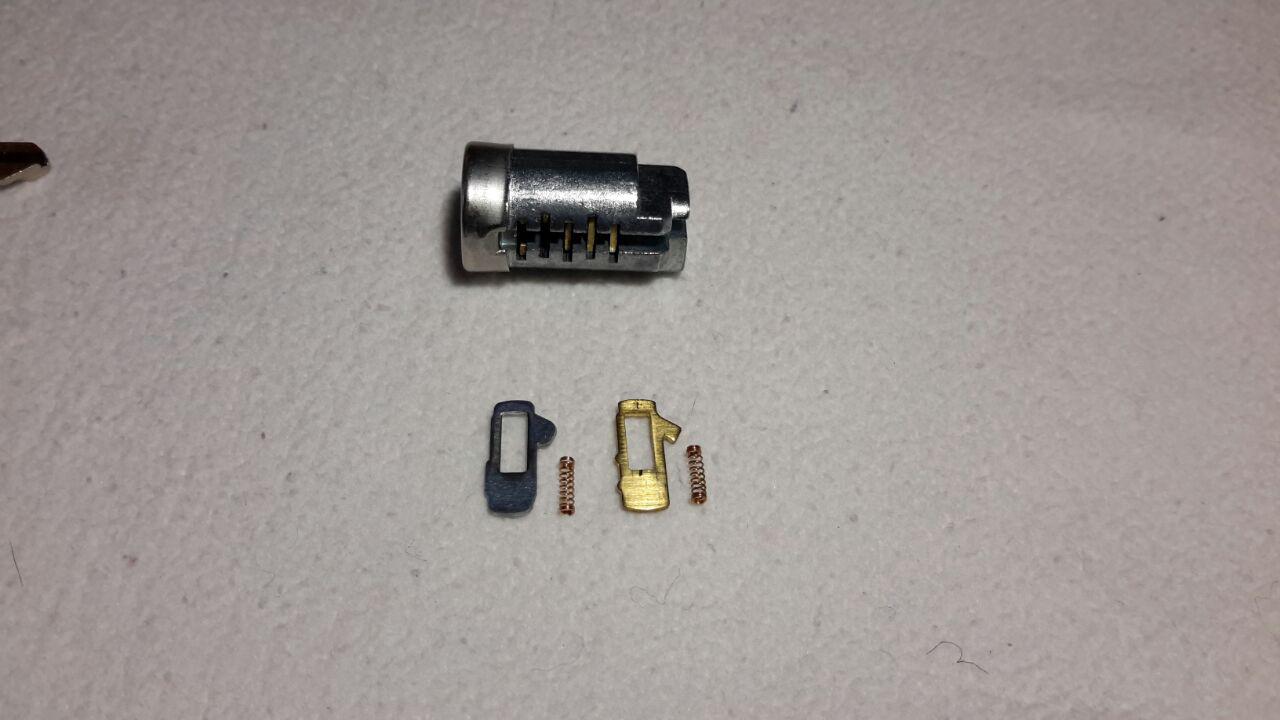
The picture above shows the cylinder and two different types of wafers. The protrusion on the right is for the spring and the protrusion on the left helps to hold the wafer in the cylinder.
Once you have removed the cylinder from the body, you can insert the key you want to use. Note which of the 4 wafers should be changed. When the key is inserted the wafers (other than the first, retainer wafer) should be flush with the surface of the cylinder. The wafer can be removed using a small tool pressed in from the side where the groove is visible (as in the above photo).
Do not remove the wafers that do not need to be changed. Care must be taken not to lose the small springs.
Do not remove the first wafer which is open at the bottom and is used exclusively to hold the cylinder in the body.It may be necessary to perform several tests with the available wafers to find the correct wafer for each position. If you are lucky swapping the wafers around will suffice but, if an exact match is not available, a small amount of the protruding wafer can be filed or ground away with a Dremel multitool.
When all wafers are correct, it can help to keep them in place by slightly closing the slit on the side opposite the spring using a hard tool.
With the key in place, the cylinder is then inserted into the lock body. When the retention wafer reaches the lock cover, remove the key and then depress the wafer and slide the cylinder all the way into the body. Once in place, insert the key and check the action of the lock.
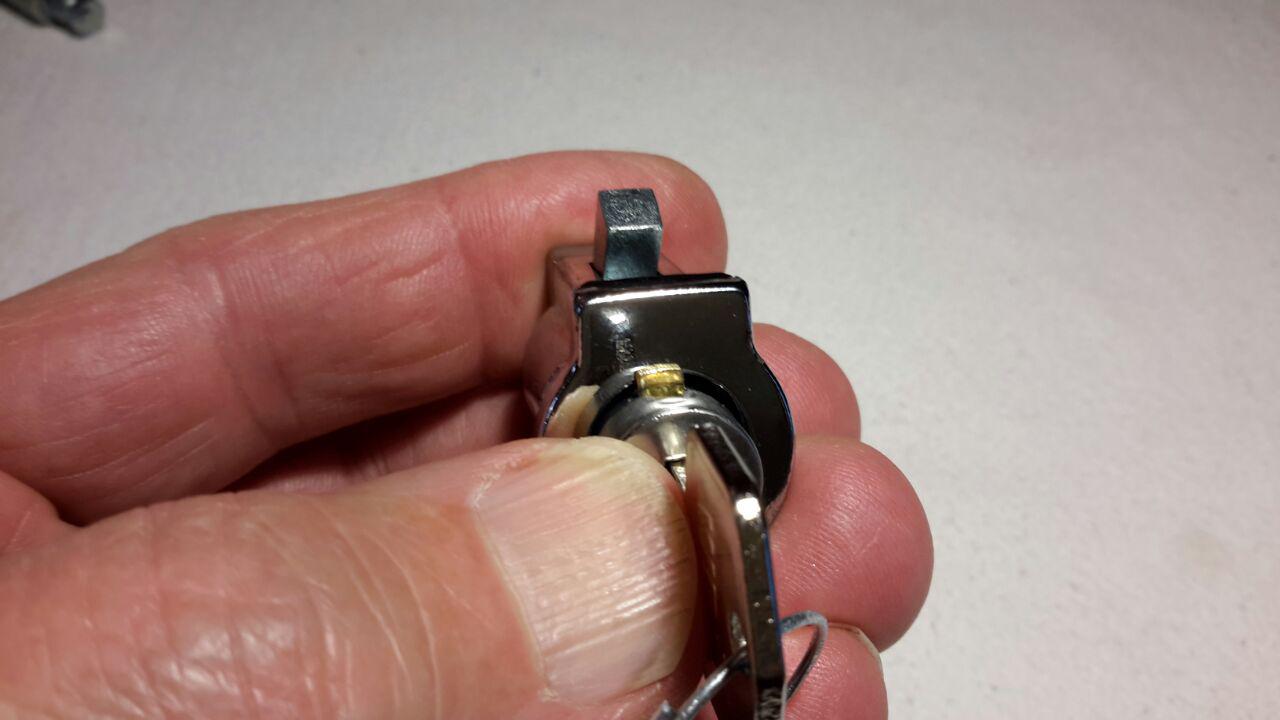
The retaining wafer is against the lock cover. Remove the key and then depress the wafer to slide the cylinder completely into the body.
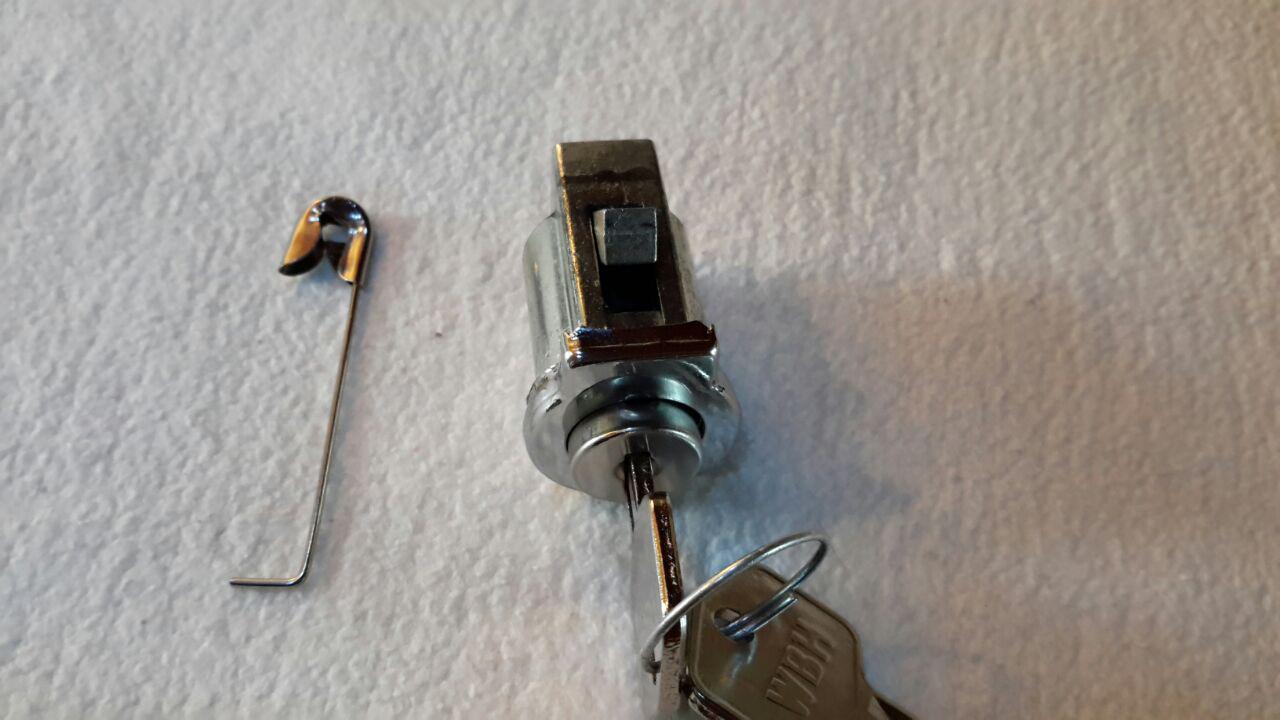
The complete lock is ready for installation.
By the way these locks are very easy to pick, with a bit of practice I could probably do it in a few seconds. They can also be forced fairly easily so never leave valuables in the car even if they are in a locked glovebox.







![[Linked Image]](http://bradley.it/public_images/drive.jpg)
