I'm perfectly fine with you bringing that up, George. Besides, the world is good enough that procurement can also go in the direction of better parts.
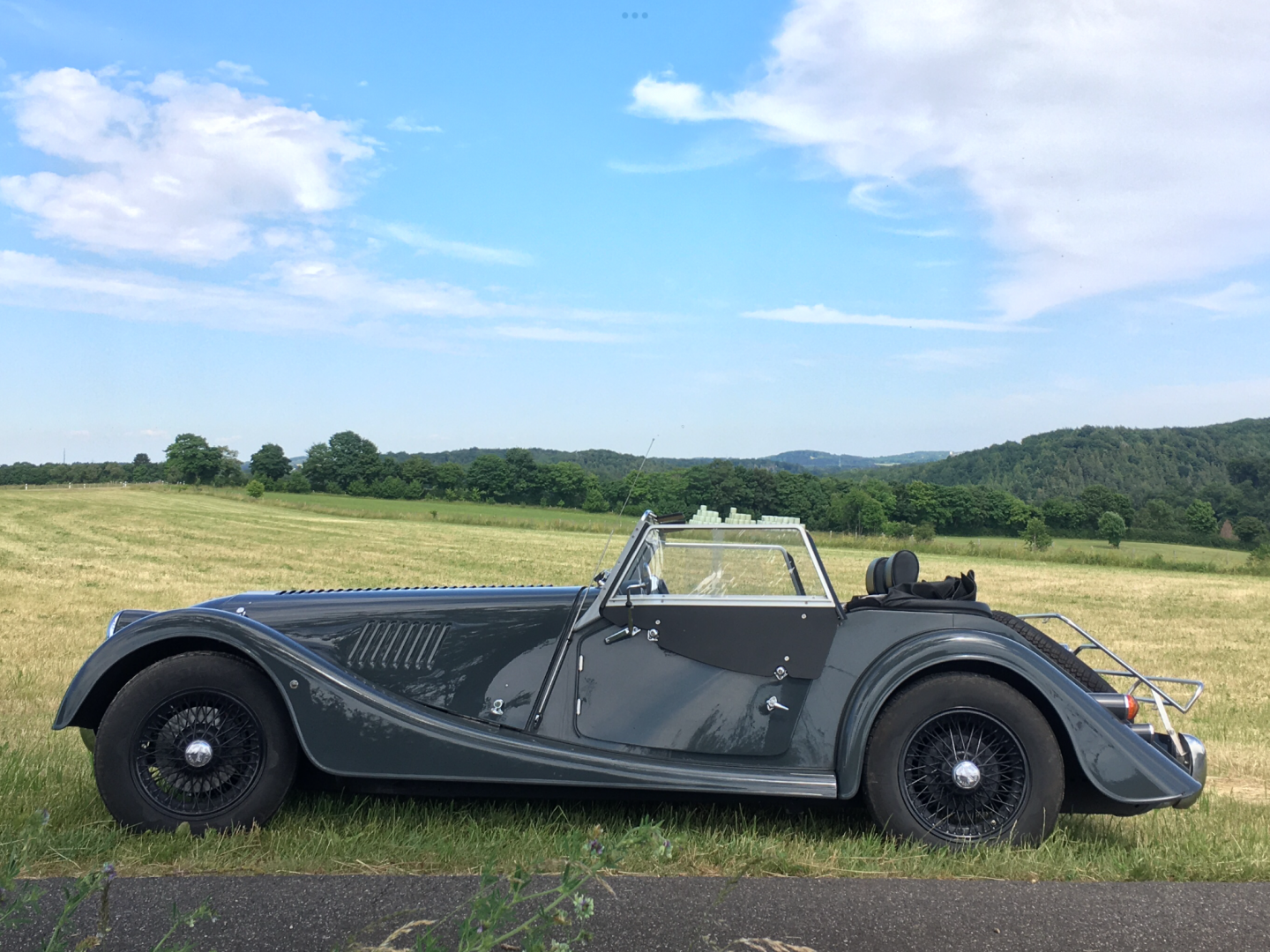
Others will be able to name the time period better than I, but my 2011 Plus4SS was affected by extremely bad springs. They were fortunately that bad and sagged visibly before the warranty expired.
My 2014 4/4 had very good springs from the factory that did not sag, even after three years. But they were far too soft for my taste. This is not the fault of the spring itself.
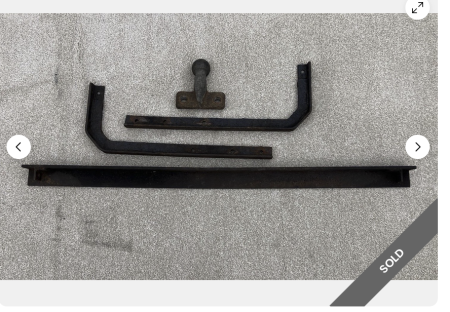
So I bought Mulfab leaf springs for 4 seaters. They are very good in strength but after only one year they started to sag if not too extremely. That was the starting point to remove the lowering blocks to get better control and more fun. To this day, this works wonderfully. It is also my guess that the sagging will stop or reduce at a certain point? The future will tell. I am even happy when I can go back to the roots and achieve a positive effect. Removing the lowering blocks is more elegant than keeping them and adding a panhard bar. (Nothing against the panhard staff...but why make it worse first and then better in the second step? According to Lorne Goldman, MMC wanted to use the lowering blocks to avoid having to change the spring geometry of the 4/4 Sport, which is much lighter without a spare wheel etc. than normal Morgan's ever were. Then came the bespoked model 4/4 with spare wheel, but Morgan kept the lowering blocks.
George, I totally agree with you on your attitude. We look at form follows function. That's how the appearance of a Morgan, for example, is created. If 80 years later (now) you want to fundamentally change the function, e.g. the leaf springs as a topic against coils or whatsoever then that's possible to a certain extent. But to be honest, I personally buy a Morgan to take it as it was intended. I don't want the comfort of a Bentley or the sporty control of a Lotus, as long as I'm looking at the traditional Morgan.
It's a similar issue on the Klipsch forum, where I've been active intermittently since 2006. (Speakers). About a perceived three million people want to change the tweeter on their Klipsch Horn or Lascala. The original K77, a T35 from EV is a love-hate relationship. But...every "modern" Klipsch speaker is, on the whole, evolutionarily built a little differently.
If I put a different tweeter in my 1977 Lascala than the original K77 Alnico, I destroy the overall character of the soundstage that makes the speaker. I have tried it several times and I have come back remorseful. Because besides the frequency response, which is very special, there are other parameters that are very determining but not directly obvious. Just one example is the crossover, which is not steep, but harmonises perfectly with the abrupt entry at the lower end of the frequency range of the tweeter. This avoids overlapping with the midrange horn despite the flat xover (which has other advantages compared to the steep xovers of the Lascala type).
If I install isolated "better" tweeters today, I may destroy the old goal and the personality character of the loudspeaker.
I find the example very comparable to Trad Morgan's. . Of course and fortunately, we don't live in the Morgan or Klipsch dictatorship and everyone can do it as they enjoy it. It's just my view of things.