Thanks for the info, everyone – now I've had a good look under the car with it up on axle stands, it's fairly obvious how the rad comes out.
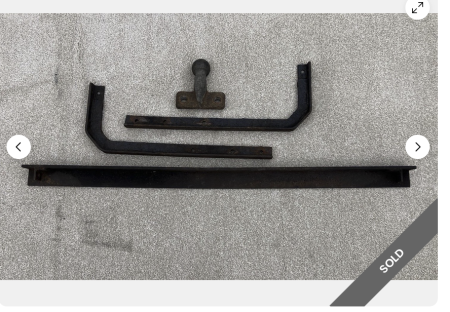
It's supported on two brackets that are bolted to the chassis, just behind the crosshead, but as my car has a good covering of underseal, these seperate brackets, and their bolts, weren't immediately apparent.
Like Rubymorgan says, by just removing one of the brackets it's possible to slide the rad out – once the upper rod and Kenlowe fan have been removed. Thankfully, the rack doesn't need touching at all. And yes, there is a fair bit of jiggering about to be done!
I've now had the radiator repaired (a new core and the bottom neck re-affixed) at a cost of £156.00(!). But I suppose it is half the price of a new one.
I think a lot of radiator problems could be the result of a combination of the chassis flexing and the rigidity of the radiator mountings, making the poor old rad almost a 'stressed member' of the chassis.
So, having contacted a chap called Peter Goodman of Vibration Improvement Products here in Leicester, he's supplied me with some softer mounting bobbins that I'm going to try. These have male/female connectors, unlike the male/male on the originals, so a bolt needs to be screwed in from below through the bracket and into the bobbin, but that's not really a problem, though.
An alternative suggestion for a more flexible mounting is drilling a couple of 6mm holes (at right-angles to each other) through the rubber of the original bobbins, to make them far less rigid.
I did try this, and it does make the bobbin a lot more flexible, so I'm going to use this modified bobbin on the upper mounting, and the two new, softer bobbins on the lower mountings – and hope that the radiator is no longer affected by the chassis flexing. Time will tell...