Forgive me if this is egg sucking but the question suggests that maybe your not 100% on the reasons for a relay, understanding that helps understanding how to wire one in. A relay is best thought of as a high current (amperage) internal switch operated by a low current external switch. Its there to protect delicate switchgear or switching devices (like ECU's) from arcing and burning out.
OK, so what we need is a high amperage feed to make your horn operate (Oooh Err Missus)… if we just poped a small switch in line it would work but after a while the switch contacts would fail due to the high amperage these cheap horns consume, seen a couple burn out switches, to prevent this we fit a relay.
So to yours, really old stock relays were marked up W1, W2, C1, C2 for 'Wiring' and 'Contacts', many yeyars ago when wiring went to more modern standards markings were changed to a numerical system and your relay should be typically marked 30, 85, 86, 87.
First the high current wire (thick gauge wire) for the horn, that should run from the relay 87 terminal to the horn + terminal. The horn - terminal should go to earth. Next the relay 85 terminal should go to earth also. The relay 86 terminal is switched feed so run a standard gauge wire from a fused feed (or put in a line fuse) to your switch, and then from the other side of your switch to the 86 terminal . Finally take another high current (thick) wire from a permanent feed (battery is good) put a line fuse in its length shortly after the point you connect it and run this wire and connect to the relay 30 terminal.
BUT, do none of the above without first disconnecting the battery and make sure all fuses are in place before you start and the connection to the battery should ALWAYS be the last to make.
If your numbering is different from the above you have a strange relay? However all is not lost, you wont hurt the relay by testing it, when you find the wiring terminals (old school W1 and W2 last 30 years 85 and 86) you can connect one side to earth and the other to feed and hear and feel it click, those are your external switch terminals, the remaining ones (C1/C2 or 30/87) are your internal high current contacts of the relay heavy duty switch.
Hope that explains and does not baffle you even more.
BR
Colin
Colin, First thanks for taking the time to research and respond.
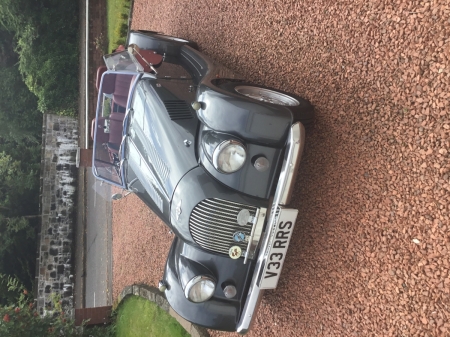
Research? I do have a 2006 +4 !!
Response. No issues about sucking eggs!! As far as my knowledge of electrics is concerned, what's an "egg"

The terminal numbers you have listed 30, 85, 86, 87 are, I think, the same as mine but I will double check. .
The wiring solution you have provided is just what I needed.
I have a spare battery in the workshop so I will bench check before I go near the car.
So all in all thanks very much.
Regards
Ian