I'm with Graham here, my 2010 plus 4 has the cylinders stainless lined from past parts, Bought new cylinders and sent them straight there. Before this my cylinders seized over winter every year, now since 2022 they have worked perfectly and the standard cylinder repair kits fit the lined cylinders so any wear and its just a quick service at £12 per side although as yet I haven't needed to carry this out. Now, I service my car diligently and change my brake fluid annually. Check moisture content throughout the year yet still the cylinders would gum up without fail. so my advice to any classic owner would be to line the cylinders! First used on racing cars for its bomb proof reliability they really do help.
Not sure what brake distribution system you have fitted but try a back bleed through each cylinder nipple to see if you can get some flow. If all ok then i'd suspect your mechanical side. Shoe friction material thicknesses, spring strength, shoe retaining locators and lubrication against back plate. Something is locking them up when fully applied then released. Just use a rubber or nylon mallet to tap the shoes from side to side at each cylinder. As you move one across the other side should move out the same amount and then back again, this should move easily with little resistance and good cylinders will move with hand pressure even when fully assembled. If they don't I reckon the cylinders are gummed up. I have written previous posts on how to rectify this but come back if you find a problem with this.
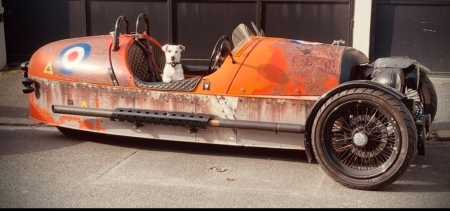
Just as an aside, when I first got my Mog I drove it for the first few months when clearly the rear cylinders were seized and no brake effort was being delivered to either rear wheel....... car performed fine, however when I rectified this, (I quickly took the car off the road for a major work-over as so many things were just frankly blooody awful!) I have to say I could not feel any improved breaking effort or flatness in the brake feel. The only thing that has changed is, if breaking hard in the wet the back end can twitch a bit, although not unmanageable, mind you a 1990's Golf Gti makes anything feel good in the wet when being compared with it!
The Morgan set up is really quite primitive and a methodical approach will soon get you sorted out. Just one last thing. I have come across cylinders that look like they are leaking just a little but its been the lubrication applied to the piston seals and often the excess amount stuffed under the dust covers trying to stop them seizing that is wet. I'm starting to believe that some of the lubricants that are used might be the cause of this gumming up and have reverted to the old school use of brake fluid as a lubricant on assembly and then a very small amount of red rubber grease to the lips of the dust cover (both cylinder and piston) which seems to be quite effective in keeping water at bay but not causing harm. I'm sure many here will come up with a suggestion as to which assembly product to use but I have to say I started working on cars from the end of the 60's and I have never seen as many wheel cylinder problems since all these new fangled brake lubricants have been foisted on the market.... I'm coming around to the ... if it aint broke mentality here!