|
9 members (Davetherave, jbk, nick w, Hamwich, John Winn, +8Rich, BobtheTrain, gazum, TalkMorgan),
366
guests, and
65
robots. |
|
Key:
Admin,
Global Mod,
Mod
|
|
|
Forums39
Topics49,850
Posts837,437
Members9,596
| |
Most Online1,063
Jun 14th, 2026
|
|
|
There are no members with birthdays on this day. |
|
|
|
Joined: May 2007
Posts: 4,612 Likes: 15
Part of the Furniture
|

Part of the Furniture
Joined: May 2007
Posts: 4,612 Likes: 15 |
i'm not belittling the problem, but just thought you might like to see what was happening 120 years ago. link for item belowThe Great Horse Manure Crisis of 1894
In order for these cities to function, they were dependent on thousands of horses for the transport of both people and goods. In 1900, there were over 11,000 hansom cabs on the streets of London alone. There were also several thousand horse-drawn buses, each needing 12 horses per day, making a staggering total of over 50,000 horses transporting people around the city each day. To add to this, there were yet more horse-drawn carts and drays delivering goods around what was then the largest city in the world.
This huge number of horses created major problems. The main concern was the large amount of manure left behind on the streets. On average a horse will produce between 15 and 35 pounds of manure per day, so you can imagine the sheer scale of the problem. The manure on London’s streets also attracted huge numbers of flies which then spread typhoid fever and other diseases. Each horse also produced around 2 pints of urine per day and to make things worse, the average life expectancy for a working horse was only around 3 years. Horse carcasses therefore also had to be removed from the streets. The bodies were often left to putrefy so the corpses could be more easily sawn into pieces for removal.
The streets of London were beginning to poison its people. But this wasn’t just a British crisis: New York had a population of 100,000 horses producing around 2.5m pounds of manure a day.
This problem came to a head when in 1894, The Times newspaper predicted… “In 50 years, every street in London will be buried under nine feet of manure.” This became known as the ‘Great Horse Manure Crisis of 1894’.
The terrible situation was debated in 1898 at the world’s first international urban planning conference in New York, but no solution could be found. It seemed urban civilisation was doomed.
However, necessity is the mother of invention, and the invention in this case was that of motor transport. Henry Ford came up with a process of building motor cars at affordable prices. Electric trams and motor buses appeared on the streets, replacing the horse-drawn buses.
By 1912, this seemingly insurmountable problem had been resolved; in cities all around the globe, horses had been replaced and now motorised vehicles were the main source of transport and carriage.
Even today, in the face of a problem with no apparent solution, people often quote ‘The Great Horse Manure Crisis of 1894’, urging people not to despair, something will turn up!
Last edited by A11OGE; 22/11/21 05:38 PM.
Steve A11OGE Red 1989 4/4 4 seater
'A Morgan is for life, not just for Sundays'
|
|
|
|
|
Joined: Apr 2008
Posts: 12,257 Likes: 317
Scruffy Oik Member of the Inner Circle
|

Scruffy Oik Member of the Inner Circle
Joined: Apr 2008
Posts: 12,257 Likes: 317 |
Personally I think the biggest danger is from people refusing to change their habits because they mistakenly believe that living a low-carbon lifestyle means reducing one's quality of life.
It's perfectly possible to live a good and wholesome life without killing the planet. Change is needed but change means different, not worse.
I know and socialise with a fair few young people (in the 20-30 age group) and I can tell you it's not the grim future that pisses them off, it's the grim present. Low wages, poor prospects, no real chance of ever being able to afford to buy a house, and the people who have the power to make changes for the better show no inclination to actually do so.
Tim H.
1986 4/4 VVTi Sport, 2002 LR Defender, 2022 Mini Cooper SE
|
|
|
|
|
Joined: Dec 2009
Posts: 37,415 Likes: 977
Tricky Dicky Member of the Inner Circle
|
|
Tricky Dicky Member of the Inner Circle
Joined: Dec 2009
Posts: 37,415 Likes: 977 |
i'm not belittling the problem, but just thought you might like to see what was happening 120 years ago. link for item belowThe Great Horse Manure Crisis of 1894
In order for these cities to function, they were dependent on thousands of horses for the transport of both people and goods. In 1900, there were over 11,000 hansom cabs on the streets of London alone. There were also several thousand horse-drawn buses, each needing 12 horses per day, making a staggering total of over 50,000 horses transporting people around the city each day. To add to this, there were yet more horse-drawn carts and drays delivering goods around what was then the largest city in the world.
This huge number of horses created major problems. The main concern was the large amount of manure left behind on the streets. On average a horse will produce between 15 and 35 pounds of manure per day, so you can imagine the sheer scale of the problem. The manure on London’s streets also attracted huge numbers of flies which then spread typhoid fever and other diseases. Each horse also produced around 2 pints of urine per day and to make things worse, the average life expectancy for a working horse was only around 3 years. Horse carcasses therefore also had to be removed from the streets. The bodies were often left to putrefy so the corpses could be more easily sawn into pieces for removal.
The streets of London were beginning to poison its people. But this wasn’t just a British crisis: New York had a population of 100,000 horses producing around 2.5m pounds of manure a day.
This problem came to a head when in 1894, The Times newspaper predicted… “In 50 years, every street in London will be buried under nine feet of manure.” This became known as the ‘Great Horse Manure Crisis of 1894’.
The terrible situation was debated in 1898 at the world’s first international urban planning conference in New York, but no solution could be found. It seemed urban civilisation was doomed.
However, necessity is the mother of invention, and the invention in this case was that of motor transport. Henry Ford came up with a process of building motor cars at affordable prices. Electric trams and motor buses appeared on the streets, replacing the horse-drawn buses.
By 1912, this seemingly insurmountable problem had been resolved; in cities all around the globe, horses had been replaced and now motorised vehicles were the main source of transport and carriage.
Even today, in the face of a problem with no apparent solution, people often quote ‘The Great Horse Manure Crisis of 1894’, urging people not to despair, something will turn up!The future... Bison-drawn carriage in Sioux Falls, South Dakota 1900. ![[Linked Image]](https://www.tm-img.com/images/2021/11/22/bis.jpg)
2009 4/4 Sport Henrietta
1999 Indigo Blue +8
2009 4/4 Sport Green prev
1993 Con Green +8 prev
|
|
|
|
|
Joined: Dec 2018
Posts: 1,309 Likes: 5
Has a lot to Say!
|
|
Has a lot to Say!
Joined: Dec 2018
Posts: 1,309 Likes: 5 |
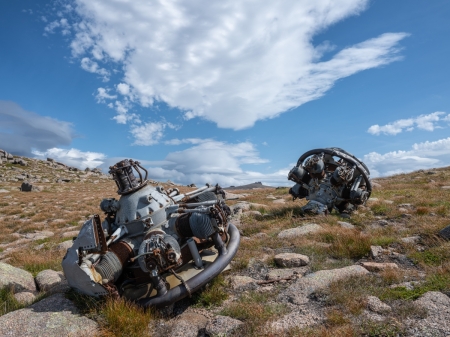
Bison-drawn carriage in Sioux Falls, South Dakota 1900. The equivalent of putting a Merlin engine in a Mini 
Bonesie Current stead -'The Captain' Black +4 'Life is like a garden, dig it' *Joe Dirt 
|
|
|
|
|
Joined: May 2015
Posts: 1,815 Likes: 32
Talk Morgan Enthusiast
|
|
Talk Morgan Enthusiast
Joined: May 2015
Posts: 1,815 Likes: 32 |
Wow, I find some of the claims above amazing! I can only assume they are put forward in good humour. I hope so, but the use of words like rubbish to address real concerns begins to sound like a brexit fervour. Links that don't support the actual statement?
Everyone can charge at work? Most evs have a realistic range of 250 miles. Etc.etc.
What a laugh
Nick
I am prepared to submit a line by line refutation of the claims but don't really want to bother I'm laughing at your laughing  "Everyone can charge at work?" No. But if you needed to commute to a work car park there is a reasonable chance there will be charging available. Heck I now see folks poking cables out of their office windows to their cars! Personally I dont drive to work, and at my work there are a couple of chargers to be used. And I expect chargers to continue to proliferate... "Most evs have a realistic range of 250 miles. Etc.etc. What a laugh"... Isnt the highest selling EV in the UK the Tesla 3? Claimed range for the standard model 305 miles, say 250 realistic max? Mind you I share some of the EV sceptism (eg why the focus on private cars vs shipping, trucks, central heating etc). But remember, there is no Planet B.
M3W5sp 2015, MSCC, MTWC, Oxon UK
|
|
|
|
|
Joined: Nov 2018
Posts: 6,667 Likes: 433
Talk Morgan Sage
|
|
Talk Morgan Sage
Joined: Nov 2018
Posts: 6,667 Likes: 433 |
"Most evs have a realistic range of 250 miles. Etc.etc. What a laugh"... Isnt the highest selling EV in the UK the Tesla 3? Claimed range for the standard model 305 miles, say 250 realistic max?
Mind you I share some of the EV sceptism (eg why the focus on private cars vs shipping, trucks, central heating etc). But remember, there is no Planet B.
The Tesla is probably the highest selling EV, but more a reflection of the demographic who are currently buying EV's. Down in the more realistically priced EV's (Golf, Corsa, Leaf, Kia etc) that your average man on the street has a chance of buying, the real world range is much reduced to around 140-170 miles. The two SMART offerings are sub 100.
"Y mae dafad ddu ym mhob praidd"
1972 4/4, 1981 MGBGT, 1984 FLHT1340, 1980 XLH1000, 1990 ZX10
|
|
|
|
|
Joined: May 2007
Posts: 4,612 Likes: 15
Part of the Furniture
|
|
Part of the Furniture
Joined: May 2007
Posts: 4,612 Likes: 15 |
and that's before you turn on the wipers, the headlights, and heaters to drive home (or Carlisle to Reading) in the winter.
Down in the more realistically priced EV's (Golf, Corsa, Leaf, Kia etc) that your average man on the street has a chance of buying, the real world range is much reduced to around 140-170 miles. The two SMART offerings are sub 100.
Steve A11OGE Red 1989 4/4 4 seater
'A Morgan is for life, not just for Sundays'
|
|
|
|
|
Joined: Apr 2008
Posts: 12,257 Likes: 317
Scruffy Oik Member of the Inner Circle
|
|
Scruffy Oik Member of the Inner Circle
Joined: Apr 2008
Posts: 12,257 Likes: 317 |
and that's before you turn on the wipers, the headlights, and heaters to drive home (or Carlisle to Reading) in the winter.
It's the cold in winter that reduces range, not the use of ancillaries. With LED lights, you're not going to be using more than about 50 watts for ancillaries, and most of the cabin heat will be coming from the heat pump. Driving at 40mph will use about 10KW for the motor as a comparison, and far more if you want to bat along at 80, nearer 3 times as much. Certainly there are few current EVs that are capable of long drives like the 300 miles from Carlisle to Reading at motorway speeds without stopping for a recharge en route, and those that can do it are pretty expensive - but then again at least they can generally support very high charging rates, so a 30 minute coffee break at a beefy charger wouldn't be a problem. For me to do it in my Mini would take 6.5 hours, including 4 charging stops totalling 1.5 hours, which could be a bit of a pain if one was in a hurry. Fortunately hardly anyone needs to do journeys like this with any particular frequency, and those that do would probably either keep an ICE car or hire one as and when needed. For anyone with a sub-50 mile daily commute I can't see range being a big issue even in winter for most EVs apart from the very small city cars like the Smarts, Hondas, and E-ups.
Tim H.
1986 4/4 VVTi Sport, 2002 LR Defender, 2022 Mini Cooper SE
|
|
|
|
|
Joined: Nov 2018
Posts: 6,667 Likes: 433
Talk Morgan Sage
|
|
Talk Morgan Sage
Joined: Nov 2018
Posts: 6,667 Likes: 433 |
This was an interesting study from leasing.com (apologies for the layout issues)
Outside temp / e-Golf range (heating/AC ON) / e-Golf range (heating/AC OFF)
-10° / 88 miles / 139 miles
-5° / 100 miles / 149 miles
0° / 115 miles / 157 miles
5° / 133 miles / 165 miles
10° / 153 miles / 173 miles
15° / 173 miles / 181 miles
20° / 186 miles / 188 miles
"Y mae dafad ddu ym mhob praidd"
1972 4/4, 1981 MGBGT, 1984 FLHT1340, 1980 XLH1000, 1990 ZX10
|
|
|
|
|
Joined: Aug 2013
Posts: 15,794 Likes: 15
Formerly known as Aldermog Member of the Inner Circle
|
|
Formerly known as Aldermog Member of the Inner Circle
Joined: Aug 2013
Posts: 15,794 Likes: 15 |
Our first cold weather drive of any distance today in the Tesla M3 the initial power consumption was high, almost 2kw/mile but over the journey from Sherborne to Salisbury via the A303 the car ended up using an average of 271 w/h per mile. This compares with an average of 261w/h per mile over 4300 miles since May: I understand the difference is that the battery has to heat up to function efficiently and starting from 1C it takes about 15 mins to heat up car and battery using the heat pump. Getting into a warm car is rather nice!
271 w/h per mile gives me a range, based on using 85% of the battery, of 240 miles and an absolute theoretical range of 276. miles.
In the summer I was seeing a consumption of 200w/h per mile, so an 85% range of 281 miles.
ICE cars are much less efficient when cold, but we know this and ignore it or just complain that the fuel consumption isn't as good as it was....!
Peter,
66, 2016 Porsche Boxster S
No longer driving Tarka, the 2014 Plus 8...
|
|
|
|
|