Hi All,
I have a 1996 +4 and the heater fuse keeps blowing. I have put in a 30 amp fuse, it works for a period then it will blow at random. I have checked the wiring all looks ok.
The fan also only works on position 2 so no function on position 1.
Any ideas what the issue could be?
Switch faulty or sticky heater motor? Many thanks Will
Hi Will,
There is a generic issue here that has to be mentioned.
But first, at a glance, your symptoms indicate RichardV6 is right and is suggesting the right course. By windings, he speaks of a wound coil looking thingie that creates resistance and therefore reduces the effective current and therefore fan speed. Ergo, a two speed heater fan should have three positions. One that sends no current, a second position that sends a current through the windings (slow speed) and a third that goes directly to the fan. (I am ignore the possibility of relays.) I also like his action plan.
N.B There is no electrical diagram for Morgans made between 1990 and 1998. Nothing in the handbooks either. All other years from 1950 to 2019 are more or less covered. I have been trying to cob something up from trial and era with the help of moggers for 15 years. ANY information would be helpful/ But instead you could glance at my Morgan's earlier diagram
https://www.gomog.com/allmorgan/wiring88&89.jpg speocifically the area found at the right middle. You will see my heater blower switch and blower with two paths between, indicated by RichardV6, with his wire colors.
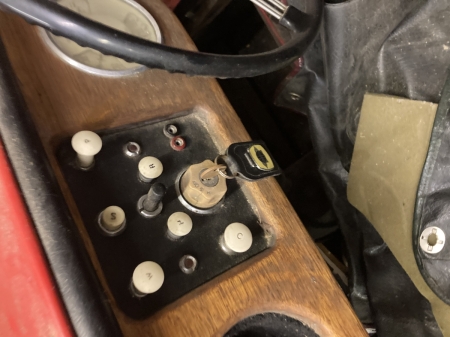
The switch is simple. It could be shorted by melting from your present situation. Who is the supplier of your switches...VDO? Piccie?
Can you ascertain the supplier of the heater/fan unit. After they stop installing Smiths (the most reliable heater and still supplied today (parts or assembly) and taking, BY FAR, the least space. Do you have a piccie from under the dash and bulkhead? Fan motors are not difficult to replace and cheap, and aftermarket is even better than what was original. But let's finish diagnosis.
MORE IMPORTANT STUFF The British gave many important things to the world. One of them was color coded wiring. Fuses are great. They are designed weakpoints. Rather than have one's car wiring melt when there is a short or wire failure, why not create a pre-designed wiring weak point, in a convenient place. It was called a fuse (odd name but a welcome idea) . Later, it was brilliantly realized that fuses of different strengths could be installed for each or a limited number of items and that would help with diagnosis or where the problem was WITHOUT the entire car closing down. Fuseboxes became bigger and bigger. By 1987 every mogger could be a diagnostician! Sadly, that has recently ended with the advent of more-profit making PCBs or such, a big prejudice to automobile repair.
Yes, we all try a one size larger fuse when a fuse fails. But more than that is unwise. Fuses don't fail for no reason. If we make our fuses so strong they cannot do their first job of protecting the wiring..that is very unwise.
The worst example I have ever seen, was at the start of the European GEMS era. Those cars put out a lot of heat. The radiator fans were inadequate. So they put in SPAL fans which drew enormously more current. To compensate for the increase in draw, they installed a 40 amp fuse in the old slot in the fusebox. The fuse slot and fusebox were not rated that high..neither was the car wiring in general. The wiring, sometimes the fuse box slot,etc burned, the fan failed and new car engines blew their head gaskets in traffic.
If you are up to 30 amp fuses and they are failing, stop now. Sort this thing first.
gmg
P.S. If the motor is shot, they are cheaper to buy new than repair.





![[Linked Image]](https://tm-img.com/images/2024/02/05/IMG_3656.jpeg)
![[Linked Image]](https://tm-img.com/images/2024/02/05/IMG_36571195e497c5688349.jpeg)
