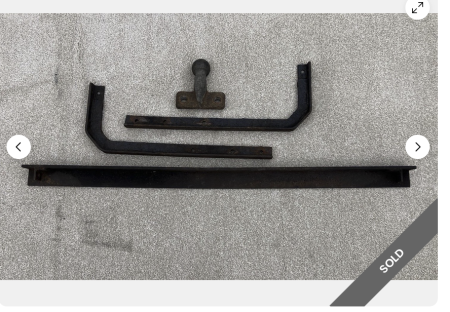
TM : Tow Ropes
In support of Calum #807123
I found last year the following information
On a Miata-Mx5 Forum from 2006
https://forum.miata.net/vb/showthread.php?t=183234< Quote >
Originally Posted by TimMullen
A transmission is lubricated by "splash" - the gears in the transmission splash the gear oil around and it gets in the bearings. When the engine is running, and the clutch is engaged, the input shaft gear is turning, which turns the counter shaft, which in turn rotates all the gears on the output shaft. All of this splashes around the gear oil.
With the engine off, none of the gears in the transmission rotate, and the oil is not splashed around. When the car is towed (transmission in neutral), the drive shaft spins the output shaft of the transmission. The gears ride on this shaft on bearings. However, none of the gears are rotating , so no oil is being splashed, and the bearings are not getting lubricated.
When you tow with the rear wheels on the ground, there is no lubrications happening. The only lubrication that is happening to the bearings is from the gear oil that is already on the bearings. All of that is why you shouldn't tow with the rear wheels on the ground. Now, all that being said, many people have towed and not had any problems. But the potential for damage is there. Me? I'd use a trailer or dolly, or at least disconnect the rear drive shaft (to prevent the transmission from being turned). But many have no problems...
Tim Mullen again
As someone else pointed out, the output shaft is turning.
The input shaft extends out the front of the transmission and into the clutch. In the transmission, this has a gear on it - this gear turns the counter shaft gear in the bottom of the transmission. The output shaft sticks out the back of the transmission, and the front of it rides on a small roller bearing in the back end of the input shaft. All of the other gears and gear selectors ride on bearings on the output shaft. With the engine off and the clutch "out", non of the gears in the transmission rotate (and don't splash the oil). But as you move the car on the rear wheels, the drive shafts are rotated. This turns the differential, which in turn rotates the propshaft (aka drive shaft) that is connected to the output shaft of the transmission. This output shaft has all the gears riding on bearings that are no longer being lubricated by the oil being splashed. There is still probably some splashing going on by the gear selectors/synchros, but not much.
That's all why every manufacturer of a "normal" manual transmission does not recommend that a car be towed more than around 50 miles with the drive wheels turning (I said "normal" because there are some transmissions - like my Accord's - that have gears attached to the output shaft that splash lubricate things).
I doubt that monitoring the temperature of the transmission would indicate that the lubricated bearings on the spinning output shaft were getting near failure - there wouldn't be any noticeable heat reaching the outside of the trans, and it would be a bit hard to wire the rotating shaft inside the transmission.
Now, all that said, some people tow cars many, many miles and have no problems. Probably some other's have had problems. Me? I'd use a trailer/dolley/drive shaft disconnect, but that's me.
==>healeyman
Tim,
In my nearly 50 years of building and messing with cars, I have seen 2 transmission failures attributable to being towed 4-down.
1 was an automatic, 1 was a 4-speed. BOTH failures were at the juncture of the driveshaft tailstock and the tail cone bushing.
You are correct in your assessment that most manual transmission gears, gear clusters, and lay shafts rotate on roller or needle bearings. In nearly all cases, the driveshaft yoke or tailstock slides into a bronze, oil retaining bushing.
In most transmissions, including the Miata, the lube filler plug is located BELOW the tail-shaft cone bushing. The reason for this is because the driveshaft tailstock not only rotates, but slides in and out as the rear end moves up and down. The normal tail cone lubrication seal is usually insufficient to provide a constant, non-seeping, seal while these two actions are taking place.
To compensate for this higher than fluid level, some transmissions pump a small amount of oil to that area and some transmissions rely on "splash" to lubricate the tail-cone bushing sleeve.
If a fresh supply of lubricant is not being fed to this bushing sleeve, heat can build up as the lubrication drips out of the bushing or seeps out through the tail-cone seal. This tail cone bushing heat build up is what usually "burns up" the transmission and the driveshaft yoke.
Nearly all of the Miata owners, now 7, that I have talked to stop every couple of hours (150 miles) and start the car and let it idle in neutral for a minute or two. Apparently this action creates enough "splash" action to replenish the lubrication in the tail cone bushing.
It seems to work as some of these guys have towed the same Miata for as much as 75,000 miles with no apparent ill effects. One has towed all 3 (NA, NB, and NC) models.
Last night, I drove the car onto tall wheel ramps, raising the filler plug to a position almost even with the tail cone, and slightly overfilled the transmission with Lucas Gear Oil.
Lucas Gear Oil is an especially "clingly" lubricant that resists running off of gear teeth an out of bearings and bushings.
I can tell you that it has made a HUGE difference in the noise level and "feel" of the transmission through the shift knob. Shifts are silky smooth and the transmission is noiseless.
Today I drove for about an hour with about 1/2 of that at highway speeds. Once the transmission warmed up, there was absolutely no temperature rise or fall in any of the 5 transmission thermocouples.
< End Quote >
Personally Comment :
+ I worked on my ships with a lot of Lucas Heavy duty oil. And it is a perfect lubrication when you need the lube oil to stay for a long period between the gear-teeth, when engines are not working, which - hopefully - happens often with sailing vessels.
+ My conclusion is
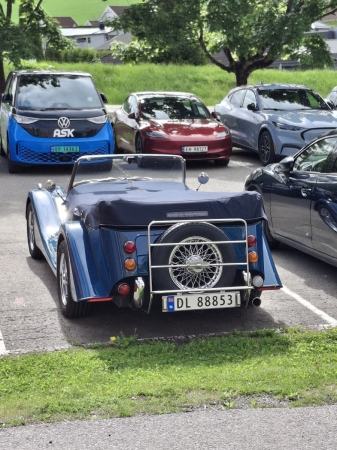
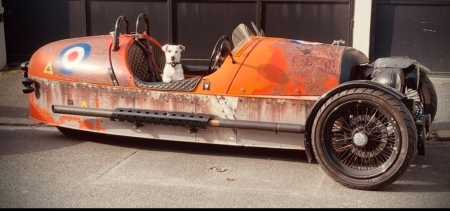
Do not tow our M3W for an extended period, say not more than 100 meters.
+ I have been looking to buy an aft wheel dolly, but it was cheaper to raise my insurance so I have always a 'pick-up' service on a flat-surface truck.
+ Temperature does not say anything about the wear and tear of the gear-box. The body of the gear-box is very big and reasonable cooled at the bottom.
In my current Bevel-Box project I found a similar problem.
I have a Temperature gauge on the Bevel box and I made an air-duct under the vehicle to cool it after I took away that ridiculous NVH Morgan Bevel-Box support. The temperature tells me something about the Bevel-box lube-oil temperature and the thickness of the oil, but tells me nothing about the wear and tear.
In my opinion the biggest problem with the M3W Bevel-box is that it runs every time the first 100m without proper lubrication.
Reason the drive belt is so tight that it presses the lube-oil out of the teeth of the Crown-wheel. So the Crown-wheel teeth wear out that first 100m or more till the lube oil can get in between, which gives after a long period the typical resonation sound at 70-90 km /hr.
In my opinion is the only solution - to solve this noise problem totally :
With a new or refurbished Bevel Box, change to chain-drive and don’t drive a mile again with that drive-belt again.
A great idea to make a choice for chain-drive for the Super 3 Owners who have that choice when buying a new one. Else have a look at Phil Bleazey his chain drive system. It works absolutely great.
I also found that you have to put at least 800cc – the current 300cc is far too less - in the Bevel-box of a more "clingly" lubricant like 250 SAE Amsoil Severe Gear. Also very good to use for oiling the chain.
The thoughts of ruining the oil-seals with more than 300cc is not correct.