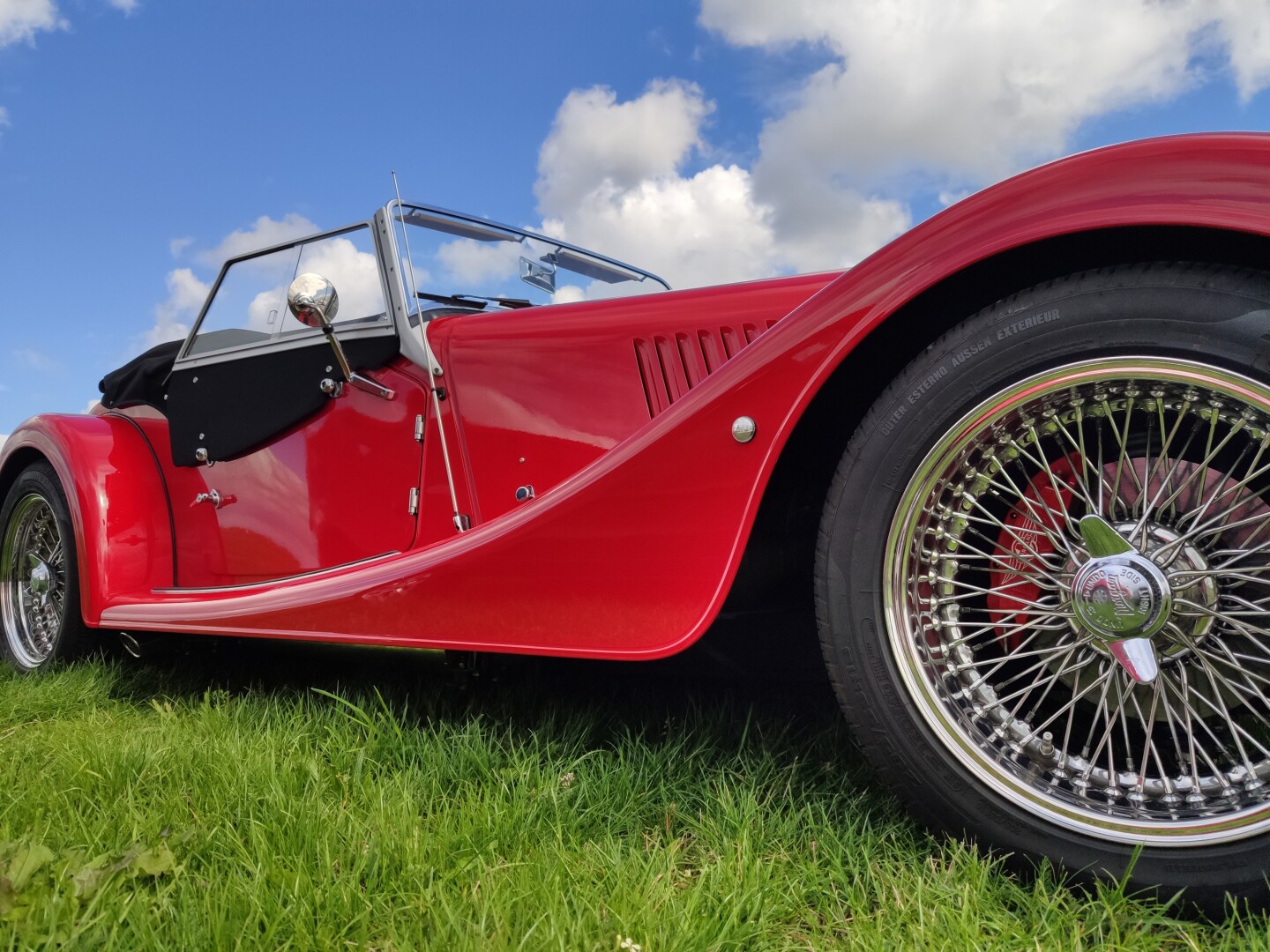
My 4/4 Track Day Edition has a battery cut off switch, which negates any need for a trickle charger when the car is garaged over the winter. It starts first flick after months of lay up and is the easiest way to solve battery drain problems.
Seems in true TM fashion we have drifted off into discussion of EV... As a serial drifter I can not complain.. (-: I guess my hope was to create a simply searchable discussion on the eternal question of battery issues as tends to befall irregularly used classics.
Barry I suspect your kill switch seems unlikely to halt the general INTERNAL ageing process that is inevitable in battery`s over time, more that it cuts out any chance of discharge through any of the on board circuitry. Also I guess that while the the kill switch works for you, it may not suit all Morgans, thinking of those with digital kit that may provide issues when deprived of power, and not discovered until the power is restored at some later date...?
On the other hand in pre digital Trads, the killswitch if used as you suggest would cut down on EXTERNAL parasitic losses that can flatten a battery over some period of time even to the stage where it can not be recovered as the result of those external losses. My mid 80`s +8 has an immobiliser system which places a constant although minimal current draw on the battery and would in time have the possibility of draining the battery into a situation where it can no longer fire the engine up. likewise an electric clock, etc.etc.
As I typed earlier I over depended upon a CTEK clever monitoring and conditioning system to counteract both my +8`s immobilisers external drain and it`s battery`s natural chemistry causing internal losses, which like your kill switch, my CTEK has worked rather well for me over many years in terms of battery longevity for the old style non AGM lead acid, Other than that I tended to replace my +`8`s battery every 3 years or so in the hope of avoiding sudden internal failure when far from home... I looked upon replacement as an insurance policy.
I have little in the way of experience with AGM batteries. My expectation is that they are better able to cope with the demands that modern vehicles complex circuitry demands and no more so perhaps, than the introduction of stop/start operation...?
I bought a circa 9 year old car with all the bells and whistles of a high end vehicle, according to the date code on the AGM battery it directly related to the year the car left the factory. I bought a CTEK suited to coping with the requirements of an AGM battery. All went well for quite a few months, until forgetting to connect up the CTEK after it`s last run, caused the car to fail to start after I think 8 days. Thus a replacement battery was fitted..
Four years on from the new battery being fitted and coded in to match the needs of the car`s on-board intelligent charging system, and being connected to it`s CTEK when the car was not in use, the battery failed while out for a drive, having started the car without issue and all systems in use functioning as expected till I parked and switched the engine off for perhaps 10 mins or so, after which it failed to start providing ALL the signs of a flat battery.
Being a high tec digitally controlled vehicle, the dash came up with a plethora of alarms once the battery recovered some voltage when the key was released and sprung back to the ign on.. Unusually the battery recovered to some extent on the circa 20 mile drive home, even once safe in the garage It fired up as normal, having benefitted from being charged by the alternator. I did not connect the CTEK in order to test if it would start the following day, which it did, I tried a couple of days later and again it started without issue....???
As I have no real experience of working on digital cars, I booked it in with an independent specialist, The day before the appointment I reconnected the CTEK to the car to be as sure as I might, that the car would start on the day to allow me to drive it to the specialist some 20 miles distant.... Initial inspection suggested that the battery was undercharging according to the dash voltage read out, Battery removed from the car and tested showing 12. 4 volts, when load tested it failed...the voltage dropping rapidly....Battery replaced with a new one and coded in.
I must have maintained and replaced literally hundreds of non AGM batteries, over a period of decades, in all types of installations, though never came across one that acted as this AGM battery seems to have done.
Had I access to a code reader with the ability to re-set systems after battery removal/replacement, I would have carried out tests on the battery myself, but without that and the confidence that after battery removal and replacement that the digital systems might hopefully come back on line, I preferred to leave it to someone who has expertise in such processes....However I will still be driving with my fingers crossed for some time to come, having spent years solving communication issues between all sorts of digital nodes required to operate all sorts of digitally operated and controlled machines and kit...
I will also follow the "destructions" in the CTEK manual more carefully too..
Hope this ramble proves worth something to someone at some time... More than happy to be picked up on anything I have typed that might be inaccurate..
BTW, I suspect the EV discussion on the requirement to derive a lower control voltage being supplied by an old style circa 12 volt battery, as opposed to just tapping the required and lower control voltage, may be related to maintaining balanced usage and recharging across the high voltage battery group...?