![[Linked Image]](https://tm-img.com/images/2025/08/14/66.jpg)
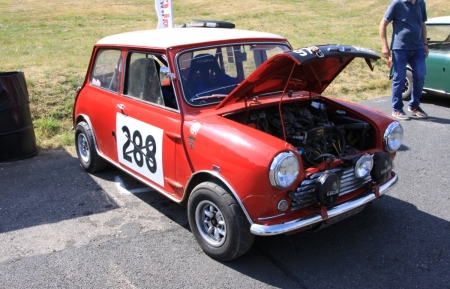
The MG Austin Metro 6R4 was a purpose-built Group B rally car developed in the mid-1980s as a collaboration between Austin Rover and Williams Grand Prix Engineering. Despite being based on the humble Metro hatchback, the 6R4 shared almost nothing with the road-going version, featuring a heavily modified body with wide wheel arches, aggressive aerodynamics, and a mid-mounted engine layout. The “6R4” name stood for “6-cylinder, Rally, 4-wheel drive,” reflecting its key technical features. It was designed to compete against some of the most advanced rally machines of the era, including the Audi Quattro S1 and Lancia Delta S4.
At its heart was the V64V, a 3.0-liter naturally aspirated V6 with four valves per cylinder, producing around 250 horsepower in the Clubman (homologation) version and over 400 horsepower in full International spec. Power was delivered to all four wheels through a sophisticated permanent four-wheel-drive system, giving it excellent grip on gravel, tarmac, and snow. The car’s short wheelbase, light weight, and instant throttle response made it exceptionally agile, though it could also be challenging to control at the limit.
The 6R4 made its competitive debut in 1985, showing flashes of speed but struggling with reliability issues in its early outings. Its career in Group B was cut short when the category was banned at the end of 1986, but its engine went on to power successful endurance racing cars like the Jaguar XJR-10 and XJR-11 in twin-turbocharged form. Today, the MG Austin Metro 6R4 is remembered as one of the most distinctive and ambitious entries of the Group B era, cherished by rally fans for its raw, mechanical character and unmistakable exhaust note.