|
|
|
|
|
|
|
|
|
|
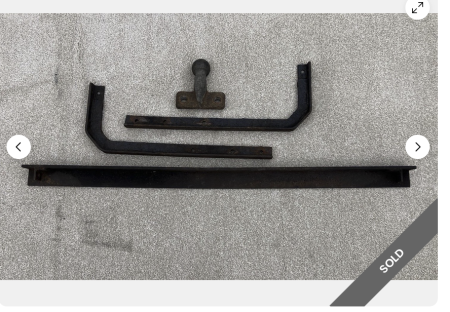
tow bar
by G Walker - 24/08/26 06:52 PM
|
|
|
|
|
Forums39
Topics49,836
Posts837,249
Members9,596
| |
Most Online1,063
Jun 14th, 2026
|
|
|
|
|
| by Druthman |
| Druthman |
Hi all, I’m looking for advice. I own a lovely 200 Morgan 4/4 with a 1.8 duratec engine. Since I’ve owned it I’ve had an issue with the temperature gauge. The car gauge reads 90 degrees for a while but then steadily rises to anywhere between 110-120 when the car is being driven at a constant 3000-3500 revs on the bypass. I’ve checked all over the engine and coolant system with a laser temp reader and all the readings appear normal but the gauge is still showing 110 degrees. I should add that the radiator fan kicks in when the gauge reads 100 and a OBD tester which was used during a run showed the high reading in line with the temperature gauge even though the actual engine temperature tested normal with the laser temp gauge. I’ve also installed a new and tested thermostat which made no difference. I’m now wondering if the engine temperature sensor could be the issue but I’m open to advice.
|
|
|
|
|
| by Hamwich |
| Hamwich |
I had a similar experience earlier this year with my 1986 4/4. After many years of showing a steady 90C under all conditions, it started showing 110-120. At all times the ECU temperature reading was normal and tallied with coolant temperatures taken with an IR thermometer.
I ended up replacing the temperature sensor, thermostat, water pump, and voltage stabiliser. The gauge still shows a higher than normal temperature despite repeated readings which show that the coolant temperature is exactly right.
I've decided to just accept the fact that my temperature gauge now reads high, as if I were to replace it I'd have to replace all my gauges. A single bright shiny new gauge in a dashboard of otherwise shabby nicely patinated 40 year old gauges would look daft, and I can't afford a full set.
|
| 1 member likes this |
|
|
|
| by Rog |
| Rog |
Greetings Neil, great choice of car  The 110-120 temp that you are seeing is the cylinder head temp which will be completely different to the thermostat temp at the bottom of the engine. Your temp sensor is located at the top of the engine at rear of the head. There is only one temp sensor and it is shared by both the ECU and MFU. Your OBD tester will be seeing exactly what your ECU is seeing whilst the gauge is getting a modified output form the micro controller onboard the MFU. A couple of questions.... If you were to hammer down your bypass and stop the car quickly when you see 110/120C with the fan running. If you where to jump out and feel the temp of the bottom rad hose going into the thermostat housing, would the hose be hot or cold, ie is the stat open or closed at that point? By any chance do you have an aftermarket aluminum radiator fitted?
|
| 1 member likes this |
|
|
|
| by RichardV6 |
| RichardV6 |
Sounds like the sensor as you suggest. The gauge itself is obviously working correctly if the CANBUS reading aligns with the OBD readout. I did wonder if the sensor is located in the normal Ford Duratec position or some custom MMC one 
|
| 1 member likes this |
|
|
|
| by John V6 |
| John V6 |
Hi Roger, Thanks for the useful information, I haven’t done the hose test yet but I do have a aftermarket aluminium rad fitted, does that make a difference at all. On here somewhere are reports that they can do.
|
| 1 member likes this |
|
|
|
| by Rog |
| Rog |
Hi Roger, Thanks for the useful information, I haven’t done the hose test yet but I do have a aftermarket aluminium rad fitted, does that make a difference at all. I have a suspicion that the more efficient aluminum rads have the potential to mess with the normal cooling dynamics on cars with thermostats on the cold side of the radiator, particularly on the smaller engined/lower powered cars that produce less heat output. Unfortunately the Duratec has the stat on the cold side of the rad unlike older generation cars with the stat on the hot side of the engine. On older cars the the stat was opened simply by the heated coolant exiting the cylinder head. Cold side stats are opened with a combination of hot bypass coolant recirculated through the engine and the cooled coolant exiting the rad. These two coolant paths merge within the stat housing and the resultant combined coolant temp sets the stat opening point. That's fine until the balance is upset with cooler coolant from a more efficient rad. Then the combined coolant temp will be lower and the stat no longer opens at the same point as before. It's totally counter intuitive but a bigger better rad may actually make a car run hotter rather than cooler and also make a car run hotter when the ambient temp is lower on a cooler day. I very much hope I'm wrong with this but it might be worth trying your bypass test or even just checking when you hear the fan come on by feeling the bottom hose to see if its cool indicating the stat is shut. Normally the stat should be fully opened when the ECU triggers the fan and the bottom hose hot. And yes the Duratec will actually run with the stat closed with the bigger ali rad. It appears to derive a modicum of cooling from the coolant flow through the small bore pipe that short circuits through the header tank and the rad top header. Something that I suspect might go unnoticed.
|
| 1 member likes this |
|
|
|
| by Rog |
| Rog |
Modern cars often use ECU controlled coolant thermostats. They operate a tiny heater in the stats wax chamber that quickly opens same to be ahead of the game when there is a sudden high demand placed on engine. The ECU controlled stats with heater elements were used on the first generation Duratec engines. By the time the engines were put in our Morgans around 2005 (4/4 and +4) Ford had already phased these out on the 4 cylinder Duratecs although the ECU input still remains, albeit unconnected.
|
| 1 member likes this |
|
|
|
| by CooperMan |
| CooperMan |
Ok but just bear in mind that one feature of a 'cold side' stat is an opening delay, and that can be bit of a game... Before the stat can be fully opened there has to be enough heat in the bypass coolant (easy if you have a V8) to crack the stat and let some cooler coolant from the bottom of the rad creep past, and then only for it to be closed again as the temp within the stat housing drops. This open/close cycle looks to be repeated multiple times until the coolant in the rad is raised enough to hold the stat open. The delay will depend on a number of variables like the air speed through the rad, the ambient air temp, the rad efficiency and the longer the delay in opening, the hotter the engine gets. The stat on my little 1.8 with its huge radiator poking out the bottom of the car would open normally if I let the engine warm up from idle with no air flow through the rad, however it was moving fast it was a different matter. The engine temp could rise dramatically as the hot bypass coolant from head struggled to get enough heat into the stat housing to open the stat, sometime it just wouldn't open. Something to keep an eye on and perhaps come back to if you run out of other suggestion. Have fun  Rogers comments made me remember the 'stat mods I use on Mini's (may be worth a try Neil as 'stats are so cheap) I drill 3 x 1/8" holes in the baseplate so they constantly bleed some water flow
|
| 1 member likes this |
|
|
|
| by RichardV6 |
| RichardV6 |
Rogers comments made me remember the 'stat mods I use on Mini's (may be worth a try Neil as 'stats are so cheap) I drill 3 x 1/8" holes in the baseplate so they constantly bleed some water flow You just reminded me Jon of a similar mod I made to a vintage narrowboat engines thermostat. Here I drilled a 2mm hole which aided bleeding as well as providing a bypass trickle. If the stat has a horizontal component to its mounted position the hole needs to be at the highest point. Thinking further about Neil's issue it may be the best answer to his overheating. I would cautiously start with maybe just one say 2-3mm bypass hole in the periphery of the stat and see how the engine responds. Note stats are usually manufactured with a bleed hole anyway, partially filled with a captive jiggle pin to aid same.
|
| 1 member likes this |
|
|
|
| by JohnHarris |
| JohnHarris |
Has the radiator and the cooling system been flushed through and new antifreeze and water been added, just to ensure there is no sludge build up in the radiator etc restricting flow, which can happen with cars over time and those subject to periods of inactivity. It's one of the first things I get done when I purchase a Morgan, as invariably like spark plugs and brake fluid changes is not always attended to as it should be.
|
| 1 member likes this |
|
|
|
| by IcePack |
| IcePack |
Roger’s explanation of modern engines cooling systems is so right. Just look at the radiator problems with the plus six & 4. Whilst the older V8s needed more cooling, just using a fix all aluminium radiator from Mulfab or Simon imho showed a fundamental misunderstanding of what is required. My plastic radiator is hanging on, just, as in very cold weather it just starts to weep at a seam. Luckily so far not once warm or during the summer. I have put off changing it until I can source an aluminium version of the same size. Some quotes I’ve heard of are astronomical in price.
|
| 1 member likes this |
|
|
|
| by Rog |
| Rog |
That looks better Neil..... I then went onto a faster road and found that as the car was pulling up to 70 the temp started rising again up to about 112 and I eased off the throttle, the temp then very slowly started dropping back Perhaps that’s the delay or lag mentioned in my last post. When the engines load increases the stat doesn’t respond quick enough. That’s why the early Duratec engines had stat heaters. The ECU would see the engine load and switch the heater on to kick the stat into action. I’m now wondering if I should decrease the size of the blanking plate to allow more air through at the higher speeds or increase it further. Yes, you could try and decrease it but don’t forget this is counter intuitive. My money would be on increasing it a little bit at a time. Or maybe leaving the blocking like that and now consider combining it with a lower 82C opening stat? NB - Just be aware to factor in the ambient air temp each time you test as that will affect the Delta T of the rad from one day to another. And don’t be surprised either if the car runs hotter in winter too..... 
|
| 1 member likes this |
|
|
|
| by RichardV6 |
| RichardV6 |
Maybe time to try a bypass hole in the thermostat periphery Neil. Another thought is the efficiency of the water pump given age of car. If the coolant flow was below par it could cause latency in response to changes in engine power demand and speed.
|
| 1 member likes this |
|
|
|
| by Heinz |
| Heinz |
I attached two vertical covers to the left and right sides of the radiator. This will ensure that the radiator continues to function properly. I did it intuitively; I'm not a physicist. But if you cover the entire width of the lower surface of the cooler, I could imagine that an entire working section or temperature range of the cooler would be blocked, because the heat varies from bottom to top and not from left to right. Left and right side added together I covered about 30% (or 40% ?), so the surface area is now approximately the same size as the original cooler. You can test it with different areas to get the best result. For me, this keeps the temperature fairly constant, just like with the old cooler. It is enough for the valve to open. I wouldn't cover any more than that to avoid new problems when driving in warm weather, e.g., in stop-and-go traffic or in a traffic jam.
|
| 1 member likes this |
|
|
|
| by Heinz |
| Heinz |
It was actually just a temporary solution until I could do it properly with aluminum surfaces. But, crazily enough, it's already lasted three years, it is a type of waterproof plastic cardboard that can withstand the heat reasonably well
|
| 1 member likes this |
|
|
|
| by Druthman |
| Druthman |
FIXED!!!!!
I tried the suggestions about blanking plates for the rad to no avail. Decided to go back to basics and get the cooling system flushed through. Engine block and heater matrix flushed through separately. There’s a short hose that runs from the rear housing on the head to the heater matrix. This little hose has a spring in it in order to stop it from collapsing I guess. The spring had caused a blockage in that small hose which was easily flushed out. The car is now running at normal temperatures under load and on tick over in a queue. The fan cuts in and now the temp immediately drops unlike before. Many thanks for all of the suggestions, and the time taken by my Morgan friends to write them. Just goes to show that going back to basics sometime is the best way.
|
| 1 member likes this |
|
|
|
| by RichardV6 |
| RichardV6 |
Congrats on finding the solution Neil. It just goes to show how important even the narrow bore feed to heater matrix is when its constant flow is a design factor in the engines overall heat dissipation, not to mention it carrying the hottest coolant in the whole of the engine.
|
| 1 member likes this |
|
|
|
| by Deejay |
| Deejay |
Great news and a big thanks for reporting back. That’s what makes the forum so useful.
It is frustrating sometimes when members put their efforts into finding a solution only to find that the end result is never published!
|
| 1 member likes this |
|
|
|
| by JohnHarris |
| JohnHarris |
Good to see that you have found the solution, and thankfully it was a simple and inexpensive fix.
I've had too many aluminium engined cars over the years that often suffered from sludge buildup,either due to poor maintenance or lack of use, that a simple precautionary flush through of the cooling system on acquisition , can help avoid sources of potential overheating problems.
This forum is an excellent resource, maybe it could benefit from a known cures section, which would concentrate the accumulated knowledge into a reference section, so the potential solutions are not lost in the mists of time and among all the background noise.
|
| 1 member likes this |
|
|
|
| by Heinz |
| Heinz |
Thank you very much for your efforts. Have you tried using this page? https://tm-img.com/When you upload an image of the right size (I do not know in the moment the max size), you will see a long list of insertion options. The last section at the bottom says ‘BBCode’. Select the first line „Full“ and simply copy it by clicking on it at the right end. You can insert the line into your post as I have done here to show the screenshots. I think there are also good instructions for this on the page. ![[Linked Image]](https://tm-img.com/images/2025/09/11/IMG_6204.png) At the very bottom of this second image, you will see ‘BBCode full’. ![[Linked Image]](https://tm-img.com/images/2025/09/11/IMG_6205.png)
|
| 1 member likes this |
|
|
|
| by RichardV6 |
| RichardV6 |
FIXED!!!!!
I tried the suggestions about blanking plates for the rad to no avail. Decided to go back to basics and get the cooling system flushed through. Engine block and heater matrix flushed through separately. There’s a short hose that runs from the rear housing on the head to the heater matrix. This little hose has a spring in it in order to stop it from collapsing I guess. The spring had caused a blockage in that small hose which was easily flushed out. The car is now running at normal temperatures under load and on tick over in a queue. The fan cuts in and now the temp immediately drops unlike before. Many thanks for all of the suggestions, and the time taken by my Morgan friends to write them. Just goes to show that going back to basics sometime is the best way. Would it be possible for you to take a photo of where the hose runs? I would also try cleaning it myself. Thank you very much. The hose Neil describes is the hot coolant feed to heater element Heinz. Cannot find an image for 4/4 but its the hose connecting to the lower of the two heater box connections.
|
| 1 member likes this |
|
|
|




![[Linked Image]](https://www.tm-img.com/images/2025/09/04/IMG_5268.jpeg)
