Well exactly, horses for courses here and we need to know exactly what type of spinner?
Well as everyone is having a go I'll give you my findings.... note they are mine but as there seems to be so many opinions, experienced findings will allow you to make your own minds up!
When I got my current car it had three eared spinners fitted. Well it did look good! By GOD they're unusable though.
Firstly you cannot adequately tighten them they are just too small to use a mallet on and after they have self tightened getting them loosened requires the help of nasa. Having had experience of both the two eared and octagonal or Euro knock off spinners I bought a set of the octagonal type to replace them and rested happy again on my informed choice.
So lots here Is talked about tightening knock off wire's. Mostly the truth is no-one can categorically tell you how tight is tight on fitting. Yes they do need to be tight enough to protect the splines, both hub and wheel. To loose and you do chance damaging the splines to both elements so you have to learn what tight feels like. Now they are as stated previously, handed so are different on the left side of the car to the right side of the car. This is to prevent them from undoing whilst driving. They are generally marked if a Morgan product but are available with no markings. Here's how you can remember which way to turn to loosen or tighten. When they are marked they show the undo direction and if you notice whatever side you are standing on you will rotate the spinner towards the front of the car and the reverse to tighten. The tool kit...... I'd only use that if caught out in the desert with no other option. The spanner... what a tool, guaranteed to help you damage the car or yourself! As for the mallet flailing about your head!....well!
So I got to thinking, How best to deal with this issue, initial tightening to prevent damage to your splines. safe method of tightening and loosening in the field and something with enough heft to loosen a self tightened wheel which for some reason don't all tighten to the same level in use. Most of all... zero use of the mallet.
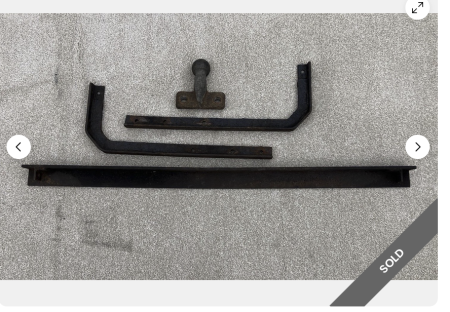
Firstly I ascertained the best leverage length whereby I would know that the wheel was tight enough, meaning I could achieve this without feeling I was lifting the car! For me this was 700mm from the centre of the spinner to the end of the shaft. So I went onto Ebay and bought another euro spanner just like the one in the car, MG is the same size and also bought some aluminium box section 50mm x 15mm and 600mm long. I took the spanner and at a line drawn about 25mm from the head towards the handle buried the head in the vice and hammered the handle towards me somewhere between 5'-10'. It's not a lot. I then filed the handle to fully fit the box section tube to just shy of the head. the internal width of the alloy section was larger than the thickness of the spanner so I inserted a spacer made from 6mm plexiglass. I then marked the spanner handle for two suitable fitting points and drilled them through the spanner. Using the spanner on the outside of the box section as a template I marked the drill position and drilled through both sides. I then assembled the parts together and drilled through the spacer when all together. 6mm was the bolt size and assembled it with plate washers and nyloc nuts. I have this clipped on pins secured with R clips on the rear vertical face of the spare wheel mount so it in fact obvious when the wheel is lifted out and you can also access it from underneath at the back. This allows you to adequately tighten your wheels, loosen them under full control and not damage your car or yourself. you'll now appreciate why the angle was made to the spanner head....... it clears the wing edge without effecting the force angle of the spanner.
Finally the worst advice I/we were probably given in the old days was that you don't need to tighten the wheels hardly at all as they do it themselves, That's how to damage the splines. Were I asked at the roadside I would say tighten well not just approximate.
Lastly, I regularly loosen and retighten my hubs as this prevents an over tightening from really taking hold and If you have ever had one of these then you'll understand where I'm coming from. ( probably every 500-600 miles).
Greasing, Well you certainly need to grease the splines. I sparingly grease both the wheel and hub and have found that copper slip works the best as the copper element has a cushioning effect. Where the rear of the wheel sits against the hub, it's the ground area at the back, you need to use the merest amount of surface protection, just enough to protect against rusting. I just use regular grease here with a high melting point it can literally be described as wiped on wiped off! This is where a rotating wheel will chuck excessive grease around if you overdo things!
So my conclusion here is that this enables you to tighten the wheel adequately, To also safely remove a wheel even in difficult circumstances or situations and protect yourself when doing so! And you won't look like Andycap wacking your car to death at the roadside!