|
Forums39
Topics49,841
Posts837,313
Members9,596
| |
Most Online1,063
Jun 14th, 2026
|
|
|
There are no members with birthdays on this day. |
|
|
|
Joined: Sep 2012
Posts: 1,959 Likes: 15
Talk Morgan Enthusiast
|

Talk Morgan Enthusiast
Joined: Sep 2012
Posts: 1,959 Likes: 15 |
MR kindly gave me a set of + 8 exhaust mounts to try, only lasted 80 miles   Put the original ones back on and I'm going to try to cut and drill them this week to see if they last abit longer. I'm now on my four set. Nice wiring 
|
|
|
|
|
Joined: Feb 2011
Posts: 870
Talk Morgan Regular
|
|
Talk Morgan Regular
Joined: Feb 2011
Posts: 870 |
I have a question about those rubber mounts. What happens to them? Do they shear? Disintegrate because of heat, or what happens? Surely there must be a way for them to last more than they do for some people. I first thought "salt", but Peter's experience doesn't point to that at all.
On the other hand, I'm glad that there is a solution for the dead rectifiers (better wiring and ground), but those mounts still have me puzzled.
Last edited by AQM; 10/08/13 05:07 PM.
|
|
|
|
|
Joined: Apr 2012
Posts: 1,653
Talk Morgan Enthusiast
|
|
Talk Morgan Enthusiast
Joined: Apr 2012
Posts: 1,653 |
http://www.ebay.co.uk/itm/290921547380?ssPageName=STRK:MEWAX:IT&_trksid=p3984.m1423.l2649
This helpful chap does these at £60 and chromed ones at £65, £3 postage.
My original one is square.
2022 Plus Four, 2023 Super Three, Range Rover Vogue SDV8 and Triking T3.
|
|
|
|
|
Joined: Apr 2013
Posts: 1,370 Likes: 11
Has a lot to Say!
|
|
Has a lot to Say!
Joined: Apr 2013
Posts: 1,370 Likes: 11 |
I mounted the H-D regulator directly onto the steel plate without the rubber cushions. I used some oversized bolts between the regulator and the plate to give it an air gap. When I removed the original Cycle Electric regulator I checked the ground and it was perfectly fine. The regulator was very much dead and not just partially dead.
Have had a whole slew of Harley Davidson groups passing through here and have had a few conversations regarding this issue and they all agree that the stock regulator supplied by S&S (Cycle Electric) is a POS and should be avoided. The H-D unit is practically bulletproof and is usually mounted directly without rubber bushings. These guys just love the S&S but really looked pained by the regulator.
What's your mileage? Who cares. Is it practical? See #1. What happens when it rains? You get wet.
|
|
|
|
|
Joined: Feb 2011
Posts: 870
Talk Morgan Regular
|
|
Talk Morgan Regular
Joined: Feb 2011
Posts: 870 |
I just did a bit of research on the regulator/rectifier business (not sure I understand it all, though), but it seems a problem in general. Here's a couple of quotes and links: Condition 3 is what we are most interested in with respect to charging capability.
Voltage should be at least in the 13’s at all engine rpm. You may detect it will fall off slightly as you raise engine rpm. This is not atypical performance. A simple mod that can enhance your charging voltage to the battery can be achieved by this modification outlined in this thread. That should give you performance in the 14V+ range. Next, examine the wires and connectors between the stator output and the R/R input (three wire harness and connectors) – are these charred/melted due to excessive heating? This is fairly common result of poor connection between the mating terminals. See later in thread for examples of this issue & suggested replacements. And now the most important ones ( my bold): Best widely available R/R on the market today is the Shindengen FH012AA used on the late (06+) Yamaha FJR, 07+ Yamaha R1 among others
What makes it better is that is a MOSFET controlled device rather than the crude SCR shunt type that is on most bikes until recently and also is a 50A rated device.
MUCH better voltage regulation and runs cooler too due to more efficient devices and control circuitry.
The SCR shunt type consumes more energy in the Regulator itself than the bike is using and dumps a ton of current into the heatsink (feel yours & just see how hot those things run!!!! - don't touch it - you'll burn yourself - seriously!) The problem is exacerbated because their efficiency goes even lower when they get HOT so it's a vicious circle. Heat is the number 1 killer of these devices.
Incidentally its a misconception that shunt type work harder with increased load i.e. higher-wattage lights, heated vests etc - actually, the higher the load on the output, the less work the shunt regulator does in dumping that excess energy and will actually run cooler!! From here http://www.triumphrat.net/speed-triple-f...or-upgrade.html(There's also quite a bit of info on fault finding in the above link) Keep in mind, that I'm not saying that that particular regulator/rectifier will work - I simply don't have enough knowledge on this topic to do something like that. My point is that, maybe, just maybe, there is something out there which is better than the standard or the HD unit. Edited to add: There is no reason that SCR type regulators and FET type regulators can't be interchanged. As long as you make sure the stator has the same number of phases it will work. Most likely what you saw was an error in installation, or some other incompatibility. FET type regulators and SCR type regulators work exactly the same way, the only difference is the final switching transistors are different (SCR or FET) which wouldn't make any difference to the bike. From here (another interesting read for a numbnut like me): http://www.rc51forums.com/forums/showthread.php?t=6540
Last edited by AQM; 10/08/13 05:38 PM.
|
|
|
|
|
Joined: Feb 2011
Posts: 870
Talk Morgan Regular
|
|
Talk Morgan Regular
Joined: Feb 2011
Posts: 870 |
I mounted the H-D regulator directly onto the steel plate without the rubber cushions. I used some oversized bolts between the regulator and the plate to give it an air gap. When I removed the original Cycle Electric regulator I checked the ground and it was perfectly fine. The regulator was very much dead and not just partially dead.
Have had a whole slew of Harley Davidson groups passing through here and have had a few conversations regarding this issue and they all agree that the stock regulator supplied by S&S (Cycle Electric) is a POS and should be avoided. The H-D unit is practically bulletproof and is usually mounted directly without rubber bushings. These guys just love the S&S but really looked pained by the regulator. When I first read that (I only saw it after my second post in this thread), I thought to myself "But there has to be a reason for those rubbermounts - perhaps it will all shake loose or the innards might fail prematurely". But then I took a closer look at the pictures in the threads I linked to, and it seems that doing without rubber is the "done thing":   And in particular this image: 
|
|
|
|
|
Joined: Apr 2013
Posts: 1,370 Likes: 11
Has a lot to Say!
|
|
Has a lot to Say!
Joined: Apr 2013
Posts: 1,370 Likes: 11 |
I mounted the H-D regulator directly onto the steel plate without the rubber cushions. I used some oversized bolts between the regulator and the plate to give it an air gap. When I removed the original Cycle Electric regulator I checked the ground and it was perfectly fine. The regulator was very much dead and not just partially dead.
Have had a whole slew of Harley Davidson groups passing through here and have had a few conversations regarding this issue and they all agree that the stock regulator supplied by S&S (Cycle Electric) is a POS and should be avoided. The H-D unit is practically bulletproof and is usually mounted directly without rubber bushings. These guys just love the S&S but really looked pained by the regulator. When I first read that (I only saw it after my second post in this thread), I thought to myself "But there has to be a reason for those rubbermounts - perhaps it will all shake loose or the innards might fail prematurely". But then I took a closer look at the pictures in the threads I linked to, and it seems that doing without rubber is the "done thing": At first glance, I would agree. But. There are two different design philosophies involved. The Harley unit uses the brute force approach in that it is always going full blast converting AC to DC and throwing the rest to ground. Fairly simple circuit wise. The C-E unit is constantly adjusting to load and I think that may be where it fails as it takes changes in the rpm's and constantly adjusts to load. I can see where a simple digital circuit could get quite fried trying to do this and then, all of a sudden, something weird happens and its poor brain just goes into meltdown. I'm still building analog vacuum tube based stereo systems as I LIKE the sound. Don't get me started on digital...
What's your mileage? Who cares. Is it practical? See #1. What happens when it rains? You get wet.
|
|
|
|
|
Joined: Feb 2011
Posts: 870
Talk Morgan Regular
|
|
Talk Morgan Regular
Joined: Feb 2011
Posts: 870 |
|
|
|
|
|
Joined: Feb 2011
Posts: 870
Talk Morgan Regular
|
|
Talk Morgan Regular
Joined: Feb 2011
Posts: 870 |
Hang on,
At first glance, I would agree. But. There are two different design philosophies involved. The Harley unit uses the brute force approach in that it is always going full blast converting AC to DC and throwing the rest to ground. Fairly simple circuit wise. The C-E unit is constantly adjusting to load and I think that may be where it fails as it takes changes in the rpm's and constantly adjusts to load. I can see where a simple digital circuit could get quite fried trying to do this and then, all of a sudden, something weird happens and its poor brain just goes into meltdown.
If I understand you correctly, you're saying that the newer ones won't work because they're digital? But that the older HD ones work because it's analogue? MOSFET as in the recommended one to use in the link is analogue too, and from what I seem to understand from the explanations in the links, is that they all run all-out and dump extra energy as heat. That is kind of the point of them. They're regulating three phase voltage to DC, and as such, they are converting as much energy as they can handle (which are put into them, that is)are put into them, and dumping the rest as heat. Hence when little is dumped into them, they only convert that amount of power. Neither of them draws power. They merely convert what is there.
|
|
|
|
|
Joined: Oct 2011
Posts: 1,947
Talk Morgan Enthusiast
|
|
Talk Morgan Enthusiast
Joined: Oct 2011
Posts: 1,947 |
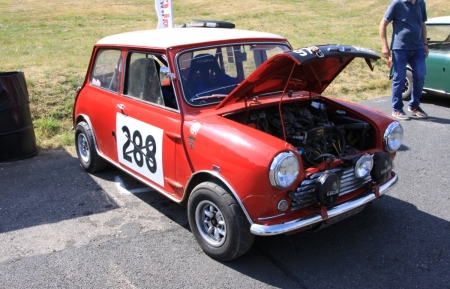
I don't know the details of either the S&S or Harley alternator. But, there are two functions here. An alternator produces AC,and a battery is DC so all of them, whoever made them, have a diode pack with at least two diodes, and most have more. This turns the AC output into DC. Next there is a regulator that samples the output and from it, derives the excitation power that feeds the field coils to make sure the output voltage stays at the 14 and a bit volts for battery charge. In a car alternator, the two functions are utterly separate and crucially, none of the output power passes through the regulator. Most of them these days do it all in the alternator case, but separate regulators were in some car types. There are various ways of doing things and this explanation is ok, although don't take the numbers of diodes for granted as I can show you an alternator with only two diodes and no 'diode trio' (my 2CV alternator in the vintage trike). On another related topic, the rubber mounts for the regulator look like what I call A35 exhaust mounts. That being so, they are interchangable with a more flexible type, the so called Mini ones. See here for ideas. Any decent exhaust fit place should have loads of them and as you can see, playing around won't break the bank.
Last edited by Martyn Culling; 10/08/13 08:27 PM. Reason: added a bit
1930 Super Sports Aero 'The Elk'
|
|
|
|
|