|
9 members (CooperMan, Graham, G4FUJ, Morganmike, DaveW, MJF, Mike D, PaulV, +8Rich, Moggo),
269
guests, and
144
robots. |
|
Key:
Admin,
Global Mod,
Mod
|
|
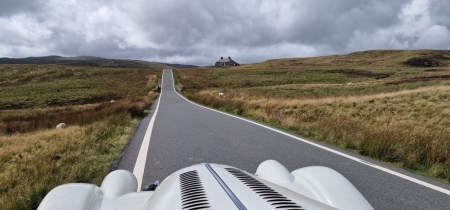
Wales
by Joske Vermeule, September 1
|
|
|
|
|
|
|
|
|
|
|
Forums39
Topics49,869
Posts837,658
Members9,596
| |
Most Online1,063
Jun 14th, 2026
|
|
|
|
Joined: Jun 2009
Posts: 1,569 Likes: 12
Talk Morgan Enthusiast
|
OP

Talk Morgan Enthusiast
Joined: Jun 2009
Posts: 1,569 Likes: 12 |
I was sent this by a friend in Canada, I can't vouch for the accuracy but it makes interesting reading. Sorry it's a bit long.
An attempt to address the rampant lack of experience concerning batteries.
What is a battery?' I think Tesla said it best when they called it an Energy Storage System. That's important!
They do not make electricity “they store electricity produced elsewhere, primarily by coal, uranium, natural gas-powered plants, or diesel-fueled generators”. So, to say an EV is a zero-emission vehicle is not at all valid.
Also, since forty percent of the electricity generated in the U.S. is from coal-fired plants, it follows that forty percent of the EVs on the road are coal-powered, do you see?"
Einstein's formula, E=MC2, tells us it takes the same amount of energy to move a five-thousand-pound gasoline-driven automobile a mile as it does an electric one. The only question again is what produces the power? To reiterate, it does not come from the battery; the battery is only the storage device, like a gas tank in a car.
There are two orders of batteries, rechargeable, and single-use. The most common single-use batteries are A, AA, AAA, C, D. 9V, and lantern types. Those dry-cell species use zinc, manganese, lithium, silver oxide, or zinc and carbon to store electricity chemically. Please note they all contain toxic, heavy metals.
Rechargeable batteries only differ in their internal materials, usually lithium-ion, nickel-metal oxide, and nickel-cadmium. The United States uses three billion of these two battery types a year, and most are not recycled; they end up in landfills. California is the only state which requires all batteries to be recycled. If you throw your small, used batteries in the trash, here is what happens to them.
All batteries are self-discharging. That means even when not in use, they leak tiny amounts of energy. You have likely ruined a flashlight or two from an old, ruptured battery. When a battery runs down and can no longer power a toy or light, you think of it as dead; well, it is not. It continues to leak small amounts of electricity. As the chemicals inside it run out, pressure builds inside the battery's metal casing, and eventually, it cracks. The metals left inside then ooze out. The ooze in your ruined flashlight is toxic, and so is the ooze that will inevitably leak from every battery in a landfill. All batteries eventually rupture; it just takes rechargeable batteries longer to end up in the landfill.
In addition to dry cell batteries, there are also wet cell ones used in automobiles, boats, and motorcycles. The good thing about those is, ninety percent of them are recycled. Unfortunately, we do not yet know how to recycle single-use ones properly.
But that is not half of it. For those of you excited about electric cars and a green revolution, I want you to take a closer look at batteries and also windmills and solar panels. These three technologies share what we call “environmentally destructive embedded costs."
Everything manufactured has two costs associated with it, embedded costs and operating costs. I will explain embedded costs using a can of baked beans as my subject.
In this scenario, baked beans are on sale, so you jump in your car and head for the grocery store. Sure enough, there they are on the shelf for $1.75 a can. As you head to the checkout, you begin to think about the embedded costs in the can of beans.
The first cost is the diesel fuel the farmer used to plow the field, till the ground, harvest the beans, and transport them to the food processor. Not only is his diesel fuel an embedded cost, so are the costs to build the tractors, combines, and trucks. In addition, the farmer might use a nitrogen fertilizer made from natural gas.
Next is the energy costs of cooking the beans, heating the building, transporting the workers, and paying for the vast amounts of electricity used to run the plant. The steel can holding the beans is also an embedded cost. Making the steel can requires mining taconite, shipping it by boat, extracting the iron, placing it in a coal-fired blast furnace, and adding carbon. Then it's back on another truck to take the beans to the grocery store. Finally, add in the cost of the gasoline for your car.
A typical EV battery weighs one thousand pounds, about the size of a travel trunk. It contains twenty-five pounds of lithium, sixty pounds of nickel, 44 pounds of manganese, 30 pounds cobalt, 200 pounds of copper, and 400 pounds of aluminum, steel, and plastic. Inside are over 6,000 individual lithium-ion cells.
It should concern you that all those toxic components come from mining. For instance, to manufacture each EV auto battery, you must process 25,000 pounds of brine for the lithium, 30,000 pounds of ore for the cobalt, 5,000 pounds of ore for the nickel, and 25,000 pounds of ore for copper. All told, you dig up 500,000 pounds of the earth's crust for just - one - battery.
Sixty-eight percent of the world's cobalt, a significant part of a battery, comes from the Congo. Their mines have no pollution controls, and they employ children who die from handling this toxic material. Should we factor in these diseased kids as “part of the cost of driving an electric car?"
I'd like to leave you with these thoughts. California is building the largest battery in the world near San Francisco, and they intend to power it from solar panels and windmills. They claim this is the ultimate in being 'green,' but it is not! This construction project is creating an environmental disaster. Let me tell you why.
The main problem with solar arrays is the chemicals needed to process silicate into the silicon used in the panels. To make pure enough silicon requires processing it with hydrochloric acid, sulfuric acid, nitric acid, hydrogen fluoride, trichloroethane, and acetone. In addition, they also need gallium, arsenide, copper-indium-gallium- diselenide, and cadmium-telluride, which also are highly toxic. Silicon dust is a hazard to the workers, and the panels cannot be recycled.
Windmills are the ultimate in embedded costs and environmental destruction. Each weighs 1688 tons (the equivalent of 23 houses) and contains 1300 tons of concrete, 295 tons of steel, 48 tons of iron, 24 tons of fiberglass, and the hard to extract rare earths neodymium, praseodymium, and dysprosium. Each blade weighs 81,000 pounds and will last 15 to 20 years, at which time it must be replaced. We cannot recycle used blades. Sadly, both solar arrays and windmills kill birds, bats, sea life, and migratory insects.
There may be a place for these technologies, but you must look beyond the myth of zero emissions. I predict EVs and windmills will be abandoned once the embedded environmental costs of making and replacing them become apparent. "Going Green" may sound like the Utopian ideal and are easily espoused, catchy buzzwords, but when you look at the hidden and embedded costs realistically with an open mind, you can see that Going Green is more destructive to the Earth's environment than initially meets the eye.
Makes you think.
Steve L.
1996 Plus 8
N22 MOG
|
|
|
|
|
Joined: Sep 2010
Posts: 1,511 Likes: 21
Talk Morgan Enthusiast
|
|
Talk Morgan Enthusiast
Joined: Sep 2010
Posts: 1,511 Likes: 21 |
I was watching the extreme EV racing in the desert ! What they don’t show it the diesel generators for recharging ,the large transporter trucks and the flights to get personnel to the race ! Just for two laps before a recharge !
|
|
|
|
|
Joined: Mar 2009
Posts: 3,825 Likes: 69
Talk Morgan Addict
|
|
Talk Morgan Addict
Joined: Mar 2009
Posts: 3,825 Likes: 69 |
I will be very interested in any replies to this from those that know.
Are the embedded costs of a petrol car substantially less? Or similar?
Nick
|
|
|
|
|
Joined: Jul 2007
Posts: 27,816 Likes: 749
Member of the Inner Circle
|
|
Member of the Inner Circle
Joined: Jul 2007
Posts: 27,816 Likes: 749 |
Thanks glad to see someone realises EV aren't zero emmissions.
JohnV6
2022 CX Plus Four
2025 Renault Scenic Alpine etech "Yvette"
|
|
|
|
|
Joined: Aug 2013
Posts: 15,794 Likes: 15
Formerly known as Aldermog Member of the Inner Circle
|
|
Formerly known as Aldermog Member of the Inner Circle
Joined: Aug 2013
Posts: 15,794 Likes: 15 |
Most things we manufacture/consume have embedded costs that the user doesn't think about. I don't disagree with anything in the article, but it misses the point.
The EV obsession is driven by one thing: a belief that by burning fossil fuels we are raising global carbon dioxide levels which will so heat up the planet as to drive the human race to extinction. That theory may, or may not, be proven, but until then society is driven to cut CO2 emissions, almost at any cost. Only in that context do EVs make sense.
I bought an EV because it is a very cheap to run performance car. It costs about 15% per mile when compared with the car it replaced, a Mercedes AMG C63.
Whilst it is cheap and quick it also offends me, because it carries a 500kg battery pack at all times, so a part of the energy used to move the vehicle is consumed simply to move the mass of the battery.
I hope that hydrogen fuel cells replace battery EVs, but I'd also be quite happy if hydrogen fueled ICE engines appeared.
Another route is green gasoline, made from carbon dioxide extracted from the air and hydrogen from seawater, but it needs a lot of cheap energy. Fusion reactors, anyone?
Peter,
66, 2016 Porsche Boxster S
No longer driving Tarka, the 2014 Plus 8...
|
|
|
|
|
Joined: Aug 2019
Posts: 960 Likes: 21
Talk Morgan Regular
|
|
Talk Morgan Regular
Joined: Aug 2019
Posts: 960 Likes: 21 |
I totally agree with the article. Still some little aspects to be polished (for example the efficiency of the ICE vs the electric motor). But the base is totally true. Since I finished my university studies, decades ago, I'm a ferocious defender of the nuclear power. There is nothing "greener" than nuclear power. Still has embedded costs, of course, but I can tell you that those are way smaller than any other embedded cost of other existing technologies we know, but hydro power (which I also love). And yes, of course, the embedded costs of extracting crude oil and refine it are very high too. Not negligeable at all... About the comment that the windmills kill birds... very rare. It doesn't happen that much. I've seen way more roasted seagulls after flying over a blue flame torch in refineries than birds hit by a windmill blade... However, I'm not against EV. I would love to have an EV powered with nuclear power plants and hydro plants and wind mills, as this would really reduce the CO2 emissions dramatically. If the range of this EV is higher than 600 km, and the recharge time was as fast as refueling petrol or diesel... I would buy one for sure! But we're very far from this hapenning. By the way, if anyone asks: I'm a mining engineer specialized in energy and combustibles. And I work in the Oil&Gas industry 
|
|
|
|
|
Joined: Dec 2015
Posts: 938 Likes: 19
Talk Morgan Regular
|
|
Talk Morgan Regular
Joined: Dec 2015
Posts: 938 Likes: 19 |
The government’s want us Joe Public to go green and be as carbon neutral as possible, yet reading in the papers today the number of ghost flights(empty or near empty seats) made by airlines over the last two years in order for them to maintain their flight and airport slots is appalling. Saving a bit here and a bit there by the man in the street is so minuscule that it is a waste of time and unless the big boys do it then we are doomed.
|
|
|
|
|
Joined: Aug 2020
Posts: 3,854 Likes: 401
Talk Morgan Addict
|
|
Talk Morgan Addict
Joined: Aug 2020
Posts: 3,854 Likes: 401 |
The government’s want us Joe Public to go green and be as carbon neutral as possible, yet reading in the papers today the number of ghost flights(empty or near empty seats) made by airlines over the last two years in order for them to maintain their flight and airport slots is appalling. Saving a bit here and a bit there by the man in the street is so minuscule that it is a waste of time and unless the big boys do it then we are doomed. Even full of passengers aircraft often carry non passenger freight, and during the current world wide logistics issues, its been a important source of revenue to the airlines. Press coverage can be often too narrow, selective and not paint the full picture and twist information to their own ends. I speak from years of experience in the International transport sector and as a former Director of a passenger and freight airline. Whilst it may take some time to produce the empirical evidence that EV's are truly green, notwithstanding that the benefit of the carbon reductions like the Clean Air Acts of the 60's by reducing harmful emissions we are improving the quality of the very air we breath. We do have the right to be very sceptical, as a few of the original authors that drove change from leaded to unleaded petrol, having now had time to validate their assumptions have indicated that with what they know now they would not recommend the change to unleaded petrol. It appears amongst other things that leaded emissions were heavier and fell to the ground quite quickly, unleaded emissions are lighter and more susceptible to being inhaled as a result.
Last edited by JohnHarris; 24/02/22 08:38 AM.
22 Plus Four KIMI
12 Plus 4 Sport OZZY
08 Roadster FELIX
06 4/4 70th LOKI
77 4/4 SEAMUS
85 4/4 MOLLY
|
|
|
|
|
Joined: Aug 2013
Posts: 988 Likes: 14
Talk Morgan Regular
|
|
Talk Morgan Regular
Joined: Aug 2013
Posts: 988 Likes: 14 |
Windmills are the ultimate in embedded costs and environmental destruction. Each weighs 1688 tons (the equivalent of 23 houses) and contains 1300 tons of concrete, 295 tons of steel, 48 tons of iron, 24 tons of fiberglass, and the hard to extract rare earths neodymium, praseodymium, and dysprosium. Each blade weighs 81,000 pounds and will last 15 to 20 years, at which time it must be replaced. We cannot recycle used blades.
I think any article that refers to Windmills instantly loses any credibility.
Brian
Jersey and Spain
|
|
|
|
|
Joined: May 2010
Posts: 9,545 Likes: 132
Needs to Get Out More!
|
|
Needs to Get Out More!
Joined: May 2010
Posts: 9,545 Likes: 132 |
The EV debate is being focussed towards low per mile cost compared to ICE as one selling point to bolster the CO2 reduction targets. Hmmmm....remember the drive to promote diesel? As a soundbite that gave politicians an opportunity to spout about benefits despite knowing the drawbacks that subsequently resulted in diesel being vilified.
At the moment there are huge barriers to widespread moves to EV. Up front cost of an EV that means from a pure cost viewpoint there is a LONG breakeven period. Which did an analysis of comparing car breakeven for equivalent cars. Mini1 breakeven for the EV was 6 years more than the ICE version ownership cost. The survey compared all costs and the savings on tax, fuel servicing were very small and the big difference was up front purchase cost. So, if you have the money you can get in early before taxes, fuel targeting, increase as they undoubtedly will increasing the cost of ownership. This happened with solar power where incentives were great to entice take-up but fell away. Why not increase incentives to get it back as a source of electricity? Money diverted from vanity type projects would increase capacity where needed ( home use and EV charging) Instead we will be hit by big sticks of penalising ICE use to generate money that will be squandered or diverted to convoluted schemes. Cheap or incentivised home gen is a direct benefit that will also reduce major infrastructure changes to expand generation and supply. Smart meter systems can be designed to target EV charging for a specific tax to replace fuel duty that is a HUGE cash cow.
I could live with an EV based on current everyday journey analysis with some exceptions for longer journeys but the up front purchase cost is far too negative. If the comparable costs of an EV versus ICE/ hybrid version were closer then that might tip the balance. Cost of energy is another thought provoking aspect.
At my last service (Sportage petrol) I looked at upcoming Sportage options and chatted to the sales person about options. The new Sportage offers variants so I’ll go back to see them. I would consider a hybrid over pure EV as here in West Wales access to charging falls away rapidly away from major towns. Local mileage using EV is fine but longer journeys to places we go could be difficult. Learning how to utilise E power seems to be easier though. The Spirtage has a setting to optimise the piwer with an “Eco” setting to manage power output, regen systems etc. A bit like variable ECU maps for economy versus power in an ICE car..
I wonder, too, about Hydrogen conversion. The economics of production need developing but is there reluctance based on pushing manufacturers to develop EV vehicles? Huge costs incurred that require payback.
Conspiracy theory coming......?
Last edited by sospan; 24/02/22 12:11 PM.
Plus Four MY23 Furka Rouge
|
|
|
|
|