|
2 members (JMcL, Morganmike),
133
guests, and
66
robots. |
|
Key:
Admin,
Global Mod,
Mod
|
|
|
|
|
|
|
|
|
|
|
|
|
|
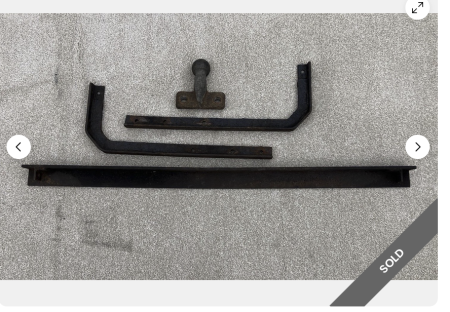
tow bar
by G Walker - 24/08/26 06:52 PM
|
|
|
Forums39
Topics49,836
Posts837,276
Members9,596
| |
Most Online1,063
Jun 14th, 2026
|
|
|
|
Joined: Mar 2009
Posts: 3,824 Likes: 69
Talk Morgan Addict
|
OP

Talk Morgan Addict
Joined: Mar 2009
Posts: 3,824 Likes: 69 |
Sorry if I was misleading. What I'm trying to learn is if renewables are actually cheaper from a factual stance. I don't doubt that taking advantage of gov grants and subsidies is a great strategy for the individual. But that doesn't, to me, equate with public figures claiming it is cheaper to produce energy that way. All those subsidies and grants have been financed by charging us all more. Rather like the gov push for "free" smart meters which we all pay for regardless of whether we actually have one.
A couple of the links above are really interesting reading but seem to me to skirt the issue of the actual costs. Even the brilliant in depth one relies on accounting procedures which don't reflect total reality. For instance, if wind generation is as cheap to maintain as stated why have California given up trying to keep their system running.
And why does it not take into account the massive costs of paying the Scottish windfarms not to produce?
I'm not an evangelist doom monger, I'd really like to learn some form of reality about the costs of energy production,
It's so convoluted
Nick
|
|
|
|
|
Joined: Dec 2009
Posts: 37,403 Likes: 977
Tricky Dicky Member of the Inner Circle
|
|
Tricky Dicky Member of the Inner Circle
Joined: Dec 2009
Posts: 37,403 Likes: 977 |
I agree with you. it's a lot of Political window dressing not based on reality i.e. hard commercial figures as only then can such statements hold up. We all know that as taxpayers we are the subsidy 
2009 4/4 Sport Henrietta
1999 Indigo Blue +8
2009 4/4 Sport Green prev
1993 Con Green +8 prev
|
|
|
|
|
Joined: May 2019
Posts: 389 Likes: 17
Learner Plates Off!
|
|
Learner Plates Off!
Joined: May 2019
Posts: 389 Likes: 17 |
The answer is still Do The Math. On my 151kw system, it pays for itself in 7 years instead of 5 without the 30% tax credit. With a life expectancy of 30 years, that beats buying from the grid no matter how you look at it. It's like a Buy One Get Four Free deal.
65 Plus 4 / 4 Seater, car addict
|
|
|
|
|
Joined: Apr 2014
Posts: 6,954 Likes: 115
Talk Morgan Sage
|
|
Talk Morgan Sage
Joined: Apr 2014
Posts: 6,954 Likes: 115 |
That would be the maths? Remember, it's mathematics, not mathematic.
Best Regards
Lang may yer lum reek
|
|
|
|
|
Joined: May 2019
Posts: 389 Likes: 17
Learner Plates Off!
|
|
Learner Plates Off!
Joined: May 2019
Posts: 389 Likes: 17 |
That would be the maths? Remember, it's mathematics, not mathematic. That's somewhat regional I would say. Calling it "maths" around here would confuse the audience! Admittedly easier to do on this side of the pond lately (think politics).
65 Plus 4 / 4 Seater, car addict
|
|
|
|
|
Joined: Jul 2007
Posts: 27,802 Likes: 749
Member of the Inner Circle
|
|
Member of the Inner Circle
Joined: Jul 2007
Posts: 27,802 Likes: 749 |
When we moved in 2018 I put up a second solar PV array. It cost fr less than the original but the feed in tarrif or gov support was far lower.
Where you save is on buying in kWhs.
My system on average generates 11.08 kwh per day. More on average than we consume but of course in winter we import in summer we export. But the saved income wihout FIT is £1.11 per day at today's cost of electricity. With the FIT that rises ot £1.92
That array cost £ 5300 so the non FIT payback is 13.1 years & with the FIT 7.6 years.
However I do have a switch that diverts exported power to heat hot water & that saves gas so say another £50 pa.
At the end of 2022 I installed 4.2kWh of batteries as the payback improved driven by sales cost for power going from 16 to 26p / kWh.
That has cost £3276 and saved over 2019 kWh or £627 in 567 days. So a payback of 8 years.
I have just moved to Octopus Flux which has 3 time slots for tarrifs both of supply & export. I now will load the batteries from 02 - 05:00 hrs so that we maximise exportduring the day & hopefully at peak cost in the evening i.e. load shifitng. That should bring another £100 or so savings.
I would say you should easily get below 10 years as a payback and as energy costs increase that payback will reduce.
JohnV6
2022 CX Plus Four
2025 Renault Scenic Alpine etech "Yvette"
|
|
|
|
|
Joined: Oct 2019
Posts: 5,586 Likes: 603
Charter Member
|
|
Charter Member
Joined: Oct 2019
Posts: 5,586 Likes: 603 |
Edwin ... 'Two countries divided by a common language' 😄 (can't remember who's quote that is?)
I reckon you're pretty well placed in terms of climate for your payback. .... as I look out of the window at leaden skies and the rain dripping off my solar array ... in June!! 🙂)
Domestic subsidies aside .... having been solely reliant on renewables for 35 years, the industry has always had a murky relationship with candour. In terms of the Big-Boys (who provide the power that comes out of Joe Average's sockets) both they and Government have an interest in avoiding informed scrutiny ... they may be altruistic and glossing things to get us past the 'teething' stage to where economies of scale improve the figures ... or maybe not! 🙂
I guess the only way you'd get hard, unvarnished, facts would be to pick a new development (there's some individual offshore projects just starting up here) .... as stand alone projects they will have books that will be in the public domain ... then get the sort of forensic accountant they send after organised crime and go through the lot, picking up all the subsidies, wheeling and dealing between group companies and tax breaks etc then comparing the bare commercial costs against returns from energy sales of their completed output.
Far too many hands in far too many pockets to trust much else 😄
K
|
|
|
|
|
Joined: Mar 2009
Posts: 3,824 Likes: 69
Talk Morgan Addict
|
|
OP
Talk Morgan Addict
Joined: Mar 2009
Posts: 3,824 Likes: 69 |
The problem for me now is that the savings of home generation above don't take into account the artificially raised price of the elec from the grid to the consumer. Artificially raised to fund the green argument going forward.
So, is what I need....or maybe should I clarify my inner question....
A. The cost of production of, say, 1KW hour of a solar array and taking into account the percentage of the 24/7/365 that achieves. V
B. The cost of production of 1KWH from a gas powered power station...V
C. The cost as above from a nuclear source.
It's the cost of production, i.e. the cost to society as a whole, rather than the cost to any one person that I'm chasing.
Is it actually cheaper as Sir Starmer claims or should he be saying something like "sorry folks it's going to cost more than using gas etc. but it's just what we need to do so suck it up" which, to me, would be totally acceptable if it was honest.
Last edited by nick w; 09/06/24 02:42 PM.
|
|
|
|
|
Joined: Jan 2019
Posts: 938 Likes: 46
Talk Morgan Regular
|
|
Talk Morgan Regular
Joined: Jan 2019
Posts: 938 Likes: 46 |
these are exactly the numbers you find in the text poted by BertR
1973 2CV AK400 Ralley
1985 plus 4 four seater
1992 Peraves ecomobil
bicycles (pedersen to recumbent)
|
|
|
|
|
Joined: Mar 2009
Posts: 3,824 Likes: 69
Talk Morgan Addict
|
|
OP
Talk Morgan Addict
Joined: Mar 2009
Posts: 3,824 Likes: 69 |
these are exactly the numbers you find in the text poted by BertR Not really, as I see it. Firstly it's an article written by one man in 2020, not a study. Secondly the claimed costs of a unit of renewable electricity are ludicrous today, let alone back in 2020 Thirdly, the article does not mention that the vast proportion of the renewables used to support the argument are from hydro power, something unusable for most countries, especially UK. Looking at his updated article (2021 I think) is more revealing of his data...https://ourworldindata.org/renewable-energy However, it was educational, but I'm still looking....
Last edited by nick w; 10/06/24 02:23 PM.
|
|
|
|
|