|
8 members (John V6, MATTMOG, Neville1, +8Rich, Sir Percival, TalkMorgan, TBM, Ian Wegg),
226
guests, and
84
robots. |
|
Key:
Admin,
Global Mod,
Mod
|
|
Wales
by Joske Vermeule, September 1
|
|
|
|
|
|
|
|
|
|
|
Forums39
Topics49,867
Posts837,624
Members9,596
| |
Most Online1,063
Jun 14th, 2026
|
|
|
|
Joined: May 2017
Posts: 58 Likes: 4
Just Getting Started
|
OP

Just Getting Started
Joined: May 2017
Posts: 58 Likes: 4 |
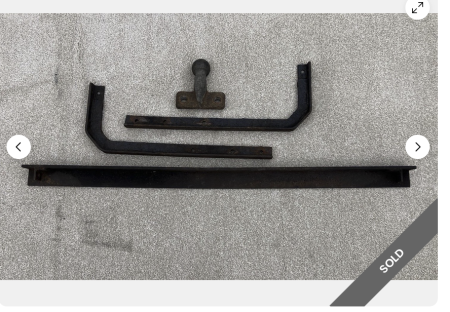
Update: I've taken out the PRV, it came out easily, so was not stuck! See picture of old and replacement, tadpole from JED....plus a couple more Questions... 1.Spring is slightly longer, is that ok to fit? 2. As the 'thimble' was free so probably not the issue, says i have to 'prime' the pump? So......can I do that by pumping oil up the tube for the PRV? Its on a 45 degree upward incline so I'm thinking oil will run straight out unless i can seal the exit in some way? Appreciate your collective thoughts? PS Melvyn Rutter are out of stock on the oil gaskets, so dismantling the whole pump and using vaseline will have to wait for a while.... https://ibb.co/SX7M7Ygvhttps://ibb.co/0yPPXzxxhttps://ibb.co/j94B3MjBhttps://ibb.co/b5R7jyPV
|
|
|
|
|
Joined: Jul 2019
Posts: 5,447 Likes: 469
Charter Member
|
|
Charter Member
Joined: Jul 2019
Posts: 5,447 Likes: 469 |
At a guess, it may not be the length of the spring that counts but the pressure it applies to the bullet..? Logic would dictate that the aftermarket manufacturer of the new pressure relief kit you bought would know what poundage set up was required for a Rover V8 relief valve..
Never having tried to pressurise the Rover V8 via the pressure relief valve, I can only suggest again.... It may just be possible that if you make use of a pump feed oil can filled with engine oil, and hopefully a flexible nozzle tube may just provide you with access to the oil galleries.
HOWEVER, with the bullet/tadpole removed, it seems obvious that you will have opened up not only access to the oil gallery, but also the orifice through which the over pressured oil would normally drain..?
The above is why I suggested IF possible removing the oil pressure sensor as being my choice. All assuming access to introduce oil is possible at it`s location relative to all else around it.
Again using logic and no more. It would seem the oil gallery as opposed to the drain to sump within the oil pressure relief valve would be acting on the nose of the bullet/tadpole, which would be directly in line with the line of the spring..
Again assuming the nose of the oil can can fit inside the bullet`s housing and make direct contact with the gallery drilling, then I fully expect you will be able to introduce enough oil to the pump to prime it. and if you wished as an extra guide, you had someone with the ign switched on they could perhaps see the oil pressure gague needle rising..?
Against the above would be if you could only get the nose of the oil can into the start of the pressure relief valve orifice, which would then cause whatever oil you were able to pump in with two routes of escape, one being the target gallery and the other the relief passageway.... That typed you may even by that slightly flawed process introduce enough oil to the gallery to prime the pump...?
As for sealing while pumping oil... When I first tried this process in my yoof, as i previously typed I used a bit of rag wound tound the oil can nozzle jammed into the oil pressure relief valve assembly to cut down on the mess and help reduce pressure loss created by the pump action of the oil can.... It worked for me..
Wishing you the best of luck Jeremy..Fingers crossed..
|
|
1 member likes this:
jeremylparker |
|
|
|
|
Joined: May 2017
Posts: 58 Likes: 4
Just Getting Started
|
|
OP
Just Getting Started
Joined: May 2017
Posts: 58 Likes: 4 |
Thanks Luddite, agree with the comments on the new spring, done a trial fit and all seems good. I'look to get at the oil pressure take off instead but seems a tight fit with the side bulkhead. I've got an oil can with flexible hose arriving tomorrow, will figure out best way to pack / seal the aperture of the PRV (or oil pressure take off) and give it a go! Fingers crossed as you say!
|
|
|
|
|
Joined: Jul 2019
Posts: 5,447 Likes: 469
Charter Member
|
|
Charter Member
Joined: Jul 2019
Posts: 5,447 Likes: 469 |
No harm in trying the PRV access as you already have that out, and are aware that ideally the nozzle of the oil can fits inside the orifice left to the extent that the nose of the nozzle might make direct contact with the gallery thus reducing possible leakage of pressure into the over pressure drain... HOWEVER, as I typed earlier even if you loose some oil through leakage to the drain, dependant on which has the least line of resistance to the passage of oil, it seems likely that you may well still prime the pump for it to be able to suck up oil from the sump to then create pressure in the system once the engine is spun over..by whichever method you choose...
Looking forward to reading that all is well...
|
|
|
|
|
Joined: May 2017
Posts: 58 Likes: 4
Just Getting Started
|
|
OP
Just Getting Started
Joined: May 2017
Posts: 58 Likes: 4 |
Update: oil can arrived late on Friday and was raining yesterday (i need to push the car out of a tight garage and onto the drive to work on it safely) so tried to make progress this morning.
1. Found the gauge sender and when disconnected the gauge goes 'full', so guess that rules out any gauge issues.
2. Got access to the take off, quarter run at a time to initially undo, but far better to go in vertically, filled with oil, did not take much perhaps 100ml, then ran with no sparks for 30 seconds - nothing registered on the gauge.
3. Next step with try and refill through the same take off then seal / pack to be able to add more pressure and get more oil into the pump and also see if the gauge moves at all.....perhaps would it be worth letting it sit for a while to drain into the pump more?
4. if that fails its the disassemble the pump and vaseline.....but that will be next month due to time / travel etc.
|
|
|
|
|
Joined: Jul 2019
Posts: 5,447 Likes: 469
Charter Member
|
|
Charter Member
Joined: Jul 2019
Posts: 5,447 Likes: 469 |
Sorry to read your initial efforts did not progress things other than proving the gauge to some degree.. That you spun the engine without firing it up was perhaps the safest option. When using the oil can did you jam it into the orifice and pump till you felt pressure building in the oil can`s pumping system...?
Wishing you the very best of luck..
|
|
1 member likes this:
jeremylparker |
|
|
|
|
Joined: Nov 2006
Posts: 921 Likes: 47
Talk Morgan Regular
|
|
Talk Morgan Regular
Joined: Nov 2006
Posts: 921 Likes: 47 |
Update: oil can arrived late on Friday ...... filled with oil, did not take much perhaps 100ml, then ran with no sparks for 30 seconds - nothing registered on the gauge.. A couple of points Jeremy... 1. For what it is worth, all mechanics, amateur and professional, have favourite tools, whimsically chosen. I have both an oil can (pump type of course) and a clear syringe with markings. For this task, I prefer the latter as I see/measure the contents and the plunger allows me to pressure the contents to any degree I feel called for., I can also use it to suction liquids. I find it odd that you could not fill it more than 100ml. That seems no more than the capacity of oil relief valve passage. Luddite? 2. As you know, these engines (prior to the GEMS/Motronics variants), have low oil pressure in original format At idle, it can be as low as 12 and you did not get to idle. As well,especially after a lost prime, it can take time to show. Frankly, as much as we have hopes for this way of priming, if you have fears, move directly to the Vaseline. 3. CODICIL: I work this morning with a memory of one of my first repairs (with my late 1984 Plus 8 EFI) more than 30 years ago. All pre-GEMS and Motronic LR/Rover V8s stock originals have your/our oil original oil systems. Not the most solid system (later changed to a crankshaft-driven oil pump with other sadder weaknesses). Ours start with a nylon covered aluminum sprocket that holds a notorious timing chain. These components stretch and stress the camshaft, prejudice the timing and cause premature camshaft wear. (actually the original 1984-1986 Vitesse EFI camshaft is surprisingly good, better than most popular aftermarket fast road camshafts) . As well, the system (all engines) causes the interface gear to fail with its teeth coming off behind the timing cover. No warning sign other than some odd noises from the timing cover for a short period, that you cannot hear with the engine turning and the oil pump stops turning. It was very early on in my Morgan life.pre-GoMoG..but I touched upon it. https://www.gomog.com/allmorgan/camwear.htm The various damage manifestations can be avoided by moving to a duplex chain. I have used them on all my Plus 8s for the last 400,000+ kms. I mention this only as I don't want you to get to a point where you are dismayed, not because you are proceeding wrongly. It requires the removal of the timing cover which can be done with the engine in situ and if you are there anyway... Lorne P.S. I am still curious. At the time, Morgan offered two options for Plus 8s, EFI or carb. Which do you have?
|
|
1 member likes this:
jeremylparker |
|
|
|
|
Joined: May 2017
Posts: 58 Likes: 4
Just Getting Started
|
|
OP
Just Getting Started
Joined: May 2017
Posts: 58 Likes: 4 |
I pumped oil in until it was full and then came out of the top of the hole.
I've refilled about the same amount again now and I'm leaving until tomorrow to see if the level has dropped, then may add more, see if that helps before another attempt.
Also thinking to acquire and adapt another screw in unit to allow a feed tube to be applied and set it up like a 'hospital drip' with an oil container held above the engine to add pressure and then turn over the engine to get oil round key parts? Thoughts?
|
|
|
|
|
Joined: May 2017
Posts: 58 Likes: 4
Just Getting Started
|
|
OP
Just Getting Started
Joined: May 2017
Posts: 58 Likes: 4 |
I am still curious. At the time, Morgan offered two options for Plus 8s, EFI or carb. Which do you have?[/quote]
Its an EFI car...
|
|
|
|
|
Joined: Jul 2019
Posts: 5,447 Likes: 469
Charter Member
|
|
Charter Member
Joined: Jul 2019
Posts: 5,447 Likes: 469 |
T`was bugging me while I was engaged making and eating my evening meal that your attempt to prime the pump seems not to have been successful (assuming pump loosing prime might be the issue?).
Lorne I very much doubt that the oil pressure relief valve would be forced off it`s seat during the attempt to prime the pump using an oil can, in the assumption it had been rebuilt and is seating correctly in it`s housing..
My thinking is currently that Jeremy`s description of removing the oil pressure sensor a fraction of a turn at a time relative to spanner access, caused me to then imagine how much time had passed prior to him replacing the sensor and then turning the engine over.... which may have been enough time for the small amount of oil he pumped into the system to drain back out of the pump gears to drain off down into galleries with little to no oil in them for quite some time, thus perhaps the pump still failed to suck oil up from the sump... ?
As I typed I have not tried this method on a Rover V8 and on both occasions I used it the issue was resolved... Were I involved directly I would ensure that I was able to feel pressure building in the oil can pumping mechanism, and given the description of events I would minimise the time between the last pumping action and screwing in the oil pressure sensor ( if that was the access point used) by just quickly screwing it in a few threads i.e. hand tight, before spinning the engine over, thus hopefully minimising the time available for it to drain past the oil pump gearing...?
I suspect much depends upon the routing of the galleries within the oil pump relative to least line of resistance,and that is why I suspect it is important to pump as much oil in as possible and in as short a time as possible prior to closing off the galleries...?
As I typed I used oil pressure relief removal on the side of the block of both engines I used this process on, thus there was obviously alternative routes for the oil I was feeding into the system to chose to flow, regardless of that in both cases oil pressure was restored when the engines were spun over, in one case to see the oil pressure needle dropping down and in the other for the oil pressure warning light to extinguish..!
If indeed the the oil is draining off before the orifice used to introduce it is sealed off, then perhaps before stripping the pump off to grease the gears, a thicker oil might be used in the oil can, thinking hypoy or similar axle lube..?
If that might prove successful, perhaps best to then perform an oil change, and hopefully by that time only replacing with a new filter initially filled with fresh engine oil, turning the engine over to confirm pressure restored, prior to warming the engine up and draining and refilling the sump, before once again confirming pressure has been restored.... Fingers crossed..?
As before, hope this helps and does not muddy the water.... ?
|
|
1 member likes this:
jeremylparker |
|
|
|
|