|
6 members (Graham, G4FUJ, Paul F, RichardV6, Themorganeer, cerealsurfer, verysideways),
292
guests, and
62
robots. |
|
Key:
Admin,
Global Mod,
Mod
|
|
|
|
|
|
|
|
|
|
|
|
|
|
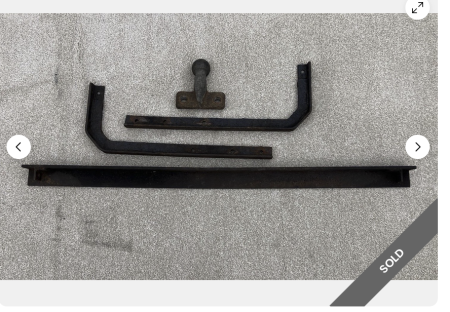
tow bar
by G Walker - 24/08/26 06:52 PM
|
|
|
Forums39
Topics49,836
Posts837,266
Members9,596
| |
Most Online1,063
Jun 14th, 2026
|
|
|
|
Joined: Apr 2015
Posts: 237 Likes: 1
L - Learner Plates On
|

L - Learner Plates On
Joined: Apr 2015
Posts: 237 Likes: 1 |
Glad you enjoyed the Caterham video as that's my sons car. He was surprised it came up with that figure, wasn't expecting it.
Out of interest the first owner of the car, which was built for him, was Chris Hoy; maybe they tweaked the engine a bit..........
Dave
2015 4/4 Royal Ivory
2019 Fiat 500C
2019 Volvo V40 T3R
|
|
|
|
|
Joined: Jun 2022
Posts: 1,042 Likes: 148
Has a lot to Say!
|
|
OP
Has a lot to Say!
Joined: Jun 2022
Posts: 1,042 Likes: 148 |
Cool  From what I've read most 420's make the full 210hp, and aparently many make more, but 224hp on the standard Caterham short runner inlet is a very strong number indeed 👍 I'd love to study the dyno graph, and especially the torque curve, in detal 
|
|
|
|
|
Joined: Jun 2022
Posts: 1,042 Likes: 148
Has a lot to Say!
|
|
OP
Has a lot to Say!
Joined: Jun 2022
Posts: 1,042 Likes: 148 |
Regarding the earlier comments touching on the subject of cam/valve timing, as Monty is predominantly a road car, and I'm now moving to Phase 3 cams, it's likely there may be some benefits waiting to be enjoyed by dialling in the valve timing a few degrees either side of Newman's suggested numbers? On the Phase 2 cams, I've been able use the excellent idle management features within the EMU Black software to dial in a super clean 'drum roll' idle at 970rpm, closed loop ignition timing (scatter spark) and PID idle air control valve management helped me give Monty truly superb idle quality. I've been especially proud of this as idle tuning is one of the big challenges when fitting a more progressive camshaft profile. However, before I pat myself on the back too hard, the truth is the Newman Phase 2 cams really aren’t that aggressive at all. Idle tuning is also greatly helped by my choice to use the Fusion Fabrications long runner inlet and steadfastly refusing to follow the herd by fitting ITBs that present many additional challenges in this area, challenges people selling the itb dream conveniently fail to tell you about. While I will be continuing to use with the excellent long runner inlet with its well sized plenum and IACV, I am now taking valve timing to the next step by fitting Phase 3 cams. These Phase 3 cams are proper fast road spec so have more lift, more duration, and importantly more overlap too, all of which introduce additional challenges if I want to maintain Monty's refined idle quality. However, there are a few tricks we can implement that can significantly help, for example: 1. Retarding the exhaust cam slightly by 2 degrees will recover some of the idle quality as it effectively moves the onset of valve overlap above our new and very slightly lifted target idle speed of 1,000rpm, and couls also improve urban drivability at the low engine speeds seen during town driving 2. Advancing the inlet cam 3 degrees from Newman's recommended number, will also certainly give Monty even more mid-range punch. This doesn't come for free of course as these valve timing stratergies will mean power will fall away earlier in the rev range. Being completely honest with myself about how I use the car, I'm perfectly happy to trade 5-10hp or so at the top end for a strong pull in the 3,500rpm - 5,000rpm window to further enhance real world overtaking on the road. There's also good evidence to suggest if we time the PH3 cams as recommended, the engine will continue to make power all the way to 7,800rpm! In reality this is pretty wild for a street driven car, the top end power loss I'm proposing through the above small valve timing tweaks is also partly irrelevant anyway as I plan to limit the engine to 7,500rpm. I need to be honest with myself about how often I will really take monty over 7,300rpm on the road, personally I think we'd be better off trading 5-10hp at the top end for a stronger mid-range pull, I'm still on standard rods and pistons so setting the rev limiter to 7,500rpm makes a lot of sense for engine reliability. At the end of the day, what we’re creating here is effectively a Caterham 420 engine, but with further tuning via the ported big valve head. We are then dialling it back a fraction using the long runner inlet and less radical cam timing, the idea being to trade a bit of wild top end power for a far stronger pull in the mid-range. Well, that's the theory
Last edited by Montegue; 14/04/26 09:39 AM.
|
|
1 member likes this:
Paul F |
|
|
|
|
Joined: Jun 2022
Posts: 1,042 Likes: 148
Has a lot to Say!
|
|
OP
Has a lot to Say!
Joined: Jun 2022
Posts: 1,042 Likes: 148 |
Update chaps! I've just pulled the trigger on a set of Mahle motorsport big end bearings for Monty. ![[Linked Image]](https://i.ibb.co/NgJK1VB5/Screenshot-20260416-190037-Chat-GPT.jpg) Mahle motorsport bearings are... * Tri-metal (steel + copper/lead + overlay) * Designed for high load + high RPM environments The standard Ford aluminium bearings are fine for the mains, but now Monty can rev to 8,000rpm aluminium bearings on the big ends are not going to cut it. And obviously, with the caps being cracked now to fit the main bearing upgrade, it makes sense to button the bottom end back up with a set ARP rod bolts, these to match the ARP head bolts being used. ![[Linked Image]](https://i.ibb.co/Qjtvsx5M/Screenshot-20260416-191420-Chat-GPT.jpg) * Made from ARP2000 alloy steel * Around 220,000 psi tensile strength * Up to ~20× better fatigue resistance than standard bolts I continue with my plan to limit the engine to 7,500rpm, the above are there for additional peace of mind  I've also now consulted James at M2R Motorsport on my cam timing theory, he 100% agreed in principle but recommend a less agressive aproach: 1. Retard the exhaust cam by only 1 degree to recover some of the idle quality by effectively moving the onset of valve overlap above our new and very slightly lifted target idle speed of 1,000rpm. This small 1 degree change over the Newman cam timing figures will also improve urban drivability at the lower engine speeds used during town driving 2. Advance the inlet cam also by just 1 degree from Newman's recommended number, this is to give Monty even more mid-range punch but allow the engine to still keep making power ot to 7,500rpm. I neither need or want to go to the 8,000rpm potential, so let's dial it back a fraction to trade ultimate engine speed and horsepower for more mid range torque. Dave.
Last edited by Montegue; 16/04/26 06:54 PM.
|
|
1 member likes this:
Paul F |
|
|
|
|
Joined: Jun 2022
Posts: 1,042 Likes: 148
Has a lot to Say!
|
|
OP
Has a lot to Say!
Joined: Jun 2022
Posts: 1,042 Likes: 148 |
To further explain the reasoning behind my decision to upgrade the big end bearings and rod bolts.... As we look to take Monty's little 2.0 four banger past 200hp, the loads seen by those standard Ford silicon aluminum big end bearings will be higher than they were ever designed for! Ford designed the Duratec well, actually its really a Mazda engine and I strongly suspect Yamaha designed the cylinder head, as such it has huge potential to make more power than Ford intended. The hard silicon aluminum bearings they chose are actually excellent for long service life, but they're extremely unforgiving if you take the rod loads transferred to the big ends above the design limits of silicon aluminum bearings. The highest horsepower figure Ford ever quoted for the Duratec was 170hp, Ford always test components to ensure they survive 20% more than their highest output number, so I strongly suspect those silicon aluminum bearings will be fine up to a maximum output of 204hp. However, as you know we're now looking to make more than 204hp, in the new stage 3 state of tune Monty will be living on the wrong side of the edge of it being necessary to upgrade the big end bearings from silicon aluminum to tri-metal. The ARP rod bolts are probably completely unnecessary, but they do become a no-brainer because as we're now changing bearings, the rod bolts will need to be replaced too, so we may as well fit ARP! If we don't change the big ends now, it's highly likely we will end up running those silicone aluminum bearings at 5% above their absolute maximum design limit, and if I do decide to fit ITBs in the future Monty could easily make as much as 245hp! That's an estimated 20% over the design limit of the standard silicon aluminum bearings, so for peace of mind and to cover future power increases I think paying the extra £350 for ARP rod bolts and the softer more forgiving Mahle Motorsport tri-metal bearings, makes a lot of sense. They don't have the 200,000 mile durability of the standard hard silicon aluminum bearings, but they should last at least 100,000 miles, at my current 5,000 a year Monty use that's 20 years, at which point I'll be 76 years young and probably looking to drive something a little more refined than a fast road tuned Trad chassis Morgan! 
Last edited by Montegue; 17/04/26 08:06 AM.
|
|
|
|
|
Joined: Jul 2011
Posts: 1,242 Likes: 30
Has a lot to Say!
|
|
Has a lot to Say!
Joined: Jul 2011
Posts: 1,242 Likes: 30 |
Montegue, careful of pushing the duratec beyond its design limits. watch Valve Fail you will need to watch it till Donnington (I think). Not that I know, but 245hp & 8000rpm, must be getting above the con rods design capability.
Last edited by IcePack; 17/04/26 06:46 PM.
4/4 Ivory 4.1:1 axle, Mercedes A200 AMG
|
|
|
|
|
Joined: Jun 2022
Posts: 1,042 Likes: 148
Has a lot to Say!
|
|
OP
Has a lot to Say!
Joined: Jun 2022
Posts: 1,042 Likes: 148 |
Despite what the internet says, I'm reliably informed the standard rods in a Duratec are not the weak point, it may appear that standard rods in a Duratec exceeding 235hp are failing, but I'm told a closer forensic examination of the engine internals will typically reveal it was actually the standard Ford hard silicon aluminium bearings that gave out first. As rod load increases the big end bearing can momentarily touch crank journal as the oil film strength is overcome, this despite the hydraulic wedge effect that should ensure the bearing is always kept separated from the journal by that film of oil. Valve float can also be an issue at higher engine speeds, I'm managing this on Monty by using 180lb beehive springs, I've been running these for the last 3 years now and despite the Phase 2 cams falling over at 6,500rpm, I have buzzed Monty's Duratec above 7,500rpm many times. The 180lb valve springs definitely do their job brilliantly, back in the day we'd use double valve springs for high rpm engine builds, however, these days instead of running inner & outer springs a single beehive spring is preferred as it provides similar control with a lot less mass, friction, and heat. ![[Linked Image]](https://i.ibb.co/7JJHX7mQ/Screenshot-20260418-070829-Chat-GPT.jpg) Running beehive valve springs also means you have fewer components to fail when compared with a double valve springs, and its conical shape results in a smaller lighter retainer, anything you can do to remove mass from your valve train improves efficiency and solves a host of undesirables too. Valve float happens when inertia overcomes spring force, by reducing inertia, you’re effectively helping the spring win without needing to run absurdly high spring rates/seat pressures. Beehive springs also naturally create a more progressive (non-linear) spring rate, the coils at the top (smaller diameter) are more flexible while the lower coils (larger diameter) are stiffer. As the spring compresses the softer upper coils compress first, then the stiffer lower coils engage which gives better control during initial valve opening/closing and strong resistance near full lift where float is most likely. Traditional straight springs can, and often do, suffer from unwanted and uncontrolled harmonics. Basically, the spring oscillates at certain frequencies, which can cause valve bounce and loss of control even if spring pressure is sufficient. Beehive springs help here because each coil has a slightly different diameter, this produces different natural frequencies along the spring so resonance can’t build uniformly and the result being more stable behaviour across a wider RPM range. Of course, the best way to mitigate risk is simply to avoid the risky behaviour in the first place, just because Monty's Duratec will have the capacity to rev out and keep making power all the way to 8,000rpm if I use individual throttle bodies, doesn’t mean that's what we're going to do. My persistence with the Fusion Fabrications long runner inlet is all about delivering on my design brief that centres around the core objective of creating a street friendly engine that makes good horsepower, but more importantly a really broad spread of torque from idle to an absolute maximum of 7,500rpm. The Fusion Fabrications long runner inlet will actually limit power over 7,500rpm, this combined with some valve timing tweaks where we are advancing the inlet cam by 1 degree and retarding the exhaust cam also by 1 degree from Newman's base number, will all come together to effectively become their own rev limiter. Obviously, I will also be running my true ignition based 7,500rpm soft rev limiter strategy, and a hard rev limiter at 7,650rpm, but the long runner inlet manifold and the valve timing tweaks will certainly help here too. So in summary, the plan is to limit the engine to 7,500rpm but then build it as if we are taking it to 8,000rpm! To this end, we are fitting Mahle Motorsport PTFE coated tri-metal big end bearings, ARP rod bolts, and moving my 180lb beehive valve springs across to the new ported big valve head. The idea is to mitigate risk by never going into the danger zone, but then completely removing all risk by building Monty's Duratec to be 8,000rpm ready  Here's the latest projected dyno graph that shows how we hope the small, but significant in influence valve/cam timing changes will increase torque towrads the end of on-street overtaking events at the expense of a few horsepower over 7,500rpm, an area we won't be visiting anyway  ![[Linked Image]](https://i.ibb.co/ccrXCgmN/Messenger-creation-822-FAB5-B-F921-4-C46-A7-D7-3-E07-CB67652-A.jpg) With the proposed 1 degree adjustments around Newman's base timing settings, peak torque actually arrives 1,000rpm higher up the rev range. Initially this looks like we've delivered the very opposite of what we are trying to achieve, especially as that peak torque number is 2 ft/lbs lower than the suggested base timing. Interestingly, despite making the changes, both timing settings actually deliver exactly the same torque from idle to 5,000rpm, so we've neither gained or lost any torque. However, as the engine passes 5,000rpm and reaches 6,000rpm, by making our minor 1 degree adjustments we magically produce another 12lb/ft of torque in that zone. Of course, this isn't magic at all, what we've done is simply hold cylinder pressure inside the combustion chambers a little longer, and before we open the exhaust valves to let it out to atmosphere. The real genius here is we'll actually sacrifice nothing for this meaningful gain; this is because any horsepower lost would exist above our self-imposed 7,500rpm rev limit, a place the engine will never visit. Despite our gain only existing in a 1,000rpm window between 5k & 6k, in a car that only weighs roughly 930kg you're definitely going to feel that additional 12lb/ft! It also now makes perfect sense to hold onto the gear a little longer before changing up, this ultimately translates to more punch during overtaking manoeuvres on the road. This 'win win nothing lost' result makes the strategy of advancing the inlet cam by 1 degree and also retarding the exhaust cam by just 1 degree from Newman's recommended numbers an absolute no-brainer, especially given our objective is to create a street friendly engine that makes good horsepower, but more importantly a really broad spread of torque from idle to an absolute maximum of 7,500rpm. 
Last edited by Montegue; 18/04/26 09:11 AM.
|
|
1 member likes this:
Paul F |
|
|
|
|
Joined: Jun 2022
Posts: 1,042 Likes: 148
Has a lot to Say!
|
|
OP
Has a lot to Say!
Joined: Jun 2022
Posts: 1,042 Likes: 148 |
Not Monty, but here's a short video to show you the upcoming big end bearing upgrade, we see James at M2R Motorsport hard at work finishing off the bottom end on one of his mighty 300hp Duratec builds. https://youtube.com/shorts/i5hTUbfpnlU?si=mq32fZlrBAhWOBDsAs we all know, you've gotta have a strong bottom end
|
|
|
|
|
Joined: Jun 2022
Posts: 1,042 Likes: 148
Has a lot to Say!
|
|
OP
Has a lot to Say!
Joined: Jun 2022
Posts: 1,042 Likes: 148 |
While all these dyno predictions are fun, one less exiting element of making sure tuning Monty to the next stage doesn’t end in disappointment, is the part of my brief that dictates… ”I must retain Monty’s sweet idle quality I’ve worked so hard to achieve” . The truth is over the last 30 years we've all become very used to flawless OEM levels of idle quality with our daily driver cars, so this ends up being the minimum standard we're prepared to accept, back in the day we all put up with a lot of poor engine behaviour we just wouldn't accept today. At this point in the tuning process, I'm relatively confident we’re on the right track to give Monty roughly 200hp and a nice broad spread of torque, but I do anticipate some challenges ahead if I don’t want to compromise on idle quality. As with all challenges in life, I always feel it’s best to anticipate and create a plan to overcome them in advance. Below are the four key challenges we will face in getting Monty to idle nicely in his next state of tune, I have also listed how I'm planning to overcome each one. 1. An Unstable MaP Signal - Largely the function of the Newman Phase 3 cams. The ECU relies heavily on the MaP signal for my fuel and ignition tables to deliver good results, but also for the effective opperation of the PID closed loop and ignition timing based idle management strategies, an unstable MaP signal is therefore always a bad thing for idle quality! The Solution - Replace the current MaP referenced Speed Density engine load calculating strategy twith a TPS referenced Alpha-N strategy, but only at idle and during low speed driving (0-5% TPS) and this purely to provide the ECU with a more stable reference to work with. After 5% TPS we will blend back smoothly to the MaP referenced engine load calculating VE (fuel) and ignition tables. 2. Reduced Exhaust Gas Velocity - This is not good for idle quality and low speed driving and again is largely the function of the Newman Phase 3 Cams. However, our decision to take the head further than the A.L Developments recommended the 38mm on the exhaust ports certainly won't help. Being honest, in terms of idle quality we've actually made it harder for ourselves by bringing the exhaust ports out to 40mm, but the bigger ports will give more torque and horsepower over 3,500rpm, and especially from 5,000rpm all the way to the new self-imposed 7,500rpm engine speed ceiling, so we're definitely going with 40mm. The Solution - Our cam/valve timing strategy detailed below in point 4 will have the biggest positive impact here, but by going no larger than 40mm we have still retained a 1.6mm anti-reversion lip on the primaries, this lip will help to mitigate the negative impact overlap has on idle quality and slow speed drivability by acting as a barier to limit revertion pulse driven exhaust gases coming back into the combustion chamber where they'll promote a less stable burn cycle. 3. Port Size Imbalance - Enlarging the exhaust ports to 40mm and the subsequent loss in gas speed has already been covered above, however number 4 exhaust port is massive compared to the other three as it includes the exhaust gas recirculation void. While I have long since deleted the EGR system by blanking it off, the giant void remains and effectively doubles the size of number 4 exhaust port, this port size imbalance is not going to help idle quality. The Solution - TiG weld up the void, this will be completed prior to the head going to the mill for all four 38mm exhaust ports to be enlarged to 40mm. In reality the EGR void probably only has a small impact on idle quality, but every little helps and by port matching the head on the exhaust side to match what A.L Developments achieved on the inlet side of the head will certainly give further gains in torque and horsepower over 3,500rpm, and especially from 5,000rpm all the way to 7,500rpm. 4. The Newman Phase 3 Cams - These cams are really the biggest enemy of a refined idle, unlike my current mild Phase 2s I've been running for the last three years, the new Phase 3s are now far more your traditional 'Fast Road' camshaft specification, they deliver quite a step up in valve overlap which is never good for idle quality. The Solution - Advance the inlet cam by 1 degree to move the overlap away from the target idle for less exhaust contamination within the combustion chambers especially with the lower gas velocity we've introduced by bringing the exhaust ports out to 40mm. The effect of advancing the inlet cam by just 1 degree from Newnan’s base settings should ultimately deliver a more stable burn cycle that will promote significantly improved idle quality. The rest is all really down to the way we calibrate the excellent closed loop idle management features within my EMU Black ECU, I used these features to great effect to deliver a beautiful 'drum roll' 970rpm idle on my Phase 2 cams. However, I strongly suspect even if we full optimise the potential of the PID IDACV management and ignition based idle management strategies, and even after implementing the above four solutions, I think it's highly unlikely I will be able to keep my 970rpm target. Maybe I'm wrong and we'll be able to get Monty's fully warmed Duratec to 'purr like a kitten' at 970rpm on the Phase 3 cams after all? However, to be honest if we end up having to settle on 1,100rpm or anything a little below I really don't have any issues with that, what I 100% will not accept is any lope, hunting or choppiness. Wish me luck with this one chaps
Last edited by Montegue; 19/04/26 01:20 PM.
|
|
1 member likes this:
Paul F |
|
|
|
|
Joined: Aug 2010
Posts: 5,464 Likes: 171
Charter Member
|

Charter Member
Joined: Aug 2010
Posts: 5,464 Likes: 171 |
Looking forward to the results.
Paul
Costock, UK
Plus Four 75th - Furka Rouge - Pip
Disco 5
Teddy - 17h1 Irish Draught cross
|
|
|
|
|