|
7 members (CooperMan, Detlev V6, BLUE+4, PJH, Pigiron, G Walker, Gordon D),
291
guests, and
66
robots. |
|
Key:
Admin,
Global Mod,
Mod
|
|
|
|
|
|
|
|
|
|
|
|
|
|
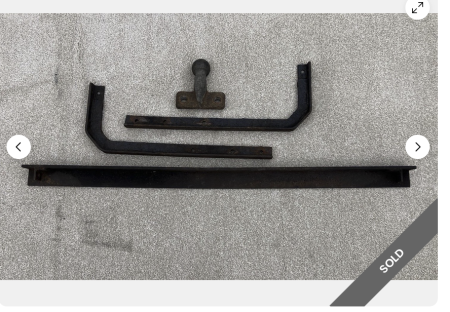
tow bar
by G Walker - 24/08/26 06:52 PM
|
|
|
Forums39
Topics49,836
Posts837,264
Members9,596
| |
Most Online1,063
Jun 14th, 2026
|
|
|
|
Joined: Apr 2024
Posts: 117 Likes: 21
L - Learner Plates On
|

L - Learner Plates On
Joined: Apr 2024
Posts: 117 Likes: 21 |
Hi Richard I don't know whether what follows will be of any help. A while ago I had a 2004 Ford fusion which was fitted with a Duratec engine. On very rare occasions the odometer or clock display, I can't remember which, showed a scrolling message saying “Throttle sensor error” and the car would drop into limp mode. So limp the bloody thing would not climb the hill where we live. Like you the fix was to cycle the ignition off and back on again and all was well for another year or so. I decided to look into the problem and perhaps clean the pot tracks. The sensors at the throttle body looked to be sealed so I left that alone. I removed the throttle pedal but that was sealed also. While the pedal was out I made some ohm measurements between the six terminals and recorded the results for future reference. The sketch diagram shows what I found. Bare in mind the parallel resistors shown across the pot networks were calculated from the resistance measurements and might be all wrong. I could only prove that, by opening the enclosure, but did not want to destroy the pedal. The pedal was refitted but the fault re-occurred in the fullness of time but still very rare so I decided to live with it. Some time later completely separate and unrelated to the above the MIL light came on with fault code P0301 cylinder 1 misfire. This would occur once or twice in about 50 miles and was a single blip as if the misfire was only a one off and not continuous.. The only thing that was consistent was it would occur when the engine was under load either accelerating or attempting to maintain a constant speed up hill. I changed the plugs and plug leads but still had the fault I thought it might be fuel so I removed the injectors, built a rig so that I could fill a chamber connected to the injector with carb cleaner, pressurised with an air line to about 50psi. I then pulsed the injector repeatedly with a circuit I built to look at the spray pattern. Cylinder 1 injector performed exactly as the others and they all looked good. So like you I removed the throttle body and cleaned it thoroughly. All to no avail. I finally found the fault was, a difficult to see hair line crack in the coil pack near cylinder 1 HT o/p terminal. I replaced the coil pack and that fixed the misfire problem. The point of all of this is that after doing all the above trying to trace the misfire problem, coincidently the throttle sensor fault never came back for the eight years I owned the car thereafter. So you may be onto a good thing. ![[Linked Image]](https://www.tm-img.com/images/2026/04/13/Ford-throttle-pedal.jpg) Regards Tony [
|
|
|
|
|
Joined: Feb 2016
Posts: 8,655 Likes: 407
Needs to Get Out More!
|
|
Needs to Get Out More!
Joined: Feb 2016
Posts: 8,655 Likes: 407 |
Thanks for report on your investigations Tony which confirm the redundant/error checking logic used by most DBW engines. Typically the two potentiometers produce a rising and equal falling voltage around a reference in the region of 5 volts, as accelerator is pressed. These two signals when added should naturally equal the reference voltage and will throw an error code if not, P2135 in my case. The two throttle position sensors at the throttle body end are also potentiometers monitoring throttle plate position and working similarly to error check as well as providing a PWM signal to throttle plate stepper motor that tracks that from accelerator pedal, so providing a closed loop ultimately between your foot and engine power.
Unfortunately my issue is substantially different to yours though. When it happens engine still idles normally. It doesn't appear to go into limp mode as such but becomes very difficult to drive at low throttle settings and in traffic. Between misfiring and throttle hesitation it will pull very strongly but only for a second or so before misfiring. A pre-empt of the issue is often a delay for the engine to go into full trailing throttle which is easily recognised from the drone of my very vocal side pipes. This delay which is very common can last several seconds and on one occasion I was able to maintain 30 mph in a village despite foot off throttle. This may sound alarming but the instant clutch is dipped revs drop back to smooth idle albeit often with a louder exhaust note. This in turn drops to the near silent normal idle exhaust note although can take up to 10 seconds.
As I mentioned OBDII readouts show good tracking between accelerator pedal and throttle plate with engine off. Its also been confirmed visually with fast response between accelerator and throttle plate position. It was noted a fraction of a second delay before throttle plate fully rests in its idle position but this could be deliberate modulation from ECU mapping, and engine was cold and not running when making this check.
Haven't taken the car out since cleaning throttle body yet but it may take several hundred miles to show up if it hasn't cleared.
Richard
2018 Roadster 3.7
1966 Land Rover S2a 88
2024 Royal Enfield Guerrilla 450
1945 Guzzi Airone
|
|
|
|
|
Joined: Feb 2016
Posts: 8,655 Likes: 407
Needs to Get Out More!
|
|
Needs to Get Out More!
Joined: Feb 2016
Posts: 8,655 Likes: 407 |
Screenshot of Morgan Roadster 3.7 V6 DBW circuitry illustrating above. Other Morgans with DBW will employ similar. ![[Linked Image]](https://i.ibb.co/Lzm5XprP/Screenshot-20260415-093947-Adobe-Acrobat.jpg)
Richard
2018 Roadster 3.7
1966 Land Rover S2a 88
2024 Royal Enfield Guerrilla 450
1945 Guzzi Airone
|
|
|
|
|
Joined: Jan 2023
Posts: 1,013 Likes: 119
Has a lot to Say!
|
|
Has a lot to Say!
Joined: Jan 2023
Posts: 1,013 Likes: 119 |
Yes Richard three channels is right, Land Rover changed over to three throttle potentiometers some time in the mid 2000's to eliminate a lot of issues that were in most cases anomalies and would reset to correct operation on a restart. The main culprit being the engine going into a high/maximium throttle position for no apparent reason. A simple switch off of the ignition and a restart would rectify this but you can guess what reactions most customers had when it occurred. I'm fairly sure it was around the time of the facelift Td5 so 2002/3?
|
|
|
|
|
Joined: Apr 2024
Posts: 117 Likes: 21
L - Learner Plates On
|
|
L - Learner Plates On
Joined: Apr 2024
Posts: 117 Likes: 21 |
Hi Richard
Thanks for your reply very interesting. One other thing I forgot to mention which that my be useful but may be a complete red herring.
I am pretty sure but can't be certain that the Ford fusion with the DBW was not fitted with an idle speed control valve. If I understand the function of this valve correctly it bypasses the throttle plate at idle so that the PCM can effectively open the throttle. This takes account of the the increased load that can be applied to an idling engine with lights, heater fan, powder steering etc. So if there is no ISCV then I am guessing that that function is taken care of by the fact that the PCM sits between the pedal and the throttle plate and can choose to modify what the pedal position is calling for. My Morgan has the old fashion mechanical throttle cable but has a PCM, so has a ISCV valve fitted.
Regards Tony
|
|
|
|
|
Joined: Nov 2015
Posts: 8,663 Likes: 487
Just barreling along Needs to Get Out More!
|

Just barreling along Needs to Get Out More!
Joined: Nov 2015
Posts: 8,663 Likes: 487 |
Hi Richard
Thanks for your reply very interesting. One other thing I forgot to mention which that my be useful but may be a complete red herring.
I am pretty sure but can't be certain that the Ford fusion with the DBW was not fitted with an idle speed control valve. If I understand the function of this valve correctly it bypasses the throttle plate at idle so that the PCM can effectively open the throttle. This takes account of the the increased load that can be applied to an idling engine with lights, heater fan, powder steering etc. So if there is no ISCV then I am guessing that that function is taken care of by the fact that the PCM sits between the pedal and the throttle plate and can choose to modify what the pedal position is calling for. My Morgan has the old fashion mechanical throttle cable but has a PCM, so has a ISCV valve fitted.
Regards Tony Zach, we need you to work out why the 3.7 Roadsters suffer rev hang and if it's related to all this complexity discussed above If you can find a cure there's lots of interested parties & you could make a few £££
Jon M
|
|
1 member likes this:
Themorganeer |
|
|
|
|
Joined: Apr 2024
Posts: 117 Likes: 21
L - Learner Plates On
|
|
L - Learner Plates On
Joined: Apr 2024
Posts: 117 Likes: 21 |
Blimey Cooperman I think you over estimate my ability, my background is electronics. Truth is what I know about internal combustion engines you could write on a fag packet and still have room for the lords prayer!!
Richard one other thought I am sure you are aware that when a fault code is generated the OBD system takes a snap shot of various parameters called a freeze frame. If the problem reoccurs this may be worth a look at if you haven't already.
Here is an example. With my misfire problem, a short blip, about once or twice in a 50 mile trip, that occurred when accelerating or maintaining a constant speed uphill, ie when the engine is under load, the freeze frame data was as follows
Freeze frame DTCfrfz P0301
Fuel sys 1 ol-drive
Fuel sys 2 n/a
load_pct (%) 97.3
ect (deg c ) 86
shrtfti (%) 0
longfti (%) -0.8
map (kpa) 99
rpm 3335
vss km/h 46
You can see from the above that the problem occurred when the engine load was at 97.3% confirming what I already knew by observation but putting a figure to it. The fuel system was in open loop ie disregarding the O2 sensor which according to the internet is what it should do when accelerating. The engine coolant temp was 86 deg. The short term fuel trim, that is the difference between the long term fuel trim and what the PCM was providing at the time was 0%. The long term fuel trim that is the difference between the standard fuel requirement for these conditions and what the PCM has chosen over a long period was -0.8%. The manifold absolute pressure was 99 kpa. The rpm was 3335 and the speed was 46 kph.
Some of this stuff might be useful in getting to the bottom of your problem.
Regards Tony
|
|
1 member likes this:
CooperMan |
|
|
|
|
Joined: Dec 2008
Posts: 22,356 Likes: 353
Roadster Guru Member of the Inner Circle
|
|
Roadster Guru Member of the Inner Circle
Joined: Dec 2008
Posts: 22,356 Likes: 353 |
Richard, the misfire you are having has similarities to what I suffered with my GDI, and sadly I never got to the bottom of it. It came on first on an uphill stretch, and all power vanished, but it would start and idle perfectly. It never went into limp mode. After some throttle pumping it would rev to the limiter in bursts, and then stutter back to a steady tickover. It did this about six times on that journey, in which I filled the tank. It felt like water in the fuel (and may have been) or an electrical glitch. By the time we got home, it was running normally. There were no error codes. I changed the relays, and checked the fuses, and because the tailpipe was blacker, decided to replace the cat, and sensors as emissions were rubbish anyway. So it remains an enigma.
DaveW
'05 Red Roadster S1
'16 Yellow (Not the only) Narrow AR GDI Plus 4
|
|
|
|
|
Joined: Jan 2019
Posts: 938 Likes: 46
Talk Morgan Regular
|
|
Talk Morgan Regular
Joined: Jan 2019
Posts: 938 Likes: 46 |
just cosmetics...
done service and TÜV - so season may start with fresh lquids and brake pads...
:))))
1973 2CV AK400 Ralley
1985 plus 4 four seater
1992 Peraves ecomobil
bicycles (pedersen to recumbent)
|
|
|
|
|
Joined: Nov 2015
Posts: 8,663 Likes: 487
Just barreling along Needs to Get Out More!
|
|
Just barreling along Needs to Get Out More!
Joined: Nov 2015
Posts: 8,663 Likes: 487 |
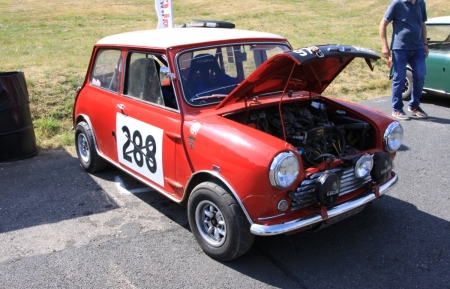
I strongly agree sewin! It's a great idea and shouldn't be very difficult or expensive to implement  Eagerly awaiting Cooperman's reply on the issue...  You'll have to give me a couple of days chaps, trying to get the Mini ready for an event on Sunday & then at Blyton Park circuit with the MTW on Monday Sewin, Bert, So here goes after a bit of delay uploading shots to the IMG site Fronts are secured with modified pipe clips lined with rubber secured to the lower factory wing brace, the wing liners are then deliberately made a bit too tall so they hold tight at the top against the wing which give a gentle curve with some upholstery foam soaked in waxoil at the top edge to stop chafing the wing underseal ![[Linked Image]](https://www.tm-img.com/images/2026/04/16/Front-2.md.jpg) they deliberately hang lower than the wing line to give a sort of mudflap to protect the running board and exhaust ![[Linked Image]](https://www.tm-img.com/images/2026/04/16/Front-1.md.jpg) Rears follow the same principle using the upper factory brace & then an added triangular brace at low level ![[Linked Image]](https://www.tm-img.com/images/2026/04/16/Rear-5.md.jpg) ![[Linked Image]](https://www.tm-img.com/images/2026/04/16/Rear-7.md.jpg) And lastly I added some rubber, sort of mudflaps, at the rear of the running boards by removing the factory nuts and fixing via those, the fixings on these are a bit in the pi55 because you have to follow the factory position of the bolts ![[Linked Image]](https://www.tm-img.com/images/2026/04/16/mudflap-1.md.jpg) ![[Linked Image]](https://www.tm-img.com/images/2026/04/16/mudflap-2.md.jpg)
Last edited by CooperMan; 17/04/26 07:35 PM.
Jon M
|
|
1 member likes this:
BertL |
|
|
|
|