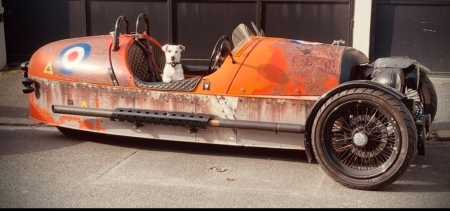
When I see pics of the cracks it looks like the steel is very brittle - almost like cast iron when it breaks. It would be interesting what a metallurgist would make of its content and suitability in a chassis that has so much torsion and loading. I can see someone producing a replacement chassis for these cars in the future where the steel has more flexibility. I very nearly bought a 3 wheeler but the issues around the chassis put me off. If they were definately cured I coukd be tempted again in the future. They have the potential to be amazing.
I did metallurgy at university, albeit a long time ago. I think you are absolutely correct and there is something wrong with the steel the chassis is made from. On past experience with Morgan, I am guessing they will buy the tube from a broker or steel stockholder, to whom they will give a specification but want a cheap deal. The broker or stockholder, to maximise his profit, buys the steel piping from the cheapest source he can, which is likely to be India or China. There are problems with a lot of their steel. It has a high scrap/recycled content. Nothing wrong with that if it is properly processed but to do this requires long period of puddling with high temperatures to make the melt totally homogenous, all using expensive energy, so the temptation is to short circuit this process. This results in steel with so called inclusions in it. These act as a stress concentration points and starting points for failure. They also encourage corrosion by acting as a voltaic cells. The second problem is poor control of sulphur and phosphorous content. It is expensive to reduce the content of these elements from the steel melt. A higher content of them leads to the steel behaving inconsistently and being more brittle than its spec. Sounding familiar so far?
In my view there is only one suitable material for making a tubular chassis and that is chrome-molybdenum steel tubing from a known steel maker in the UK, France or Germany. The best known version of this is Reynolds 531. This is tough, strong and very resistant to fatigue failure. I bet the M3W chassis is not made from it but it should be.
Wilson