When I first bought my S1 about 7 or 8 years ago I checked the fuel consumption on the long run home from the Morgan garage. I was amazed to be seeing around 30 mpg (using brimmed tank to brimmed tank method).....I've never had reason to check the fuel consumption again but I have always enjoyed driving the car with a sensible but entertaining right foot, as I just love the sound of my twin side exhausts I had fitted! Never had the fuel gauge give me cause for concern but as a matter of habit I never let it drop below 1/4 full. I am the same with my modern everyday car as well.


The manner manufacturers test for their cited official fuel mileages remind me of top speed testing of Japanese motorcycles when they first appeared in the 1970s. I remember the fellow being 40 kilos!
Mileage depends on how often and the manner your Morgan was used before you became its owner. Low mileage and rarely used engines perform poorly for the first few hundred miles from new or after a period of no or minimal usage. Each time I take mine out of storage, my mileage (4.8 liter Rover V8) spikes and my oil consumption plummets successively after each 100 mile period. This is normal for all engines, especially the big ones.
Bill Beck,
the former Service Manager and then Development Chief at the MMC,once remarked to me that he discovered that the Rover/LR V8s were rarely bedded in properly with Plus 8s. They were babied too much during the all-important first 1000 miles. This was confirmed by other major engine sellers, like John Eales, Chris Crane...et al. Morgans are too light to provide sufficient load to properly create and deal with the cylinder/piston mating.

And most of us follow the recommendations of the engine manufacturers. These V8 manufacturers only have experience with their MUCH heavier vehicles. With ultralight cars, these specialist chaps found that even after after many many miles, the cylinder walls had only "glassified" something that lowers power and mileage for a LONG time. They speculated it could take as much as 20,000 miles for the engines to reach their happy point! I have heard the same thing happen with other big engines in other hyper light cars. (shrug) I cannot see the Aeros being any different.
Instead I follow the advice of Mark Adams, the Tornado chip creator. I am more agressive than manufacturers recommend after installing a new or rebuilt unit.
AAs a reward, my engine compression has not changed in more than 20 years, which may only be evidence of an overly pampering! You are wise to fill up when you do. Internal pumps have two advantages.
A. They are comparatively VERY cheap and combined with a fuel level sender they save manufacturing man-hours.
B. Unless the fuel level is allowed to drop too much, they are constantly cooled by being immersed in fuel.
However, they are very delicate when NOt fully immersed. They can fatally overheat. Levels can change almost immediately by going up a hill or an aggressive curve. They are best used with a fuel collector, (aka a slosh box) which Morgans don't use AFAIK. Such collector thingies are a box (below) fed through one-way valves and always used by savvy race preparers. One places the fuel pickup or pump inside the box. Otherwise one must depend on internal baffling,
which is unknown since the MMC abandoned the old tanks or by using foam. Foam is great, but makes roadside pump replacement unfun. (yuk!) I finally became annoyed and, with the assistance of Peter (Mulberry) designed my own tank which uses an external pump, which needs a precise setup.
Luddite first helped me with that way back when. Canada, an economy dealing constantly with machinery repair, has more relaxed rules and skills for such creativity than other countries. BTW, foam filled tanks are as deadly as any aluminum tanks. For some reason, the UK never got into the world habit of using foam-filled deformable bladders. For that reason I shun ALL aftermarket tanks unless they are made of high quality stainless steel, which dents rather than tears. Aluminum also has a habit of very suddenly melting at relatively low temps..and worse.
Just one question about your photo as the side of the road, are the crowd admiring the car or the lady with the bike?

The lady you refer to was a member of the admiring crowd, my wife is took the picture. I am the scruffy fellow in the middle.
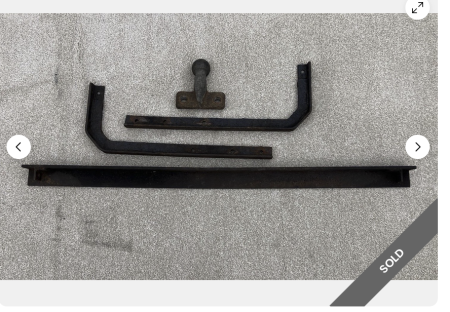
They certainly weren't admiring me!Curious. Does your Aero have the fuel tank straps I have shown above? They were added after the crash tests results. I have learned to like them more than the industry custom of bolting down fuel tanks, without cushioning, to chassis. Though not at first. However, our dearly remembered Bill Fink,
an American Morgan dealer and a close confident of Maurice Owen and Peter Morgan, explained that they worked better than the accepted custom, of bolting especially with Morgans.
gmg
P.S. Forgive my focus on safety so often. I was in an Morgan incident decades ago that left me with a grandmotherly concern for my fellow moggers.
![[Linked Image]](http://www.gomog.com/TEMP/collector2.jpg)









![[Linked Image]](http://www.gomog.com/TEMP/FuelTankLater.jpg)
![[Linked Image]](http://www.gomog.com/TEMP/October30~2004.jpg)