That varies greatly by language 🙂
Here's an overview of **"car" / "wagen" in other languages**:
### Germanic languages
* **Dutch**: *de auto* → **masculine**
* **German**: *das Auto* → **neuter**
* **English**: *the car* → **no grammatical gender**
(sometimes "she" is used in affection, but not grammatically)
* **Swedish/Norwegian**: *bil* → **common** (no gender distinction)
### Romance languages
* **French**: *la voiture* → **feminine**
* **Spanish**: *el coche / el auto* → **masculine**
* **Italian**: *la macchina / l’auto* → **feminine**
* **Portuguese**: *o carro / o automóvel* → **masculine**
* **Romanian**: *mașină* → **feminine**
### Other languages
* **Russian**: *машина (masjina)* → **feminine**
* **Polish**: *samochód* → **masculine**
* **Arabic**: *سيارة (sayyāra)* → **feminine**
* **Hebrew**: *מכונית (mekhonit)* → **feminine**
* **Japanese**: *車 (kuruma)* → **no grammatical gender**
* **Chinese**: *汽车 (qìchē)* → **no grammatical gender**
💡 Fun fact: in languages With gender, that says **nothing** about "male or female" in the real world — it's purely grammar.
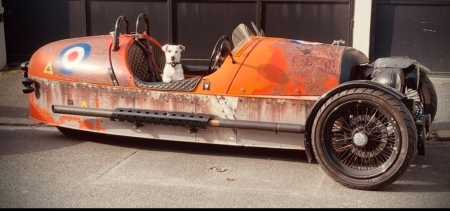
I'm thinking about calling mine "Mr M"...