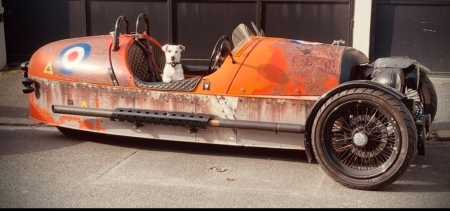
I thought I might tag this posting from DevaMog member on their forum....Worth checking the battery leads.
Mon 07:23
Msg from Tony Gibson Devamog
160826
If you have a CX model, check the tightness of your battery leads under the rubber covers.
We refuelled at petrol station 3 miles from home. Car lumpy , tried to turn over then all electrics went off. Called a friend out to jump it. Car didn’t register the new charge. The dash clock stopped at 4.10. Even that should run on fine current. So, call the RAC. Sunday in August with petrol station not happy with me blocking the forecourt. 😀🥸. Friend took Jo to our home. I waited ………. RAC diagnosed an extremely slightly loose battery lead to battery connection which couldn’t supply sufficient current to the starter resulting in the 300 amp main fuse blowing!!!! He tested the battery which was spot on. He has a 150 amp fuss on his car which he fitted and the car fired up immediately. I’ll fit a new 300smp tomorrow. Take 2 minutes to check yours!!!! No one got hurt. Otherwise a top day out .
Mike Wright
We had that, I replaced the starter motor.
John, I am somewhat confused re your post above.... I must admit that I am in no way up to date on vehicle electric systems though have heard of more modern vehicles having items described as pyro "fuses" which are of high enough amperage to carry the current of everything in the electrical system including the starter motor... I think the idea is that in a crash the "fuse" disconnects the battery from the rest of the electrical system reducing the risk of fire....? I have no idea whether the idea of high current "fuses" have become part of the of construction and use regs..?
In my limited electrical experience I have not come across a fuse that blew as the result of a loose battery connection, a loose connection usually creates the generation of heat under load causing signs or the aroma of burning, thus unlikely to "blow"the element within a fuse...? However using nothing more than perhaps flawed logic, I am guessing a pyro fuse may have a third low current input connection from an ECU which effectively acts like a relay control in that a small switched current can control a much higher current switching device, and in the case of a pyro fuse, instead of switching the device on, it switches the high current off as a one time operation...?
If my logic might be in any way reasonably accurate, then I do wonder if the loose battery connection, caused random fault codes to e generated and in this case provided a spurious output to that which may have been a pyro fuse...?
I really look forward to be proven to have been entirely incorrect..