The A.L Developments hand ported big valve head has arrived
A 0.18mm skim ups the compressio ratio a touch too
Inlet valves are now very high-spec austenitic stainless steel +1mm @ 36mm from Race Engine Components - REC 835
Exhaust valves are the same austenitic stainless steel +1mm @ 31mm (poor photo angle) - REC 836
Inlet ports recieved a lot of attention, clever bowl work and nicely knife edged port dividers.
While also heavily worked like the inlet ports, the exhaust port diameter was actually kept to 38mm, bigger is not always better. My header IDs are 44mm making them 41.6mm ID, so sticking to a 38mm exhaust port diameter gives a perfect anti-reversion step and keeps exhaust gas velocity high, both stratergies should improve torque over just blindly hogging out the port.
The new head will receive a pair of Newman Phase 3 cams to replace my current Phase 2s, my existing 180lb beehive valve springs will be moved from Monty's current head to the new big valve ported head.
Monty previously recorded 173hp before I advanced his ignition timing by 3 degrees at the top end, I've also let my pops & bangs map blast out any remaining sports cat and silencer baffles for a nice reduction in back pressure, so he should be laying down a stout 180hp now.
Place your bets on what Monty will make with the new head and Phase 3 cams?
Monty - thank you very much for sharing this wonderful bit of advanced engineering with us it's beautiful stuff and extra grunt what's not to like.
Thanks Rich,
The objective here is really just to deliver a healthy lift in power while retaining Monty's excellent road manners and reliability, tuning naturally aspirated engines can be an expensive business so there’s no value for money logic to be found here, but I can share plenty of man-maths justification as this is precisely what I’ve been using to get myself to this very point
However, man-maths aside one thing is well accepted in the Duratec tuning world, if you’re looking to squeeze over 230hp out of a Duratec the weak point will for sure become the Ford factory con rods. Well, some may argue it’s more the rod bolts than the rods themselves but whatever the detail is things definitely start to become very expensive when you open an engine. I did very closely study the option oft fitting a low pressure Rotrex supercharger kit (8psi), but my research pointed strongly towards this placing Monty’s engine on borrowed time if I failed to take heed and fit those forged rods and pistons.
Ultimately all this set the brief and determined our target horsepower, with Monty already at 180hp and the super safe ceiling for a Duratec being 220hp, our horsepower goal would need to be somewhere between to two. The supercharger idea simply delivered too much power to be engine safe without spending a kings’ ransom, and I’m not so sure a 240hp Trad chassis Morgan is a good idea anyway!
Making power is actually pretty easy, the difficult bit is making good usable power while retaining a nice sensible idle and tame town manners, Monty needs to remain a pussycat on the road and to achieve this we've made what might be viewed by some as 'a couple of controversial choices'.
1. Prioritising exhaust gas velocity and a meaningful anti-reversion lip over ultimate exhaust port size - The thinking being is the ports on a Duratec head are already big enough to support 250hp, so with our lower target more than covered we've chosen to focus on porting strategies that will deliver superior torque.
2. Steadfastly refusing to take the obvious and well trodden ITB route in favour of retaining my Fusion Fabrications inlet manifold - It's already acknowledged and widely accepted we could easily make more outright horsepower with ITB's, but for fear of repeating myself I’m after drivability and torque. As the brief focusses on delivering the desired driver experience over a making a specific horsepower number we can brag about in the pub; the long runners, single throttle body and idle air control valve offered by the FF inlet are all destined to remain.
As we know, an internal combustion engine is just a giant air pump, the more air it can be made to shift the more fuel you can add in proportion to that air, with the outcome being more power. Of course, that mixture of air and fuel must still be at the correct ratio, and it must be lit precisely at the right time to ensure maximum cylinder pressure at the precise moment that pressure can also excert maximum leverage on the crank.
So, given all this the starting point for any tuning work is always to establish where the greatest restriction exists, address this restriction and you'll be making the greatest gains. To this end, I'm reliably informed by a number of highly respected Duratec engine builders (assuming your target is uder 250hp), by far the greatest restriction in a 2.0 Duratec cylinder head is not the already large enough and well-shaped ports, it's the valves.
If you then combine 1mm larger inlet and exhaust valves with some nice knife edging of the port dividers and clever reshaping of the 'valve bowl' which is the rounded, pocket-shaped area in the intake or exhaust port located directly behind the valve seat, the engine can really come alive. The 'valve bowl' is the critical transition zone where the air-fuel mixture passes from the port runner into the combustion chamber, after that it all becomes much more complex and a bit of a black art with good engine builders closely guarding their cylinder head porting strategies.
I can understand why too, as many spend years learning what does and doesn’t work, which can, and often does change significantly from engine to engine. I chose A.L Developments as Alan Prichard has been experimenting with, and developing the 2.0 Duratec head for decades now, I gave him my proposed cam specs, header tube dimensions and most importantly what I was looking for from the engine.
The rest is all locked up in Alan's head following years of amassed experience exclusively working heads, but with a special focus on the cylinder head found on four cylinder Duratec and Mazda L engines, this knowlege is what I paid for!
For anyone interested in Monty's cam spec, here's a table showing the differences between his current Phase 2s (PH2) and the new Phase 3s (PH3) we're going with.
Newman claim their PH2s have a power band of 2,500rpm to 7,250rpm, the reality was the PH2s proved milder than I'd expected, paired with my Fusion Fabrications long runner inlet these cams gave Monty a very wide and flat torque curve. This gives Monty huge flexibility, I can smoothly trickle through urban environments at 30mph in 4th gear with the engine gently spinning at 1,500rpm. Now hit the throttle and he'll pull cleanly all the way to 135mph in the same gear at 6,750rpm, mid range punch is also impressive.
The engine actually starts to come on cam at 3,500rpm and gives a real VTEC kick at 4,000rpm, however, contrary to what Newman's above cam spec claims the PH2s most definitely do not keep making power to 7,250rpm, mine actually gave up at 6,500rpm giving 173hp until I added a few degrees of timing which I confidently predict places Monty's output at 180hp at 6,750rpm. I'm not complaining as the end result has proved to give Monty very flexible and street friendly manners, keeping the engine speed between idle and 3,500rpm gives an extremely civilised nature that more than equals a standard Duratec Plus 4, but with super exciting thrust from there on all the way to 6,750rpm which makes for surprisingly rapid progress for what is a very vintage looking vehicle.
It's highly likely what I've ended up with here is something of a Duratec sweet spot, none of this is exactly ground breaking as early on in my tuning journey my research pointed to Caterham having long since found the natural Duratec power steps. If we exclude the bonkers supercharged 620R, Caterham give their customers two states of Duratec tune, coming down from the insane 310hp 620R you can choose from 210hp in the 420, or a Monty matching 180hp in their 360 model. The difference between Caterham's 180hp and my 180hp is Monty has a broader and flatter torque curve where peak horsepower also arrives 250rpm earlier, this is almost certainly a result of the two different inlet manifold used, but more on that later.
By now you're probably all wondering if I've already found the 180hp high torque sweet spot, why I'm bothering to take Monty on his next tuning adventure? Well, sometimes I also wonder myself ??? The answer of course is you never really know you've taken tuning too far until you've taken it too far, so I've chosen to accept the challenge of hitting my original 200hp target with the promise to myself that if I don't like the outcome I will revert back to the PH2 cams. The ported big valve head is not my concern, however the worry is PH3 cams could introduce a rough idle (without winding the tickover up excessively high), and they could introduce an unacceptable dip in low down torque?
Saying all that, the increase in duration, lift and overlap when moving from PH2s to PH3s isn't radical; I'd also argue Monty has more than enough torque on the PH2s so the thinking is the PH3s could take Monty past 200hp with no drivability downsides, the new ported big valve head will certainly help here. The key unknown is how the new cylinder head & PH3 cams setup will work with my Fusion Fabrications inlet manifold which is known to start to become a restriction around 200hp.
At this stage in proceedings it's worth pointing out the Caterham 420 makes 210hp on what are essentially Newman PH3 cams, and like the 180hp 360 the 420 achieves this using Caterham's own short runner plastic inlet manifold, but on standard valve sizes and no head porting work.
While Monty's long runner Fusion Fabrications inlet manifold may well start to become the restriction around 200hp, my hope is the new big valve ported head will help redress the balance while also retaining the torque advantage provided by the FF long runner inlet?
Will Monty make the 200 plus horsepower number I'm shooting for, while still retaining good torque and his excellent drivability, or will the Newman PH3 cams fail to play nicely with the FF long runner inlet and hold the horsepower back, while also messing up Monty's lovely flexible street manners I value so much?
As I say: "you never really know you've taken the tuning too far..... until you've taken it too far!"
What it'll look like if the big valve ported head and Newman Phase 3 cams deliver the predicted 213 horsepower.
* The red Standard numbers were taken from the official Morgan published numbers for the Plus 4 with the port injectected 2.0 Duratec engine, and the shape taken from a graph I found of a standard Plus 4 that someone took to the rolling road, in practice that completely standard Duratec delivered it's peak 144 horsepower a fraction lower at 5,750rpm
* The blue Stage 2 numbers came straight from my Surrey Rolling Road dyno graph, however, I've safely added a few degress of ignition timing since then so Monty should be closer to 180hp now.
* The green Stage 3 numbers are what AI says should happen after I fed it with detailed information on my A.L Developments ported big valve head, and all the Newman Phase 3 camshaft specification.
Not long now, and we'll be finding out just how accurate the AI prediction was?
I've also independantly made my own calculations using old school traditional methods and experience.
Here's what I came up with:
* 207hp @ 7,300rpm
* 168 lbs/ft of torque at 5,250rpm.
So Artificial Intellegence & Dave Intellegence are almost in full agreement
The above predicted Stage 3 torque spread is AI generated, but it should be pretty accurate. I fed AI with the Phase 2 cam spec and my Surrey Rolling Road graph, then gave it the Phase 3 cam spec the crosssectional area of the pre and post worked ports, and finally the 1mm larger inlet and exhaust valves.
I appreciate 1mm on the valves doesn't sound like much, but in percentage terms it's signigficant, and of course there's 16 valves so the increase in airflow measured in CFM actually becomes considerable, especially when you add it to the port enlargement data. The additional lift and duration provided by the Newman Phase 3 cams is really just there to ensure we take full advantage of the potential additional airflow offered by the bigger valves and port enlargement work, although the shape of the ports is arguably more important than the volume increase which is where the real skill of A.L Developments comes into play.
The good news is AI is predicting Monty's current torque curve shape remains completely unchanged, we're just making a nice chunk more torque at Stage 3. Critically we're still enjoying 81% of peak torque at just 1,800rpm, and better still now holding onto 87% of peak torque all the way out to the new 7,500rpm red line! That's going to mean in Stage 3 tune Monty will essentially feel like a massively stronger version of his current self, with his Duratec delivering 23% more horsepower and 10% more torque everywhere and this over the current Stage 2 tune.
Very soon we'll find out how just good these AI Stage 3 etimates really are?
For those following all this, here's the parts list:
* Newman Phase 3 Cams * ARP head stud kit * Athena MLS head gasket * Exhaust manifold gasket
While the A.L Developments hand ported big valve head (+1mm valves) is without question a lovely piece of work, after much deliberation we've actually decided to bring the exhaust ports out a litttle further from 38mm to 40mm, my header tubes are 41.6mm ID so a 40mm port will still leave a small anti-reversion lip for good torque. However, it was felt the additional 2mm on a four circular exhaust ports will deliver fully optimised gas flow, while we're on the exhaust side of head we've also decided to take the opportunity to dowel and TiG up the EGR void, this ensures all four exhaust ports are perfectly volume matched.
Finally, I've added the following sensor upgrades so I can implement three robust engine 'failsafe' stratergies within my engine management calibration.
Those following Monty's development journey will already know the EMU Black 'Plug & Play' ECU worked out extremely well, I can highly recommend it to anyone looking to replace the Ford/Visteon ECU used by Morgan. The only small challenge I failed to overcome was getting the ECU to play nicely with the standard Ford knock sensor, while I was certain I'd dialed in the optimal sensor settings, a weak knock trace had me assuming I'd overlooked something?
However, after discussing the challenge with James at M2R Motorport, he explianed this is a very common issue for ECUMasters users when trying to work with the standard Ford knock sensor, the solution is to replace it with a Bosch Motorsport knock sensor that is known to work perfectly with all ECUMaster ECUs including my excellent EMU Black.The new Bosch Motorsport knock sensor allows me build a stratergy into my engine management calibration to save the engine from piston destroying knock/detonation, which I felt is wise given we're increasing Monty's Duratec to a 11.0:1 compression ratio.
I'm also adding oil and fuel pressure sensing to the ECU, if I lose oil pressure or go lean due to a loss of fuel pressure, the ECU will instantanly kill the coil pack trigger signal to save the engine. As we're now taking Monty's Duratec closer towards it's optimal naturally aspirated state of tune, and I'm heading to Castle Combe in June, I felt it was well worth the small extra cost to build these three layers of engine protection into my engine management calibration. Giving the ECU fuel temperature and pressure inputs also opens up additional engine management calibration trimming options, I can now fine trim my base VE table to compensate for changes in the volume of fuel arriving at the back of my 440cc Bosch Green Giant injectors.
The objective as always remains to deliver safe repeatable power, while retaining the excellent OEM Ford Duratec engine reliability, and Monty's super flexible 'everyday use' drivability. All the engine hardware upgrades, sensor implementation and ECU calibration work should be complete in two weeks time
Montegue, your search for performance improvements takes me back a few decades to when I suspect the majority of Morganeers were ever in search of modifications to "improve" the performance of their Morgans, Power to your elbow young man in keeping old spirits alive.... (-:
Montegue, your search for performance improvements takes me back a few decades to when I suspect the majority of Morganeers were ever in search of modifications to "improve" the performance of their Morgans, Power to your elbow young man in keeping old spirits alive.... (-:
Cheers, I appreciate your words of encoragement
Of course there is scope for all this to go terribly wrong, so my approach to mitigating potential disaster is to:
1. Reasearch, research, research
2. Identify and work with the right team
3. Select the right quality components
4. Use modern engine managemet and carefully calibrate
5. Implement 'fail safe' stratergies to protect the investment
As you can see, I've done my level best to make all that sound easy
Good work Monty…. A friend had just upgraded his Duratec engine’d Caterham 420 to add Jenvey ITB’s and independent ECU getting him to 231bhp.
I’ve used Newman cams in the past with decent results - a really nice company to deal with 👍
I’m rolling roading my Zetec E on twin 45’s in the next couple of weeks - that puts out 185bhp at the moment … this wasn’t the final best run but the red line on here is the one to look at for the Zetec E on twin 45’s.
Dave, That reminds me of a Cosworth head. You've got a thing of beauty. Of course you are so right about having an all round drive which hits the sweet spot..... ask a Ferrari man sitting at the lights in town on a hot day, now that's a look of panic! With the Morgan you only have to stuff one element and it can ruin your driving pleasure. Unless of course you are aiming for a track car or similar. I once had a friend who had an RS 1600 escort and he was obsessed with lightening his flywheel and on his third attempt at getting it as light as he could he rogered it. So for a quick resolution he fitted a new standard flywheel and was shocked to find that it was the best drive he could remember from the car!
Re the shock absorber orientation. We had briefly chatted about it and I had said about the possibility of fitting the rutherford telescopic conversion which puts the mounting points in the correct orientation. Well I phoned Tim and had a brief chat asking if it was possible to fit these and still retain the hoop as it carried h/brake and wiring etc. plus of course gene some rear impact protection. He seemed fairly vague about what I was asking and suggested that I sent him some pictures of my car showing what I have got. I explained that it was a standard 2010 car and I just wanted to know if the Rutherford top mount brackets could be fitted without interference nit I kept the hoop. Long and short of it..... I gave up! I thought I was asking a fairly simple question but evidently not. Anyway I promised to let you know how it went after talking with him.
Good work Monty…. A friend had just upgraded his Duratec engine’d Caterham 420 to add Jenvey ITB’s and independent ECU getting him to 231bhp.
I’ve used Newman cams in the past with decent results - a really nice company to deal with 👍
I’m rolling roading my Zetec E on twin 45’s in the next couple of weeks - that puts out 185bhp at the moment … this wasn’t the final best run but the red line on here is the one to look at for the Zetec E on twin 45’s.
Good result, I love the BDA cam cover too
Keep going with the videos, I've subscribed and have been enjoying them
Ok so Monty is now safely with James at M2R Motorsport, he fitted Monty's current Newman Phase 2 cams and I was delighted with his work. James is a Duratec specialist, what he doesn't know about this amazing little engine isn't worth knowing.
James is also very easy to deal with and manages my OCD personality brilliantly, probably because he's equally obsessed with the detail, for example we'll be taking the opportunity during the head swap to say goodbye to Monty's rusty exhaust manifold nuts!
We're going with flashed copper M10 flange nuts from Wurth, in my experience Wurth fasteners are excellent quality.
Being flashed copper, they're also going to look period correct and should contrast nicely against Monty's Sport Green aluminium cam cover that was skillfully wet pinted by my good friend Aston Martin (yes, thats his real name).
Finally, and sticking with the exhaust side of things, James will be adding this resonator to the straight pipe up the back.
It's a straight through design so just intended to take the edge off the volume noow Monty will keep makingbpower all the way out to 7,500rpm.
With my custom Fusion Fabrications exhaust system we started out loud! It's was hilarious fun from day one and instantly gave Monty huge carachter, but I think I've completely blown the sports cat and silencer box internals out now with my pops & bangs map.
Over the last couple of years Monty has gone from loud, to ASBO mental loud, especially over 4,000rpm! In theory, the new rear stainless steel cherry bomb resonator should just take the edge off the scream and help me get through the Castle Combe decibel test this year instead of getting banned, which is exactly what happened at the Williams Morgan charty track day last year
Hopefully we'll retain the sporty bark, but the resonator should just reduce the volume a touch, while also adding some fruity 'parp parp' notes during heel & toe gear changes.
With Monty now safely in the care of M2R Motorsport and awaiting surgery, my thoughts once again turn to estimating what we'll achieve from this next phase of tuning work? While researching all this I stumbled on the following video that puts a Mountune MR200 ST150 up against a similarly tuned Duratec converted Mk2 Escort, the only real difference between the two Duratec powered cars is the Escort is on ITBs, while the ST150 is using Mountune's long runner single throttle inlet.
At this point I should explain Monty's long runner Fusion Fabrications inlet is essentially a copy of the rare, expensive, and hard to find Mountune MR200 inlet, so in theory it should give exactly the same results. Both this Escort and the Mountune MR200 ST150 will also have a set of camshafts with similar lift, duration and overlap to the the Newman Phase 3 cams being fitted to Monty next week.
The Montune MR200 recipe has long since been my benchmark for what I'm looking to achieve with Monty, it was so good Ford fully endorsed it, back in the day you could actually walk into your local Ford dealership and buy a brand new ST150 then specify the MR200 kit that had to be fitted by Mountune themselves and nobody else, in turn Ford would give you their full new car warrantee.
As the components I've chosen for Monty are directly modeled on the the Mountune MR200 kit, the ST150 in the video is an excellent reference point for what we could potentially achieve, here's the dyno graph showing the ITB equiped Escort against the Mountune ST150:
And here are the horsepower and torque numbers delivered by the Fiesta:
The Escort's Duratec on ITBs makes 207.6hp, while the ST150 with its Mountune inlet comes in lower at 202.3hp, so theres only 5.9hp in it at the top end. The single throttle inlet Fiesta (Monty's setup) makes 10hp less than the ITB equiped Escort in the 3,000rpm to 3,500rpm window, but above this it starts to close the gap. However, look how the Mountune inlet consistantly delivers more torque in the same window, and indeed largely everywhere. The Mountune tuned Fiesta ST150 goes on to make peak torque at 5,853rpm, at which point it gives 220 newton metres which is 162 lbs/ft in old money while the ITB Escort gives its best 150 lb/ft and peaking far higher up the rev range at 6,675rpm.
It's a straight trade off between ITB horsepower and the broader more usable torque delivery produced by the long runner single throttle MR200 inlet manifold. In an ideal world, you'd want the excellent ITB horsepower curve of the Escort, but with the fatter torque delivery of the Mountune (Monty style) single throttle inlet. Of course, what neither the ITB equiped Escort or the Mountune MR200 ST150 have that Monty does, is the A.L Developments hand ported big valve head with its exhaust ports further enlarged from 38mm to 40mm.
While for sure both the Escort and ST150 will have good exhaust syetems, stand alone engine management and a set of fast road cams, I'd put money on both of them still running a standard Duratec cylinder head. A.L Developments claim one of their ported cylinder heads should give a 10-15hp gain, but this becomes 20hp if 1mm larger inlet & exhaust valves are chosen as I did. This increase is also based on the standard sized 38mm exhaust ports that we are now bringing out to 40mm on Monty's head. So theoretically, I should make at least 20hp more than the MR200 ST150's 202hp, that means we've created a tuning package that 'in theory' has the potential to get Monty to 222hp!
However, I think my Fusion Fabrications single throttle long runner inlet will probably hold the engine back, afterall it has numerous bends in it which are less than ideal. That's why I've settled on a 213hp target with a nice flat torque curve at peaks at 173 lb/ft but holds over 80% of that from 1,800rpm all the way out to 7,300rpm, after which my soft rev limiter strategy will start to get involved.
What is also 100% proven is James from M2R Motorsport was able to squeeze 207hp out of an ST150 on the standard plastic Ford inlet, this using a good exhaust, a set of Newman Phase 3 cams and running it on a EMU Black ECU like Monty has, but with no head work at all! Basically that's James' own version of the MR200 kit, but without using a slightly more efficient MR200 or Fusion Fabrications long runner inlet, and critically without Monty's ported big valve head. This all points to 207hp + the 20hp from my fancy pants cylinder head, to give Monty 227hp, however, as I say there's a strong possibility Monty's Fusion Fabrications 'curly wurly' inlet will start to hold the engine back over 200hp, I'm pretty sure the reality will be that every horsepower I can secure over the 200 mark will be very hard won indeed!
In summary, my 213hp target and below dyno graph prediction still stands!
Not long now and we'll know for sure if I have achieved my goals?
Montegue out of interest I have a 2015 Fiesta ST180 with the Mountune MP215 upgrade, I have always been satisfied with the performance. I recently had the cambelt change and it now goes like a stabbed rat, I don't understand why the difference.
While the ported big valve head and Newman Phase 3 cams combination has the capacity to make over 240hp, and Monty's 43mm ID inlet runners and 41.6mm ID exhaust primaries should support 10hp less, I believe it's the hot air and especially the bends on the inlet side that'll be what holds him back from delivering his true 230hp potential.
Bends are not good for airflow, but they are an essential function of packaging those torque producing long runners.
The bends start here:
And continue here:
Actually there are bends everywhere on Monty's inlet side.
Turning the air creates boundary layers of stagnant air that become the new internal walls of the intake, these boundary layers effectively create a significantly narrower passage for the usable air to pass through. I believe these bends, and the boundary layers of stagnant air they create, are likely to generate a significant restriction and will be what stops Monty's Duratec from delivering his 230hp potential.
If you study the full setup from air filter to cylinder head inlet ports, it's definitely full of bends, it's probably fine up to 200hp and at lower engine speeds, but I suspect it'll start to become a restriction above that. The boundary layers around the edges of all those bends effectively create a progressively smaller and smaller bore inlet that gets worse as the air speed increases, and at higher engine speeds this is precisely the time the engine will be demanding more air!
The current air filter position is also subject to quite a lot of radiant heat from the exhaust, and the radiator too which is less than ideal. I've carefully logged my inlet air temps and I estimate a cold air intake could be worth as much as 4hp, but it's really the multiple bends throughout the full inlet path that will have more of a negative impact! The solution to it all would be individual throttle bodies, a straight shot of cooler air fired through a set of 43mm Jenvey Heritage ITBs would sound great, look retro cool, and and in theory would deliver Monty's full 230hp potential.
Here's a Caterham on Jenvey Heritage ITBs, OK so it's a Sigma engined Super Seven and those K&N filters do need a small bonnet cut out which I'd want avoid on Monty.
However, I think those K&Ns would just fit under Monty's bonnet without butchering it, as there is more width on a Morgan compared to the super narrow bonnet on a 7.
Maybe the above will end up being the final tuning step for Monty? But for now, I'll be more than happy if I can get to 213hp on the current Fusion Fabrications inlet, and his slightly warmer than ideal air feed.
I promise you this will be my last post on potential Monty power outputs chaps
However, this is a critical one!
Firstly, the following video has proved quite insightful:
Increadibly, this standard Caterham 420R made a whopping 224hp on the factory Caterham short runner inlet manifold
In the video, the owner confirms a 420R uses a stock 2.0 Duratec engine with just a set of fast road cams, stronger valve springs, and the short runner inlet Caterham use on all their 360, 420R, and even the bonkers supercharged 620R although in this case it's made from cast aluminiun rather than plastic. What the video teaches us is we now know with absolutely no head work a 420R can give as much as 224hp, it also proves Caterham's short runner inlet it not a restriction up to this power level, and will probably support a lot more.
Monty already recieved 180lb beehive valve springs when we went with the Phase 2 cams, and very soon he will also have very similar cams to a 420R too, so if I go with the Caterham short runner inlet Monty could make as much as 224hp! However, he's also soon to recieve the A.L Developments hand ported head with 1mm bigger valves and exhaust ports that have been opened up from 38mm to 40mm.
That 420R in the video enjoyed none of this port shaping work, it also operates on the standard sized valves and standard size 38mm exhaust ports, yet despite these disadvantages it is now proven a 420R can still deliver 224hp on that short runner Caterham inlet! So, if now factor in the additional 20hp my A.L Devevopments cylinder head should give, that would give Monty a potential 244hp
In theory, all I need to do to achieve Monty's true potential of 244hp is fit one of these Caterhan short runner inlets!
These Caterham inlets do come up for sale on the secondhand market from time to time as many 420R owners move to individual throttle bodies, there's actually one for sale on Ebay right now and its been sat there unsold for quite a long time too, athough it is plastic and ideally I'd likecan aluminium one. The shape of this inlet suits the tapperd bonnet lines of a Caterham, so it also looks like it would perfectly suit a Morgan perfectly too? I'd certainly be prepared to pay £350 for one just to test it back to back with my FF inlet.
However, I've spent enough already, so lets see what Monty makes on my 'curly wurly' Fusion Fabrications inlet first, but if it kills power to a degree that means I fail to hit at least 213hp, after watching the above video I think fitting a short runner caterham inlet is going to be a no-brainer. There's no question those short runners are'nt tbe best for torque but it is pretty much a cheap guaranteed way to take Monty over 220hp and without resorting to individual throttle bodies.
Saying all that, if I can achieve the following or better result on Monty's current long runner setup, I'll be more than happy with that
There's clearly going to be some sort of (as yet unqualified) trade-off between the excellent top end horsepower potential of the Caterham short runner inlet, and the lovely broad spread of torque the long runner Fusion Fabrication inlet is proven to deliver. However, just how much horsepower those long curved runners on the FF inlet will kill, is as yet unknown?
What I can tell you is... "I'm actually happy to trade as much as 25 horsepower at the top end, for 10 lbs/ft more torque that arrives way earlier and hangs on across a far wider rev band".
Glad you enjoyed the Caterham video as that's my sons car. He was surprised it came up with that figure, wasn't expecting it. Out of interest the first owner of the car, which was built for him, was Chris Hoy; maybe they tweaked the engine a bit..........
Dave
2015 4/4 Royal Ivory 2019 Fiat 500C 2019 Volvo V40 T3R
From what I've read most 420's make the full 210hp, and aparently many make more, but 224hp on the standard Caterham short runner inlet is a very strong number indeed 👍
I'd love to study the dyno graph, and especially the torque curve, in detal
Regarding the earlier comments touching on the subject of cam/valve timing, as Monty is predominantly a road car, and I'm now moving to Phase 3 cams, it's likely there may be some benefits waiting to be enjoyed by dialling in the valve timing a few degrees either side of Newman's suggested numbers?
On the Phase 2 cams, I've been able use the excellent idle management features within the EMU Black software to dial in a super clean 'drum roll' idle at 970rpm, closed loop ignition timing (scatter spark) and PID idle air control valve management helped me give Monty truly superb idle quality. I've been especially proud of this as idle tuning is one of the big challenges when fitting a more progressive camshaft profile.
However, before I pat myself on the back too hard, the truth is the Newman Phase 2 cams really aren’t that aggressive at all. Idle tuning is also greatly helped by my choice to use the Fusion Fabrications long runner inlet and steadfastly refusing to follow the herd by fitting ITBs that present many additional challenges in this area, challenges people selling the itb dream conveniently fail to tell you about.
While I will be continuing to use with the excellent long runner inlet with its well sized plenum and IACV, I am now taking valve timing to the next step by fitting Phase 3 cams. These Phase 3 cams are proper fast road spec so have more lift, more duration, and importantly more overlap too, all of which introduce additional challenges if I want to maintain Monty's refined idle quality.
However, there are a few tricks we can implement that can significantly help, for example:
1. Retarding the exhaust cam slightly by 2 degrees will recover some of the idle quality as it effectively moves the onset of valve overlap above our new and very slightly lifted target idle speed of 1,000rpm, and couls also improve urban drivability at the low engine speeds seen during town driving
2. Advancing the inlet cam 3 degrees from Newman's recommended number, will also certainly give Monty even more mid-range punch. This doesn't come for free of course as these valve timing stratergies will mean power will fall away earlier in the rev range.
Being completely honest with myself about how I use the car, I'm perfectly happy to trade 5-10hp or so at the top end for a strong pull in the 3,500rpm - 5,000rpm window to further enhance real world overtaking on the road. There's also good evidence to suggest if we time the PH3 cams as recommended, the engine will continue to make power all the way to 7,800rpm! In reality this is pretty wild for a street driven car, the top end power loss I'm proposing through the above small valve timing tweaks is also partly irrelevant anyway as I plan to limit the engine to 7,500rpm.
I need to be honest with myself about how often I will really take monty over 7,300rpm on the road, personally I think we'd be better off trading 5-10hp at the top end for a stronger mid-range pull, I'm still on standard rods and pistons so setting the rev limiter to 7,500rpm makes a lot of sense for engine reliability.
At the end of the day, what we’re creating here is effectively a Caterham 420 engine, but with further tuning via the ported big valve head. We are then dialling it back a fraction using the long runner inlet and less radical cam timing, the idea being to trade a bit of wild top end power for a far stronger pull in the mid-range.
I've just pulled the trigger on a set of Mahle motorsport big end bearings for Monty.
Mahle motorsport bearings are...
* Tri-metal (steel + copper/lead + overlay)
* Designed for high load + high RPM environments
The standard Ford aluminium bearings are fine for the mains, but now Monty can rev to 8,000rpm aluminium bearings on the big ends are not going to cut it.
And obviously, with the caps being cracked now to fit the main bearing upgrade, it makes sense to button the bottom end back up with a set ARP rod bolts, these to match the ARP head bolts being used.
* Made from ARP2000 alloy steel
* Around 220,000 psi tensile strength
* Up to ~20× better fatigue resistance than standard bolts
I continue with my plan to limit the engine to 7,500rpm, the above are there for additional peace of mind
I've also now consulted James at M2R Motorsport on my cam timing theory, he 100% agreed in principle but recommend a less agressive aproach:
1. Retard the exhaust cam by only 1 degree to recover some of the idle quality by effectively moving the onset of valve overlap above our new and very slightly lifted target idle speed of 1,000rpm. This small 1 degree change over the Newman cam timing figures will also improve urban drivability at the lower engine speeds used during town driving
2. Advance the inlet cam also by just 1 degree from Newman's recommended number, this is to give Monty even more mid-range punch but allow the engine to still keep making power ot to 7,500rpm. I neither need or want to go to the 8,000rpm potential, so let's dial it back a fraction to trade ultimate engine speed and horsepower for more mid range torque.
To further explain the reasoning behind my decision to upgrade the big end bearings and rod bolts....
As we look to take Monty's little 2.0 four banger past 200hp, the loads seen by those standard Ford silicon aluminum big end bearings will be higher than they were ever designed for! Ford designed the Duratec well, actually its really a Mazda engine and I strongly suspect Yamaha designed the cylinder head, as such it has huge potential to make more power than Ford intended.
The hard silicon aluminum bearings they chose are actually excellent for long service life, but they're extremely unforgiving if you take the rod loads transferred to the big ends above the design limits of silicon aluminum bearings. The highest horsepower figure Ford ever quoted for the Duratec was 170hp, Ford always test components to ensure they survive 20% more than their highest output number, so I strongly suspect those silicon aluminum bearings will be fine up to a maximum output of 204hp.
However, as you know we're now looking to make more than 204hp, in the new stage 3 state of tune Monty will be living on the wrong side of the edge of it being necessary to upgrade the big end bearings from silicon aluminum to tri-metal. The ARP rod bolts are probably completely unnecessary, but they do become a no-brainer because as we're now changing bearings, the rod bolts will need to be replaced too, so we may as well fit ARP!
If we don't change the big ends now, it's highly likely we will end up running those silicone aluminum bearings at 5% above their absolute maximum design limit, and if I do decide to fit ITBs in the future Monty could easily make as much as 245hp! That's an estimated 20% over the design limit of the standard silicon aluminum bearings, so for peace of mind and to cover future power increases I think paying the extra £350 for ARP rod bolts and the softer more forgiving Mahle Motorsport tri-metal bearings, makes a lot of sense.
They don't have the 200,000 mile durability of the standard hard silicon aluminum bearings, but they should last at least 100,000 miles, at my current 5,000 a year Monty use that's 20 years, at which point I'll be 76 years young and probably looking to drive something a little more refined than a fast road tuned Trad chassis Morgan!
Montegue, careful of pushing the duratec beyond its design limits. watch Valve Fail you will need to watch it till Donnington (I think). Not that I know, but 245hp & 8000rpm, must be getting above the con rods design capability.
Despite what the internet says, I'm reliably informed the standard rods in a Duratec are not the weak point, it may appear that standard rods in a Duratec exceeding 235hp are failing, but I'm told a closer forensic examination of the engine internals will typically reveal it was actually the standard Ford hard silicon aluminium bearings that gave out first. As rod load increases the big end bearing can momentarily touch crank journal as the oil film strength is overcome, this despite the hydraulic wedge effect that should ensure the bearing is always kept separated from the journal by that film of oil.
Valve float can also be an issue at higher engine speeds, I'm managing this on Monty by using 180lb beehive springs, I've been running these for the last 3 years now and despite the Phase 2 cams falling over at 6,500rpm, I have buzzed Monty's Duratec above 7,500rpm many times. The 180lb valve springs definitely do their job brilliantly, back in the day we'd use double valve springs for high rpm engine builds, however, these days instead of running inner & outer springs a single beehive spring is preferred as it provides similar control with a lot less mass, friction, and heat.
Running beehive valve springs also means you have fewer components to fail when compared with a double valve springs, and its conical shape results in a smaller lighter retainer, anything you can do to remove mass from your valve train improves efficiency and solves a host of undesirables too. Valve float happens when inertia overcomes spring force, by reducing inertia, you’re effectively helping the spring win without needing to run absurdly high spring rates/seat pressures.
Beehive springs also naturally create a more progressive (non-linear) spring rate, the coils at the top (smaller diameter) are more flexible while the lower coils (larger diameter) are stiffer. As the spring compresses the softer upper coils compress first, then the stiffer lower coils engage which gives better control during initial valve opening/closing and strong resistance near full lift where float is most likely.
Traditional straight springs can, and often do, suffer from unwanted and uncontrolled harmonics. Basically, the spring oscillates at certain frequencies, which can cause valve bounce and loss of control even if spring pressure is sufficient. Beehive springs help here because each coil has a slightly different diameter, this produces different natural frequencies along the spring so resonance can’t build uniformly and the result being more stable behaviour across a wider RPM range.
Of course, the best way to mitigate risk is simply to avoid the risky behaviour in the first place, just because Monty's Duratec will have the capacity to rev out and keep making power all the way to 8,000rpm if I use individual throttle bodies, doesn’t mean that's what we're going to do. My persistence with the Fusion Fabrications long runner inlet is all about delivering on my design brief that centres around the core objective of creating a street friendly engine that makes good horsepower, but more importantly a really broad spread of torque from idle to an absolute maximum of 7,500rpm.
The Fusion Fabrications long runner inlet will actually limit power over 7,500rpm, this combined with some valve timing tweaks where we are advancing the inlet cam by 1 degree and retarding the exhaust cam also by 1 degree from Newman's base number, will all come together to effectively become their own rev limiter. Obviously, I will also be running my true ignition based 7,500rpm soft rev limiter strategy, and a hard rev limiter at 7,650rpm, but the long runner inlet manifold and the valve timing tweaks will certainly help here too.
So in summary, the plan is to limit the engine to 7,500rpm but then build it as if we are taking it to 8,000rpm! To this end, we are fitting Mahle Motorsport PTFE coated tri-metal big end bearings, ARP rod bolts, and moving my 180lb beehive valve springs across to the new ported big valve head. The idea is to mitigate risk by never going into the danger zone, but then completely removing all risk by building Monty's Duratec to be 8,000rpm ready
Here's the latest projected dyno graph that shows how we hope the small, but significant in influence valve/cam timing changes will increase torque towrads the end of on-street overtaking events at the expense of a few horsepower over 7,500rpm, an area we won't be visiting anyway
With the proposed 1 degree adjustments around Newman's base timing settings, peak torque actually arrives 1,000rpm higher up the rev range. Initially this looks like we've delivered the very opposite of what we are trying to achieve, especially as that peak torque number is 2 ft/lbs lower than the suggested base timing. Interestingly, despite making the changes, both timing settings actually deliver exactly the same torque from idle to 5,000rpm, so we've neither gained or lost any torque.
However, as the engine passes 5,000rpm and reaches 6,000rpm, by making our minor 1 degree adjustments we magically produce another 12lb/ft of torque in that zone. Of course, this isn't magic at all, what we've done is simply hold cylinder pressure inside the combustion chambers a little longer, and before we open the exhaust valves to let it out to atmosphere.
The real genius here is we'll actually sacrifice nothing for this meaningful gain; this is because any horsepower lost would exist above our self-imposed 7,500rpm rev limit, a place the engine will never visit. Despite our gain only existing in a 1,000rpm window between 5k & 6k, in a car that only weighs roughly 930kg you're definitely going to feel that additional 12lb/ft! It also now makes perfect sense to hold onto the gear a little longer before changing up, this ultimately translates to more punch during overtaking manoeuvres on the road.
This 'win win nothing lost' result makes the strategy of advancing the inlet cam by 1 degree and also retarding the exhaust cam by just 1 degree from Newman's recommended numbers an absolute no-brainer, especially given our objective is to create a street friendly engine that makes good horsepower, but more importantly a really broad spread of torque from idle to an absolute maximum of 7,500rpm.
Not Monty, but here's a short video to show you the upcoming big end bearing upgrade, we see James at M2R Motorsport hard at work finishing off the bottom end on one of his mighty 300hp Duratec builds.
While all these dyno predictions are fun, one less exiting element of making sure tuning Monty to the next stage doesn’t end in disappointment, is the part of my brief that dictates…
”I must retain Monty’s sweet idle quality I’ve worked so hard to achieve” .
The truth is over the last 30 years we've all become very used to flawless OEM levels of idle quality with our daily driver cars, so this ends up being the minimum standard we're prepared to accept, back in the day we all put up with a lot of poor engine behaviour we just wouldn't accept today. At this point in the tuning process, I'm relatively confident we’re on the right track to give Monty roughly 200hp and a nice broad spread of torque, but I do anticipate some challenges ahead if I don’t want to compromise on idle quality. As with all challenges in life, I always feel it’s best to anticipate and create a plan to overcome them in advance.
Below are the four key challenges we will face in getting Monty to idle nicely in his next state of tune, I have also listed how I'm planning to overcome each one.
1. An Unstable MaP Signal - Largely the function of the Newman Phase 3 cams. The ECU relies heavily on the MaP signal for my fuel and ignition tables to deliver good results, but also for the effective opperation of the PID closed loop and ignition timing based idle management strategies, an unstable MaP signal is therefore always a bad thing for idle quality!
The Solution - Replace the current MaP referenced Speed Density engine load calculating strategy twith a TPS referenced Alpha-N strategy, but only at idle and during low speed driving (0-5% TPS) and this purely to provide the ECU with a more stable reference to work with. After 5% TPS we will blend back smoothly to the MaP referenced engine load calculating VE (fuel) and ignition tables.
2. Reduced Exhaust Gas Velocity - This is not good for idle quality and low speed driving and again is largely the function of the Newman Phase 3 Cams. However, our decision to take the head further than the A.L Developments recommended the 38mm on the exhaust ports certainly won't help. Being honest, in terms of idle quality we've actually made it harder for ourselves by bringing the exhaust ports out to 40mm, but the bigger ports will give more torque and horsepower over 3,500rpm, and especially from 5,000rpm all the way to the new self-imposed 7,500rpm engine speed ceiling, so we're definitely going with 40mm.
The Solution - Our cam/valve timing strategy detailed below in point 4 will have the biggest positive impact here, but by going no larger than 40mm we have still retained a 1.6mm anti-reversion lip on the primaries, this lip will help to mitigate the negative impact overlap has on idle quality and slow speed drivability by acting as a barier to limit revertion pulse driven exhaust gases coming back into the combustion chamber where they'll promote a less stable burn cycle.
3. Port Size Imbalance - Enlarging the exhaust ports to 40mm and the subsequent loss in gas speed has already been covered above, however number 4 exhaust port is massive compared to the other three as it includes the exhaust gas recirculation void. While I have long since deleted the EGR system by blanking it off, the giant void remains and effectively doubles the size of number 4 exhaust port, this port size imbalance is not going to help idle quality.
The Solution - TiG weld up the void, this will be completed prior to the head going to the mill for all four 38mm exhaust ports to be enlarged to 40mm. In reality the EGR void probably only has a small impact on idle quality, but every little helps and by port matching the head on the exhaust side to match what A.L Developments achieved on the inlet side of the head will certainly give further gains in torque and horsepower over 3,500rpm, and especially from 5,000rpm all the way to 7,500rpm.
4. The Newman Phase 3 Cams - These cams are really the biggest enemy of a refined idle, unlike my current mild Phase 2s I've been running for the last three years, the new Phase 3s are now far more your traditional 'Fast Road' camshaft specification, they deliver quite a step up in valve overlap which is never good for idle quality.
The Solution - Advance the inlet cam by 1 degree to move the overlap away from the target idle for less exhaust contamination within the combustion chambers especially with the lower gas velocity we've introduced by bringing the exhaust ports out to 40mm. The effect of advancing the inlet cam by just 1 degree from Newnan’s base settings should ultimately deliver a more stable burn cycle that will promote significantly improved idle quality.
The rest is all really down to the way we calibrate the excellent closed loop idle management features within my EMU Black ECU, I used these features to great effect to deliver a beautiful 'drum roll' 970rpm idle on my Phase 2 cams. However, I strongly suspect even if we full optimise the potential of the PID IDACV management and ignition based idle management strategies, and even after implementing the above four solutions, I think it's highly unlikely I will be able to keep my 970rpm target.
Maybe I'm wrong and we'll be able to get Monty's fully warmed Duratec to 'purr like a kitten' at 970rpm on the Phase 3 cams after all? However, to be honest if we end up having to settle on 1,100rpm or anything a little below I really don't have any issues with that, what I 100% will not accept is any lope, hunting or choppiness.
Sump off, let's do this right and make sure Monty is overbuilt, rather than living on the bleeding edge of bottom end failure!
Standard 25,000-mile Ford silicon aluminium bearings out.
Slight scuffing, but nothing of particular concern given my enthusiastic use of Monty.
The Mahle Motorsport Tri-metal big end bearings have now been slipped in.
And all buttoned up with a set of ARP (ARPBE07) rod bolts that are specifically designed for use with the standard Ford rods that I'm reliably informed are a lot stronger than the internet will have you believe.
The rigid well supported and girdled bottom end of a Duratec is actually very robust if you use softer high-quality tri-metal bearings and secure the big ends with superior fasteners.
With the Mahle Motorsport Tri-metal big end bearings and ARP rod bolts in place, I'm confident we're building a bottom end that will deal with well over 250hp, with Monty's new horsepower output likely to land in the low 200's and with roughly 170 lb/ft of torque, we're actually building in a good margin of bottom end safety headspace.
Let's not spoil the ship for a hapeth of tar, and let's remain On-Brief!
Reliability, Drivability, Idle Quality, Safe Repeatable Performance... AND IN THAT ORDER
Are you planning any mods with the con rods and pistons? Thinking surface polishing rods, matching for weight, drilling holes in piston skirts and suchlike.
Chris
2015 Plus 4 Silverlake Blue (2014 3.7 Roadster Crystal Blue) (2012 4/4 Sport Black)
Are you planning any mods with the con rods and pistons? Thinking surface polishing rods, matching for weight, drilling holes in piston skirts and suchlike.
No.
The exercise here is to make the most outright power and torque, but do so while retaining a good idle, adding meat to the mid-range torque over the widest possible spread in the rev range, and also retaining Monty's excellent throttle transients for optimum drivability. But to achieve all that safely, without replacing the factory rods and pistons, which would effectively become an engine out rebuild.
You can always spend more money to make more power and add strength, but opening up the engine beyond the sump removal to fit the softer big end shells is unquestionably where we would start to see the spend increase considerably.
The next step up in strength would indeed involve forged rods and pistons, and building a Duratec to take over 300hp is actually a well trodden path. However, because it's an engine out job it's never gong to be cheap, and the truth is it's completely unnecessary here. This is because even if I did follow the herd and fit individual throttle bodies to Monty, we'd still be unlikely to exceed 245hp and 190 lb/ft.
For the low 200hp and 170lb/ft numbers were shooting for here (using the long runner Fusion Fabrications inlet), the Mahle Motorsport tri-metal big end bearings are probably unnecessary too, however, we want to build in some engine safety head space largely to remove any fear of exercising Monty to his true new potential, but also prepare his Duratec to be ITB ready should I ever choose to go down that path?
If the objective ever becomes to exceed 245hp and 190 lb/ft, the approach would be to start from scratch by building a fully forged de-stroked 2.5 Duratec. This creates a super strong and free revving 2.4 that with my ported big valve head should in theory help to deliver 270hp plus and well over 200 lbs/ft of torque. However, my opinion is a 2.0 Duratec will always be the best balanced rev happy sweet spot. Finally, it's also my personal opinion that 220hp with 180 lbs/ft is the optimal ceiling output for a traditional chassis Morgan, as such this remains my ultimate target.
To quote our cousins over the pond, what I'm aiming for here is really best described as the 'Best Bang For Buck'. Actually, being honest with myself, if the objective really was to deliver the best value for money, logic and my wallet would have stopped me at Stage 2.
A well-executed version of my Stage 2 recipe, but with a prober cold air intake with fewer bends in it, has the very real potential to give any Duratec Plus 4 185hp and 165 ft/lbs, and in a small narrow tack low door vintage looking 930kg classic car on a beam axle, for sure that's more than enough to have fun with on the road!
The way I've always viewed a Duratec Plus 4, is it's a way more reliable high-performance Triumph TR3 with 'night & day' better ergonomics. Four years ago, I came very close to buying an almost perfect zero-mile restored TR3, but on reflection knowing how Ilike to drive, and how I can never leave anything alone, I concluded a Duratec Plus 4 was the no-brainer choice!
A Duratec Plus 4 is essentially a vastly super execution of that wonderful TR3 recipe, a recipe that still delivers huge driving enjoyment to this day!
I've heard you can get 550 bhp out of the stock rods ... but only once! 🙂
Enjoying the thread ... thanks for posting (from someone trying to race a Midget with the unloved Triumph engine and walking a tightrope of how har the chocolate crankshaft can be pushed! 🙂)
As we know, Monty's setup uses the Fusion Fabrication long runner inlet which is actually a copy of the Mountune inlet that was part of their Ford approved MR200 tuning package, this kit gave an ST150 a genuine 200hp. Both the original Mountune MR200 inlet, and my Fusion Fabrications copy are designed to give good mid-range torque, but they're not really intended to function over 200hp!
I'm giving Monty a very special cylinder head with a significant lift in air flow, but also further improvements in port shape over the already very well designed Duratec head, and with 1mm bigger valves opened further and held open longer by a set of Phase 3 cams, finally the standard 38mm exhaust ports have been opened up to 40mm to help those exhaust gasses escape.
In theory all this means we're giving Monty a big uplift in air flow across the head, but let's not lose sight of the fact that even a completely bog standard Duratec head is known have sufficient air flow to support 250hp. My point is it won't matter how good the head is if the primary restriction to airflow is my long runner Fusion Fabrications inlet, which I suspect it will be! If the air can't pass easily through the bendy inlet *BEFORE* it reaches my fancy pants high flow ported port big valve cylinder head, then no matter how good the head is, I will never come close to releasing it's true maximum airflow potential!
However, if more outright power was my goal I would have junked the Fusion Fabrications inlet a long time ago. What will be super interesting to see is what effect the better breathing cylinder head and phase 3 cams will have on the 3,500rpm to 5,500rpm zone? If my calculations are correct, despite the 41.6mm id exhaust primaries remaining, despite me sticking with the potentially restrictive Fusion Fabrications long runner inlet, Monty's little Duratec should in theory deliver a fat slice more torque from 3,500rpm to 5,500rpm which is really what I'm after here.
And despite widening the lobe separation angle (LSA) by advancing the inlet cam and retarding the exhaust cam by 1 degree each from the cam makers base line numbers, the engine should also now continue making power all the way out to 7,500rpm instead of falling over at 6,500rpm as it currently does on the Newman Phase 2 cams. Of course the caveat here is this really is just theory at this stage, despite all the modelling and predictions we just don't know how well or badly the 'curly wurly' FF inlet will play with the new head and cams?
Monty should be complete and back in my hands this Saturday, but it'll be a while before I'm comfortable enough with my ECU calibration to take Monty to the dyno to lay down some numbers, so I'm afraid you will all need to be a bit more patient. However, I'm confident my bum dyno is going to reveal the general level of success very early on, so I'll try to convey my experiences as soon as I've fully exercised the new Stage 3 Monty.
Nice and clean up top, with no signs of detonaton to Monty's cylinder edges, or piston crowns
That's the excellent control from the EMU Back ECU, good atomisation from the 453cc Bosch Green Giant injectors, and of course Monty only exists on a strict diet of Shell V-Power too.
As we turn our attention to study Monty's cylinder head, we can see it's all helping to keep those comustion chambers super clean. The original head is equally clean, and thankfully also free from any signs of detonation.
I run it at:
* 14.7:1 @ Idle * 15.5:1 @ Light load * 13.5:1 @ Part load * 13.0:1 @ Full load WOT
Clearly I'm not spending enough time at full load wide open throttle
Returning to the cold air intake idea, here's Monty's current, and far from ideal, 'Hot Air' setup that needs sorting!
And here's a rough AI render showing our forward facing inlet idea, that not only allows us to remove the sharp turn at the the throrttle body and the further bends to the air filter, but also helps us create a 'Straight Shot' cold air intake.
I will also take the opportunity to replace the current Mondeo throttle body as used on the Duratec Plus 4, despite equiping Monty with a vastly superior metal version as first discovered by Rog, the standard 65mm size is really bigger than it needs to be, especially once youv'e removed the restrictive swirl flaps. Fitting the following Jenvey SFG60/0 throttle body will still easily support 300hp, but going down to 60mm will give better throttle control just off idle, and during slow speed driving.
The more apropriately sized 60mm Jenvey SFG60/0 not only improves low speed drivability by virtue of the smaller butterfly, it also delivers a progressive linkage by vitue of its eccentric throttle wheel that further improves drivability by changing the pedal movement to the butterfly opening ratio at smaller butterfly openings, this effectively softens throttle response as you pull away from junctions and trickle through town.
The smaller 60mm progressive linkage Jenvey SFG60/0 throttle body combined with the blended Alpha-N and Speed Density engine load stratergy, some additional ignition timing based tricks, and by advancing the Newman Phase 3 inlet camshaft by 1 degree, we should be able to deliver equal and possibly even better drivabily than a completely standard untuned Duratec Plus 4.
It's estimated by removing all the bends in the inlet pipe we could pick up as much as 4hp, estimates also suggest by feeding Monty's Duratec substantually cooler air we could add an additional 6hp. Combine the two and there's stong mathamatical evidence to suggest we'll enjoy a useful 10hp increase. All that with the better drivability offered by the 60mm progressive linkage Jenvey SFG60/0 throttle body, and we should end up with the perfect induction setup to pair with the torque producing Fusion Fabrications long runner inlet.
Looking at your intake temp reduction goal - I think you have an excellent opportunity here. That cone filter behind the exhaust headers is a bit of a disaster setup.
It’s worth getting some blister packs or use a laser pyrometer to do a current measurement of your intake temp to have a comparison before and after.
Quoting from Horsepower Academy discussion
“The air density will be about 0.003% greater for each 1degC reduction. I think the power change would be about .15% per degC, so a drop of 10 degC, could yield a 1.5% horsepower increase.”
I can accurately log my true IATs in real time, while I primarily use the data to build my IAT correction settings that influence my base VE table, it's quite clear when reviewing the data that there are significant benefits to come from relocating the primary induction point. As always, it's a battle between the ideal vs packaging, however, I'm confident we can move to a forward facing TB that not only allows for a proper cold air intake, it also eliminates a series of bends which is always a good thing.
From this:
To this:
To relate intake air temperature to air mass (density or mass flow), the core equation comes from the Ideal Gas Law. For engine/airflow purposes, this is usually rearranged into air density form as follows:
Obviously the horsepower curve mirrors density almost exactly (because power ∝ oxygen mass), which using the numbers below allows us to plot our data clearly on a graph and using 0°C as our baseline:
20°C ≈ −7% power 40°C ≈ −13% power 60°C ≈ −17% power
Our graph it ends up looking like this:
In reality designing a good cold air intake is all about minimising to difference between ambient temperature and intake air temperature, but taking an average of UK climatic conditions and average elevation above sea level the true potential percentage horsepower gain calculates as 6%.
If we then include the cross sectional area improvements calculated as a function of removing all the existing bends in the current induction pipe, and the one sharp turn at the throttle body (all of which generate boundary layers of air), we end up with a carefully estimated air flow improvement that should deliver a 4% improvement in horsepower.
Add the temperature based air mass hp percentage improvement of 6% to the 4% flow based hp improvement, and my 'Straight Shot' cold air intake design has the very real potential to deliver a 10% improvement in horsepower over whatever we make at Surrey Rolling Road on the 20th June when Monty will still be running his current 'Hot Air' setup. Let's say we make 204hp on the day, adding my 'Straight Shot' cold air intake and forward-facing throttle body over the winter, should see Monty making 224.4hp when I return one last time to SSR in the spring of 2027.
TBH, if I can eventually get Monty to make 220hp at 7,380rpm and 185 lb/ft at 5,250rpm on the long runner Fusion Fabrications inlet manifold, I'll be over the moon! However, as I've said all along, we just don't know where the Mountune MR200 copy inlet manifold is going to start becoming such a restriction in airflow that making any more power becomes impossible?
Tighter than a nun's chuff, this won't do at all A.L Developments
Those new high-spec austenitic stainless steel +1mm valves from Race Engine Components are indeed the dogs danglies, but they also have a longer stem!
Back to the machine shop we go, fortunately it's an easy fix
Just to update everyone, the head is still with the engineer having the valve stems shortened
With the Bank Holiday and me being overseas for the next week or so, being realistic I think the earliest I'll be collecting Monty is Saturday 16th May.
I'm currently targeting a 1,070 rpm idle speed, this at 18° BTDC which works well and brought Monty's manifold absolute presure (MAP) down to a reasonable 56 KpA.
I've since got this down to 54 KpA but thats the current limit at 18°, so today let's see if he likes to idle at 21.5°?
The ultimate goal is to create the smoothest idle at the previous target of 970 rpm, and at the lowest possible MAP signal, to help achieve this I'm currently idling Monty at 13.6:1 AFR. Once/if we get to my ultimate 970 rpm target I'll gradually lean him out untill I find his lead idle limit, for the record I'm not expecting to achieve a smooth idle at stoich (14.7:1) as achieved on the Phase 2 cams.
Just by the sound of the exhaust note you can definitely tell Monty has had cams, the Phase 3s clearly have a lot more overlap at idle than the Phase 2's. TBH if I can achieve an AFR of 14.0:1 at a 1,000 rpm idle, I'll be more than happy with that
It's early days, but Monty has already seen one brief pull where we we're knocking on the door of 7,000 rpm and it's quite clear he has a lot more to come, previously Monty fell over at 6,500 rpm making 180hp. James at M2R says the engine is now safe to 9,000 rpm, but I'll be keeping it well below that, the current AI generated dyno graph estimates Monty's new engine recipe will make peak horsepower at 8,200 rpm.
All these AI predictions are just that 'PREDICTIONS', we will only know what Monty really makes when he returns to Surrey Rolling Road in mid June!
In the mean time, I've already used the log I recorded on the way home from M2R to apply the first EMU Black Auto Tune suggestions to the VR table, so Monty's fueling is already coming good
Being sensible, which as you may have guessed by now is not in my nature, with all the additional valve overlap from the Phase 3 cams it may be wise now to remove the very immature pops & bangs element within my ignition table calibration
We wouldn't want a pressure reversion moving back into the combustion chambers at the wrong point in the cycle
I'll actually likely end up with with less timing (say 8-18 degrees) than shown above within the circled hard decel area of the table, this will still deliver mild but purposefull crackles on the overrun, but the previous big negative numbers in this area need to go. While fun, the current dramatic pops and bangs (and flames) are rather ASBO, and more importantly not particullay engine friendly.
As I understand it the upcoming Bank Holiday promises sun, so Monty will be thoroughly exercised as we further explore his new capabilities
The big valve ported head and Newman Phase 3 cams are working out really well, intially I was concerned I'd gone too far as Monty's idle was very spashy, I've since by way of an early update, I've now spent some considerable time refining my PID and other closed loop ECU idle seettings, surprisingly advanced timing numbers in the idle area of the ignition table helped a lot too.
I'm now idling at a richer 13.7:1 and at 1,050rpm, this rather than the previous 14.7:1 at 970rpm I was able to achieve on the much milder Phase 2 cams, I'm now super happy with Monty's idle quality.
As you'll see the IATs are very high as I'd been sat idling while tuning for 40 minutes, air temps do fall dramatically on the move but I definitely need to build a cold air intake setup. Saying that if I can get Monty idling this well while he's sucking 55c air, then it's only getting even better from here.
Overall impressions of the way Monty drives are also super posotive, sticking with the Fusion Fabrications inlet and refusing to follow the herd by fitting ITBs was definitely the right decission. Probably the best way to describe the drive is Monty feels the same from idle to 3,000rpm, so he remains a very usable street friendly machine.
However, from 3,000-3,500 you can start to feel the better breathing taking effect, by 4,000rpm Monty takes on a more sporty exhaust note. From 4,000-5,000rpm the push is way stronger than before, and becoming super exhilerating as you press on to 6,000rpm. From there and above it's a very different engine, those following Monty's journey will know he previouly fell over at 6,500rpm, now he just laughs at such low engine speeds as he encourages you to wind out the Duratec way beyond 6,500rpm.
I've only taken him to 7,300rpm so far which TBH is already pretty intense, but James my engine builder says he expects peak power to arrive at 8,250rpm, he also said he'd be disapointed if it did'nt make at least 230hp.
But best of all, Monty still trickles through town at a lovely smooth 1,500-1,800rpm and now also returns to a civilised idle at junctions, this is the difference between a well tuned engine on a modern engine management system and the kind of cammed up Mk1/2 Escorts on a pair of DCOE Webbers we used to play with back in the day.
This is a cracking thread Dave but your knowledge of engine tuning goes way over my head
I’m just catching up so will most probably show my ignorance but a couple of more basic points do come to mind regarding Monty’s final BHP score.
Have I missed any discussions on dry sumps? I assume Monty’s crank is still splashing around in a wet sump? If Monty does still have a wet sump then would you not be losing out compared to say a 420R at 8k RPM owing to crank drag. I know nothing about dry sumps but how much horsepower might be being robbed at the top end?
Re the air intake next to the exhaust header, it would take very little effort to just move the filter over to the other side of the engine and remount it directly on the Fusion inlet where it might benefit from the pressure wave produce by the screen pushing ambient air into the louvers (and have one less intake bend too). It might be a good intermediate solution, every degree will make a little difference…
Thanks for taking the time to explain your setup, objectives and outcomes. Nice to see you using video clips too.
We were back on the rolling road earlier in the week getting our race cert. I’ll post a clip and the power curves in a few weeks on the channel.
Excellent, I've been following your videos with interest, I'm also looking forward to watching your rolling road session, if you're attending the upcoming Williams track day at Castle Combe do come and say hello.
If not, I'm keen to come and see you race when you hit the track, having followed your preparation journey I now feel compelled to see the results, one way or another I'm sure we'll meet soon
This is a cracking thread Dave but your knowledge of engine tuning goes way over my head
I’m just catching up so will most probably show my ignorance but a couple of more basic points do come to mind regarding Monty’s final BHP score.
Have I missed any discussions on dry sumps? I assume Monty’s crank is still splashing around in a wet sump? If Monty does still have a wet sump then would you not be losing out compared to say a 420R at 8k RPM owing to crank drag. I know nothing about dry sumps but how much horsepower might be being robbed at the top end?
Re the air intake next to the exhaust header, it would take very little effort to just move the filter over to the other side of the engine and remount it directly on the Fusion inlet where it might benefit from the pressure wave produce by the screen pushing ambient air into the louvers (and have one less intake bend too). It might be a good intermediate solution, every degree will make a little difference…
Fantastic thread, keep it going
Cheers Rog, all valid points, Monty's filter will indeed be relocated to the cooler side, I will eventually build a forward-facing cold air intake but for the time being I'll be shamelessly copying your superior setup
In doing so both cooler air and fewer bends can be achieved in one go and for minimal outlay, making the change a no-brainer. One other thing I have to thank you for is drawing my attention to the dreadful plastic throttle body and identifying the existence of the immeasurably better metal one, like my metal cam cover I bought my metal TB from Ali Express for very little money. I would strongly encourage any Duratec Plus 4 owner to do the same, the manufacturer is 'Pokess' and their part number is: IS7G9E926HB-18509
More recently I completed some throttle body sizing calculations, the outcome being unless you're looking to make in excess of 350 horsepower the standard Ford TB is oversized and for a bone stock 143hp Duratec Plus 4 a 65mm TB is huge!
My cross sectional area calculations and the results of my TB sizing reasearch both point to a smaller 60mm TB being more than sufficient to support 300hp, and there are definitely drivability benefits to be enjoyed by going smaller.
Given the above gasket and butterfly bypass port for the IACV, it makes sense to retain the Pokess 65mm TB and simply choke down to 60mm using a suitable velocity stack as part of the cost-effective air filter relocation project, I've found this one that should work.
I'll then cover it with this foam air filter and mirroring your directly over the TB placement Rog
On the subject of dry sumping Monty, my thoughts are while great in principle it does add considerable cost and complexity. Cost and complexity aside, while there are a number of undisputed benefits in going dry sump it does also move Monty a bit further away from the usable fast road brief and a little bit too much towards a full on race car. However, on the track and especially as I use Toyo Proxy RRR tyres, there's a strong argument that says it would be a good idea to fit a baffled sump like this Duratec one from Retro Ford.
Regarding Monty's likely power output all I can say is James at M2R Motorsport who fitted the A.L Developments big valve ported head and Newman Phase 3 cams has gone on record saying: "I'd be disappointed if Monty didn’t make 230 horsepower plus".
TBH I'm more interested in the torque spread we eventually achieve, it's easy to hit a pub bragging rights big peak horsepower number to impress your friends, it's a lot harder to tune an engine to deliver a really nice usable spread of torque over the widest possible window in the rev range. Of course, if we can deliver both strong torque over a wide rev range and a good top-end horsepower number too, that would be the ideal.
I've run a multitude of artificial intelligence virtual dyno graph models now, first I fed various different agents with the Stage 2 Monty engine spec (Phase 2 cams, exhaust and inlet manifold), and then the Surrey Rolling Road dyno results he achieved in that guise. I then gave the same agents detailed port and valve sizing specification of the new A.L Developments head and the Phase 3 cam spec (lift, duration, lobe separation angle and overlap), all the training helped calculate the estimated CFM increase which in turn produced the virtual dyno graphs.
The average of all three AI virtual dyno graphs is shown below:
However, all the AI generated estimates are really just educated guess work, which is why Monty returns to Surrey Rolling Road on the 20th June. TBH the peak horsepower number is less relevant to me, but anything from 213hp-220 would be nice. What I'm really looking for is the horsepower to keep climbing beyond 6,500rpm where Monty previously fell over in Phase 2 spec.
However, if he also makes the spread of torque I want, I'll definitely be over the moon
Interesting Dave. Who would have thought the 2.0 Duratec TB was too big but that might well explain the mystery of why they used the same TB on the 1.8 Duratec but restricted the butterfly from fully opening
Interesting Dave. Who would have thought the 2.0 Duratec TB was too big but that might well explain the mystery of why they used the same TB on the 1.8 Duratec but restricted the butterfly from fully opening
It's odd that Ford chose 65mm TB Rog, but it's definitely unnecessarily large, my theory is they went to 65mm because it works with the swirl flaps that are a big restriction, especially at idle where this is actually by design.
The swirl flaps are there to create a significant increase in air velocity at idle, this helps to keep the fuel from falling out of separation with the air and in-turn improves emissions at idle especially during cold start where internal combustion engives produce the most pollution. That's all well and good, but it's not like they disapear when they're not needed. The swirl flaps, which are really just a second set of vacuum operated butterflys, are indeed fully open above 1,500rpm, however, even in this fully open state the spidle remains a significant and undesirable restriction to airflow above 2,000rpm so for me they had to go, and fitting the FF inlet atomatically saw to this.
The idea of going with a smaller 60mm TB is to reduce the area exposed by the butterfly at small openings, going with a smaller butterfly exposes less area for the same throttle pedal movement which in turn tames any 'touchy throttle' syndrome on initial tip-in, I also feel a smaller TB it's a better way of increasing air velocity at idle and during low speed driving than those dreadful swirl flaps.
Admitedly, my idea of choking the inlet just in front of the butterfly is a bit of a bodge, in the perfect world Monty needs a good 60mm TB, I like this one from Jenvey:
A 60mm TB is not only better sized for a standard Duratec Plus 4, but also easily capable of supporting Monty's tuned engine. Jenvey's SFG60/0 also comes with a snail cam type cable track/throttle wheel, this is an old idea but a good one. Back in the day you'd frequently see this setup on Jap four-cylinder motorcycles running multiple carbs; with no flywheel, aggressive cams and a butterfly per cylinder such bikes would have been virtually unrideable without a snail cam.
Running the cable over a large radius at small throttle openings and decreasing that radius as the throttle demand (pedal travel) increases, gives a nice progressive throttle action. This is especially useful when pulling away from junctions or when you simply need to make smooth progress through town as the whole setup becomes far less sensitive to rider throttle inputs at lower road speeds. The issue with Jenvey’s SFG60/0 is at £400 it's rather expensive, and while I suspect the stud pattern is the same as the Ford TB making it a direct fit, the other issue is there's no idle valve (IACV) throttle butterfly bypass port.
The best solution would be to fit a snail cam type cable wheel to the metal Pokess TB, and while not strictly as ideal as having a smaller 60mm butterfly, choking down the 65mm TB should work in a similar way. Using a velocity stack as the choke also delivers the additional well understood benefits of a bell-mouth, which works by using a smooth funnel-shaped flare to draw air from multiple directions, this prevents the turbulence and airflow restriction caused by the hard-edged opening of the standard Ford TB.
A bell-mouth velocity stack allows the engine to ingest a higher volume of air efficiently and relocating all this to the cooler side of the engine bay while at the same time deleting Monty's bendy intake pipe will create a 'best value' power increase, and tame any snatchy tip in too. Actually, Monty already has four bell-mouth velocity stacks buried inside the plenum chamber of his Fision Fabrications long runner inlet:
But he really needs one on the primary air entry point at the throttle body too.
Saying all this, by retarding Monty's ignition timing in the tip-in zone within his ignition table, I've already largely been able to eliminate the 'Touchy Throttle' syndrome.
This works by reducing torque in that critical tip-in area, dulling engine response and smoothing the throttle response as Monty first pulls away from junctions. I've highlighted this area below in my latest updated ignition table; by adjusting the load scaling on the X axis the new table also has better resolution in this critical area which helps dial in more accurate fuelling and ignition timing to deliver enhanced drivability..
As you can see below, the new table now also reaches out to 8,500rpm giving a logical ceiling above my 8,250rpm soft rev limiter, and 8,400rpm hard fuel cut strategies.
I'm now also idling Monty at 18 degrees BTDC with a revised closed loop idle target of 1,050rpm, this is achieved at a super stable manifold vacuum of 55 kPa; I'd challenge anyone in the ITB club to achieve anything close that level of vacuum stability on a set of their darling individual throttle bodies
Re the air intake next to the exhaust header, it would take very little effort to just move the filter over to the other side of the engine and remount it directly on the Fusion inlet where it might benefit from the pressure wave produce by the screen pushing ambient air into the louvers (and have one less intake bend too). It might be a good intermediate solution, every degree will make a little difference…
Dave, I can kind of see your logic with the large 65mm TB and the swirl flaps regulating the inlet velocity. I’ve thought long and hard about removing the flaps ever since my first Duratec. It just seems so counter intuitive to have all of that mechanical clutter in the intake but if you read the reports from people who have removed them they do report a slight torque loss once removed.
It's the age old 'airflow vs air velocity' conundrum Rog
You may assume an inlet manifold, inlet ports, exhaust ports, and an exhaust system that flow more air/gas are the way forward, but the truth is bigger is not always better! This is because air/gas velocity is equally important, arguably more important! In reality you need both velocity and flow, but the unavoidable truth is this will always force a set of compromises.
However, velocity is what really allows an engine to achieve high Volumetric Efficiency (VE), largely because even after the piston reaches the bottom of its stroke (BDC) and starts moving back up, the intake valve often stays open. High-velocity air traveling down the inlet runner and past the open inlet valve creates inertia that continues pushing air into the cylinder even when the piston is on its way back up the bore, while counterintuitive this inertia effect maximises combustion chamber filling with the lovely air/fuel charge and even when the piston is compressing!.
When tuning internal combustion engines its a classic mistake to focus solely on increasing flow, because any increase in flow will come with a reduction in velocity, this is why when tuning Monty I've always tended to focus on choosing components that promote high gas speeds, flow while also important has always been secondary to me.
What does always need to be carefully considered is, if the air starts moving too slowly, that pressure change reverses the flow pushing air back up the intake hurting power. Longer inlet runners like those found on the Fusion Fabrications inlet manifold generate a higher inertia effect because there's a greater mass of air pushing the column of air harder into the combustion chamber from behind. Making the runners narrower also increases air speed, this high velocity improves Volumetric Efficiency (VE) further while at the same time helping to limit reversion.
The exact same thing happens on the exhaust side, this is why Monty's long primaries work so well. If you're now running retarded exhaust cam timing as with Newman's Phase 3 cams, and you open up the exhaust ports too much, the subsequent reduction in gas velocity can result in reversion, and the fact the exhaust valves are still open just makes this even more likely. This is why I chose to advance Monty's inlet cam by 1 degree and retard his exhaust cam by 1 degree too, if you open the exhaust valve earlier, because the duration is fixed by the grind, it stands to reason it shuts earlier too and hopefully just in time to stop the inert exhaust gasses finding their way back into the combustion chambers. It's also why my decision to open up Monty's exhaust ports from 38mm to 40mm was so controversial.
Shutting Monty's exhaust valves earlier helps limit reversion, this is preferable because when exhaust gasses end up back in the combustion chambers they displace the valuable air/fuel charge, this again kills power and causes poor idle quality and drivability issues. The exhaust ports on a Duratec are 38mm, this is already pretty large for a 2.0 litre four cylinder engine, and for your old 1.8 they are really too large. It's the same on the inlet side, Duratec inlet ports are huge, too big really for good idle quality, low speed drivability and emissions.
This is why the swirl flaps exists, the idea is to create 'dynamic port sizing'. The term 'Swirl' is actually a bit misleading, while I'm sure they do promote some tumble, they should really be called 'Velocity' flaps. At idle the flaps are in their closed position creating substantially smaller exhaust ports, as the air goes through the now flap restricted ports its velocity increases dramatically, this limits reversion and helps to keep the (relatively) heavy fuel in suspension with the air. To some degree its much like a how the venturi works in a carb, although unlike a carb obviously you're not also using the pressure drop (depression) to draw the fuel up as we have pressurised fuel injectors.
What may be a surprise for some of you is the porting work on Monty's head wasn't really about increasing flow, the port re-shaping was actually all about increasing air velocity and so increasing Volumetric Efficiency (VE). To increase flow too, we opted for 1mm larger valves, and controversially we also opened up Monty's exhaust ports from 38mm to 40mm. That's a lot more flow, and with the progressive Phase 3 cams that have lots of overlap the flow mods were certainly risky, the top end performance improvements were more or less a given but the real concern was did we take the elements that increased flow too far, only to discover Monty ended up with a reversion generated splashy idle and poor low speed drivability?
As with all engineering challenges you inevitably end up with a set of compromises, you also never really know how all those compromises will play out until you test them. Given the foundation of my design brief was to retain Monty's driver friendly road manners as best I could, in the end I took an educated gamble and bet heavily on my Fusion Fabrications long runner inlet and long equal length primaries exhaust manifold generating sufficient air/gas velocity to limit the effects of reversion and deliver sufficient Volumetric Efficiency (VE) to produce good low speed drivability too.
I also knew I had one additional ace up my sleeve, my ECU Masters EMU Black ECU, TBH without it I never would have even contemplated putting Monty on Phase 3 cams and a big valve head. Early signs are the increased flow gamble paid off with Monty now idling happily at 1,050rpm, and amazingly retaining his excellent previous slow speed drivabilty too. To my surprise and joy, l can still trickle Monty through town on tiny throttle openings between 1,500rpm - 1,800rpm, I now believe retaining Monty's standard weight flywheel was the right decision, and the fact he only weighs in around 930kg is also a big advantage in achieving the better than expected flexibility.
With the idle and drivability now sorted, moving forward it's going to be all about measuring Monty's peak torque, and more importantly his spread of torque. TBH, if I can match Monty's previous torque results I'll be delighted, only then will I look at the horsepower gains because without a stable idle, good town manners and a broad spread of torque, all the peak horsepower in the world would be for nothing!
I've been out testing today, this allowed me to collect some proper data in the form of this ECU Log, all safely recorded on an SD card using my ECU Masters EDL-1.
One particular logged chanel of interest is Injector Duty, I'm running 440cc Bosch Green Giant injectors which are well known and understood in the Duratec tuning world.
Monty recording a proven 58% injector duty cycle at 7,700rpm allows us to extrapolate out to 8,250rpm. Then using known power outputs from other Duratec engines runing the same injectors, and knowing what duty cycle they reached when achieving those recorded torque and horsepower outputs, we can then build a dyno graph that pretty acurately shows Monty's estimated Stage 3 power output.
I'd originally predicted 213hp, so the above seems like a reasonable estimate to me, Ive consiquently updated Monty's 'Top Trump' card acordingly
At 215hp Monty would place him comfortably ahead of Duratec Plus 4 Supersport.
Monty is really flying, I've enhaced the ECU calibration further and spent last weekend ripping through the Cotswolds. This proved he's a proper little weapon now, and following an oil change this weekend and the fitting of my track wires shod with Toyo 888R tyres, Monty will be ready for Castle Combe on the 11th June.
Fortunately I've retained the 2,000 - 3,000 grunt, this is where I tend to use the engine most when pulling around, and out of bends on B roads. That aspect remains as it was which I'm delighted about, it's just the engine is now a lot stronger everywhere above that window.
While I've proved Monty's Duratec will now rev to 8,225rpm (which is nuts), I've found I don't always want to go that far, change ups at 6,000 are often enough, but the pull from 3,000 - 6,000 rpm is definitely way way stronger, and it's now easy to wind out the engine to 7k, then onto 8k and abouve whenever the mood suits.
Now I've fixed the cammy idle quailty which required some complex engine management tricks, taking Monty to stage 3 has proved to be a win, win, win
Oddly, while 8,250rpm is indeed bonkers, it's as smooth as 6,500rpm was in stage 2 form I'm already very comfortable winding out Monty's Duratec to 8k and beyond, this when 7k was the end of the world before.
Monty seems to enjoy it too, but he'll never pass the 100DB noise test at Castle Combe without his DB killer.
Remind me to do an Environmental Check the next time you are with us at Prescott. But you'll be allowed a bit more than 100dBa
Pass or fail... it'll be great to see you again Graham
Thanks Dave, Unless you are actually competing we don't normally check sound levels, unless the vehicle appears to be excessively loud. Regardless, look forward to seeing you and Monty at Prescott again soon
Graham (G4FUJ)
Sold L44FOR 4/4 Giallo Fly '11 MINI Countryman Cooper D All4 '90 LR 90 SW
The next exciting phase is putting the theory into practice........ It's been a very interesting and informative read throughout all the various stages of development you have put Monty through..........I'm waiting for all the aerodynamic aids and weight saving to start to influence Monty's drag co-efficient to help achieve the theoritical limits....those front overriders look heavy and must create turbulance.........
Last edited by JohnHarris; 06/06/2609:03 AM.
22 Plus Four KIMI 12 Plus 4 Sport OZZY 08 Roadster FELIX 06 4/4 70th LOKI 77 4/4 SEAMUS 85 4/4 MOLLY
The new direct to throttle body foam airfilter deletes the induction pipe and one significant bend, it also adds an internal velocity stack. The new arrangement is now largely pulling cool air from the top bonnet louvres, and the cooler nearside engine bay area so while it's definitely not a cold air intake, it is way better than it was!
And better on many levels, with the addition of the cold air feed I've got planned out, it'll be Monty's final fully optimised induction setup.
It needs testing, but I also predict the new arrangement will give even more of the lovely 'Sporty Snorty' induction sounds Monty likes to make
I was out for a sunset trundle round last night and the majority of my drive was spent at around 2000 rpm going up to 3000 rpm ish..... occasionally.......towards 4000 rpm going through the gears.....!!!
8000+ rpm.....................🤯😱🤦🏻♂️😆.....!!!
Although I did notice that my rev counter does go up to 8000 rpm.....................😂😂
It is bonkers Julian, but Monty seems to love a good spanking to 8k and beyond
On a seperate subject, I belive this is the high zic addative James of M2R Motorsport slathered all over Monty's new cam lobes and buckets, apparently what was left over went straight in the sump with the liquid moly engine oil.
Anyway, it's all coming out tomorrow and with Monty having covered his first 800 miles on this potion. The new cams, buckets and special big end bearings should be nicely run in now, so with Castle Combe just around the corner next Thursday, tomorrow is the perfect day to get the fresh 5 litres of Fuchs Titan Race Pro S 5w50 in Monty's sump.
The above oil was recomnended for the early oil change, and as James fitted the ported big valve head, the Newman Phase 3 cams, the fresh set of buckets and the Mahle Motorsport tri-metal big end bearings, it made sense to take his recomnendation on the engine oil.
It's also nice to see the new oil now allows me to go to 11,500rpm, this must be true as it says so on the label
Finally, the advice was to fit a genuine Ford oil filter, so that's what Monty gets
It went great thanks Andrew, but not without some drama
Firstly, the day started wet, standing water in the pit lane wet and elsewhere across the track too so we needed to apply caution, especially as we were running Toyo Proxy 888Rs. As the track dried we gradually upped the pace, and we started properly exploring Monty's new top end performance, but it soon became clear the engine was feeling a little flatter than I'd expected over 7,000rpm, so I came in for an early lunch and to check our ECU logs.
Sure enough Monty was dog rich over 7k at 10.5:1, a situation that got worse as the revs went higher, the reason for this is it's very hard to effectively tune the top end on the road when Monty is now screaming over 8,000rpm. Irrespective of the excellent AutoTune feature, reaching the higher engine speeds required to get sufficient samples over 7k simply isn’t safe, so I'd largely extrapolated the VE at the very top end and it turns out I'd been a bit ambitions with my numbers.
Foolishly I'd also only given the short term trim 10% authority either side of the AFR targets so the feature couldn’t offer sufficient correction to pull the fuelling leaner than 10.05:1 and even richer when really pressing on to 8k. This was easily corrected by applying 50% of the VE AutoTune suggested, then giving 20% authority to the wide band lambda short term trim correction.
Back out on the track and it soon became clear Monty was now pulling like a train above 7k, the rate of acceleration was night and day improved from earlier when the top end was rich. Now we were really flying, so I pushed the SD card into my EDL-1 and logged one very hot lap where Monty was held on the bleeding edge of grip and some form of correction was required on every single bend and curve. On a few occasions, I clearly felt the hard rev limiter come in and knowing this meant I'd taken Monty's Duratec to 8,400rpm I came in to study my hero log.
What I found shocked me, my AFRs were permanently locked at 25.5:1, despite the super strong performance something was clearly wrong! It then it dawned on me the earlier supper rich top end running must have poisoned and killed my Bosch LSU 4.9 lambda sensor. Undaunted, as I knew I'd corrected the VE table and the engine had responded brilliantly, I tossed Monty's keys to my good friend Aston so he could feel the improvement. Aston started to explore the new top end power and he couldn’t believe the difference, as his confidence grew in Monty's new found thrust over 7,000rpm he started getting faster and faster, I felt his last lap needed recording so I again pushed the SD card in and started the log.
Almost exactly at this moment I started to get the faint whiff of coolant, but it wasn’t strong enough to worry me, however 30 seconds later I glanced at the Monty's temp gauge and it was showing 140c!!!!
Hazards on Aston nursed Monty off the track and into our parking spot, I didn’t even look under bonnet, I took the SD card out and went to the cafe to study the log. Sure enough coolant temps had shot up to a true 120c, back at the car and Monty's bonnet up we soon found the issue, NO BELT! The 14 year old belt had clearly decided it didn’t like 8,000rpm plus so had made a bid for freedom and escaped it's long term home to start a new life on the Castle Combe track.
Much trying to work out what belt is fitted to a 2012 Duratec Plus 4 ensued, James my engine builder had some photos of Monty's Duratec engine numbers so did some Googling and came up with 6PK1305, in the mean time I'd phoned Brands Hatch Morgan and the super helpful parts guy there gave me three possibles, one of which was 6PK1305. So we borrowed a car from Henry Williams and made our way to an excellent local motor factors who had a Gates 6PK1305 in stock. Back at Monty but having no reference to confirm the belt run, it initially appeared the 1350mm long belt was too short, then Doug came in with 6PK1306 on my TM post which made me look closer at how the belt might run, luckily I had a photo on my phone that gave some clues and within minutes the belt was on.
By this time the track day was over, but we'd had our fun (and some scares), so we topped up Monty's coolant, nipped up every coolant hose Jubilee clip, tightened the expansion tank cap and ran the engine up to make sure it had survived the very short period at 120c, which of course it had. I checked to see if the engine oil smelt burnt but it was perfect, as was the level. So we drove the 50 miles back to Aston's house with Monty purring like a kitten, we returned Monty to his road tyres and I covered another 50 miles getting myself home to Rickmansworth, again Monty ran perfectly.
I arrived home safely an hour or so ago with the only casualties of the day being one £25.00 auxiliary drive belt, and one £70.00 Bosch LSU 4.9 lambda sensor. We got up at 6.00am this morning, so it was a very long (and eventful) day, however Monty is now properly mapped at the top end and going like a scolded cat. I will buy the lambda sensor tomorrow from the ECU Master's UK dealer Road Race & Rally and I should have it on Saturday morning, at which point I can reinstate the wide band closed loop short term trim and be on my merry way.
That's the point of going to Castle Combe, you can only properly and safely test a newly tuned high revving engine on a fast open track. A track day is also brutal on the car, if it can survive that sort of punishment all day long you're doing well, and it'll certainly be reliable on the road.
The racetrack at Castle Combe is the perfect environment to reveal any issues, I already knew my top end tune needed work because it's impossible to take sufficient samples at 7,000rpm and above on the road, well not without risking one's life and licence. The belt thing also only revealed itself on the track because you can't really run sutained high revs on the road, however, in it's defence it was the original 14 year old belt.
I doubt Ford designed the tensioner with 8,400rpm in mind, so I'll definitely be carrying a spare from now on. Once I've fitted the new lambda sensor, I'll be ready to safely lay down a number at Surrey Rolling Road on the 20th June, if I'd gone before discovering it was rich at the top end and correcting it, the power number would have been laim.
After yesterday's propper all day session on the track I've been able to nail the top end fueling, so I'm now confident the number I record at the dyno will show Monty giving his best. Testing on the track was the only proper way to shake Monty down following all the tuning work, the fact it only revealed two small easy (and cheap) to fix issues is testiment to our project planning and careful prep work.... but mostly the general strength, reliabilty and tuneability of the amazing Duratec engine!
We recorded 94db at 4,500rpm with the decibel killer inserted up Monty's tailpipe
So safely under the 100db rule, unfortunately it made a bid for freedom halfway through the day, but as we had our sticker the fun continued, just with the volume now turned up to 11
Indeed!! I only apply for track days with motorsport level noise restrictions!
I got black flagged one year at the Richard Thorne track day at Castle Coombe because they could hear the blue and white racer all the way around the circuit from the pits.
Luckily I also took the Yellow and Grey car in the trailer so could swap out and keep going 🤣 ….. now with added flames!🔥
I seem to remember the initial static test was not conducted correctly, per Blue Book. At the time I think I was doing trainee Environmental Scrutineer? Something I gave up, not because the job was difficult, but the difficulty in deciphering everything else to do with the Blue Book. I know things have been rewritten, but there are still a lot of contradictions and just plain indecipherable regs in the new NCRs. One of our CoC, a fully fledged Race Clerk, is working towards his Speed qualification and regularly uses an AI search of the regs to get answers. AI quite often finds contradictions! He's an acquaintance of mine from our TVR days. Me, I'll just stick to being a simple hill controller, operating radio and trying to ensue the correct facilities get to the correct spot when the carp hits the fan (and filling out the ruddy paperwork at the same time!) Oh, and occasionally covering Start Line as a marshal on non-comp days
Graham (G4FUJ)
Sold L44FOR 4/4 Giallo Fly '11 MINI Countryman Cooper D All4 '90 LR 90 SW
When optimising the tune on a high revving engine, nothing beats a bit of intensive track time where true data can be captured safely in the engine's upper rev range. Those of you following this post will already know Monty's recent session at Castle Combe was not without incident, but as far as I'm concerned that was to be expected, and also as planned I was finally able to safely record accurate logs above 7,000rpm where sufficient samples were taken to allow for accurate fuel dosing changes to the upper reaches of Monty's VE table.
Rather than extrapolating and estimating the VE numbers in the six key cells right at very the top right hand corner of the VE table, I was finally able to use the gathered data and the excellent EMU Black AutoTune feature to properly dial in Monty's full load fuelling from 7,000rpm to 8,400rpm, and do so in a safe controlled environment!
I've subsequently also fed the additional data I gathered at Castle Combe into AI, and it's given me the following revised dyno graph, interestingly the latest graph is only 2hp down on my earlier 'before Castle Combe' prediction of 215hp, as we can see peak horsepower is now predicted to be 213hp at 8,250rpm and peak torque arrives at 6,100rpm where Monty is giving 168 lb/ft.
Monty hits the dyno at Surrey Rolling Road next Saturday, this will provide the ultimate 'real world' evidence to show how accurate this final AI estimated graph really is? Actually it'll be interesting to lay this final AI graph over the 'real world' graph Monty produces next week. As always with rolling roads there are huge variations in the numbers they give you, but at least I'm going back to the same dyno where Monty recorded 172.7hp two years ago.
After that session I did advance Monty's ignition timing by 2.5 degrees at the top end, so I'm confident he actually made 180hp in Stage 2 tune, and before the latest changes. So it's now all about how much the A.L Developments big valve ported head and Phase 3 cams have actually added, constitutively I'd say the head is worth 15hp and the cams are worth another 10hp, so if we take 180hp and add the total additional 25hp we actually get 205hp.
TBH if Monty really does make 213hp I'll be absolutely delighted, but as far as I'm concerned anything over 200hp would represent a good result in my book, just one week to go and all will be revealed chaps
I'm in Rickmansworth Andrew, so 35 miles from Surrey Rolling Road, I do all my own ECU calibration work (mapping) on the road and track, so I don't really need a rolling road for tuning. I use Surrey Rolling Road just to get a number, they offer what they call 'Shootout Saturdays' which is one run on their respected dyno that's known to give accurate and repeatable horsepower, torque, and lambda data.
I will also be using the run to safely record another high rpm log, I can then compare this with what I recorded at Castle Combe, they are two very different environments but the data should correlate. When I discovered Monty was dog rich at the very top end, I ran the AutoTune feature in my EMU Black software that suggests what VE numbers are needed to get the fueling to hit the lambda target, which in this case is 13.0:1.
AutoTune then gives you the option to apply 100% of its suggested corrections, or 50% of them. Because I'm working in the full load high RPM area of the VE table I chose to apply 50% of the suggested corrections, so my VE table is actually still 8% too rich at the very top end, this seems counterintuitive but it's done for safety.
Here's the rich VE table before correction, and with the problematic cells highlighted in the top right corner.
And now with 50% of AutoTune's suggested corrections applied.
My Bosch LSU 4.9 Lambda sensor is now back in stream (yes it fixed itself), so I've reinstated closed loop fueling (short term fuel trim), but now with 20% correction authority either side of the numbers in my lambda target table.
In the case of the 8% too rich top right corner of my VE table short term fuel trim with my new increased 20% correction strategy now has plenty of authority to correct the 8% over-fueling and pin the 13.0:1 AFR target. If the lambda sensor ever did go down again, which it shouldn't now there will be no over-fueling, all that happens is the ECU falls back on the 8% rich VE number in the base fueling table (the VE table), and the engine will see a very safe 11.80:1 AFR.
If you're local to Surrey Rolling Road and you'd like to pop in to see Monty on the rollers next Saturday, you'd be most welcome, it would be nice to meet you.
I'm sure you were still fine ... decibel killers aren't that good and you were only a third of the way to the noise limit 🙂
K
We recorded 104 db withoout a DB killer last year, so the Castle Combe officials would'nt let us on the track . This year with the DB killer fitted we recorded 94 db, so they do work!
If you ask me, for just £8.00 delivered they're a bit of a no brainer, I've just ordered the following replacenent that should arrive this Friday, I'll be making 100% sure it definitely can't escape during our next track day.
If that design saved you 10db I'm well impressed ... have used similar ones over the years to tame my 14k rpm single seater as noise regs crept into more tracks, and found 3db closer .... but could be that they suit your specific car just nicely... however, I've also found track sound tests (even the MSUK ones administered by their trained scrutineers) to be a bit 'wobbly' at times 🙂
Where did you get them? ... looking for a couple for my wife's 500cc scrambler (currently on open pipes) ... they look like they'd tame the exhaust 'crack' a treat if they do them in smaller sizes 👍
They're all over eBay and easy to find, just search 'DB Killer'.
Most sellers offer a range of sizes in a drop down, I chose a seller with a UK address and promising a 3 day delivery, this in the hope I could avoid the normal delivery delays from the many Chinese sellers on eBay.
Be aware when I did a test fit yesterday, my new DB killer whistled like a flock of canaries were following Monty down the road.
The other one that I lost at Castle Combe was identical in design, but didn't do this, however it was adjusted to be quieter so that was probably why it did'nt whistle?
I just thought I'd make you aware, anyway I've removed it now as it's my Surrey Rolling Road power run session tomorrow morning.
Thanks, of course inevitably I've fallen into the trap of making many predictions around Monty's potential new torque and horsepower numbers, but with rolling road sessions my experience is, it's best to....
"prepare one's self to be disappointed"
Oddly, despite the objective of this latest tuning project being to get Monty over 200hp, the final power output is actually the least important factor, the questions I'm continually asking myself to measure the success of this one are:
1. Have I retained acceptable idle quality?
2. Have I retained Monty's excellent town managers and overall drivability?
3. Have I retained the torque bubble from 2,000 - 3,000rpm?
How the car drives and how the engine generally feels on the road is the real measure of success here, ironically making more power isn't the difficult bit, the challenge is making more power without turning the car into something that's frustrating to drive.
The numbers I record today are really not that important, because I already know Monty feels a lot stronger and he keeps making power over 6,500rpm where the Newman Phase 2 cams gave up previously. I also know I can still smoothly regulate road speed through town on the throttle between 1,500 - 2,000rpm with no frustrating engine behaviors.
However, I appreciate we all love a dyno result and there are are a few of you out there in Talk Morgan Land waiting with excitement to hear the results, so I'll update you all later today
Well Dave , I think its all about the feel of the car in the real life situations you want to cover and you have eloquently listed those in that you have multiple driving situations you want Monty to perform well in and to me your driving reports say you have achieved what you set out to do. I'm sure you wouldn't sacrifice any of those to excel in any one area, I know I wouldn't. It takes me back to my younger days and a friend who had a Mexico mk1 escort, he messed around with it claiming performance gains here and there, lightening the flywheel for a faster response until he pushed it too far and it had that Ferrari problem of not idling well or even at all and gear change rev drop so drastic that you lost all power. He took it into the local RS centre and cutting a long story short they sorted it out. When he picked it up the mech gave him the keys ignoring all his tech questions and said.... just try it! He came back beaming demanding to know what they had done to make it perfect. They said.. "returned it to stock sir". Now I know this doesn't reflect your work, clearly you have achieved wonders with Monty and it really has been very very interesting following it all. By accident you started with a fantastic car in that you have one of the five with Peter mulberry's front end and no doubt the rest of the car was pretty well sorted. I have seen your car and you of course perform at the hill climb And I can't see how it could be improved on, it surely must be one of if not the most sorted classic Morgan out there. And never forget, a car showing way less power than another on a rolling road may well outperform it on in real use!
Excellent comments and a great Mexico story thrown in for good measure from Sewin, loved it
With this in mind, and before we play the peak numbers game, here's what really matters.....
Over 6,500rpm where Monty previously fell over on the Newman Phase 2 cams, on the new A.L Development ported big valve head and Newman Phase 3 cams, he's now delivering 40 ft/lbs more torque and 50 more horsepower as his Duratec spins out to 7,900rpm.
No wonder Monty felt way stronger at Castle Combe
We also recorded big torque and horsepower gains lower down too, in the real world this is where we spend most of our time on the road.
And finally, connecting the bottom end power with the mid range grunt, and then all the way out to the top end.... is this wonderfully flat torque curve!
This is what makes a car fast
Interestingly, Monty is now making as much horsepower at 3,000rpm as a standard Duratec Plus 4 makes at 5,500rpm, and the same toque as a standard Plus 4 delivers at 4,500rpm but 500rpm lower down, after this of course its just more, more more!
With this understood, what should no longer surprise anyone is Monty is actually more flexible to drive than a standard Plus 4 when I'm just tootling about, this despite all the tuning work that back in the day would typically leave you with a highly strung animal, as illistrated so well in Sewin's excellent Mexico tale
I feel the above results and the way I've presented them, is the best way to demonstrate to you all why I was never particully interested in Monty's peak horsepower number
Now I've shared the big gains, let's look at where I still have some work to do.
TBH everything has worked out better than I ever could have wished for, apart from the horsepower line going flat from 5,500rpm that is. Don't get me wrong, holding 180hp from 5,500rpm all the way out to 7,900rpm is a big improvement, and I can tell you that 2,400rpm top end window is definitely a lot of fun.
It's way better than the previous setup, where as you can see from my Stage 2 graph bellow Monty's Duratec started to fall over at 5,500rpm, he did hold onto the torque impressively well but from 5,500rpm the horsepower clearly dropped off dramatically.
The A.L Developments ported big valve head and Newman Phase 3 cams are definitely doing their thing, but what were seeing here is an airflow restriction from another component.
Throughout this post I've tried to be honest with everyone that there is a very real possibility the Fusion Fabrications long runner inlet will create a restriction up top, but I've stuck with it despite everyone in the Duratec tuning community telling me I need to fit individual throttle bodies.
I'm in no doubt Monty would easily produce over 220hp on ITBs, but I like the torque my above curly wurly FF inlet gives Monty, so I've persevered with it despite knowing deep down it's not the right choice for creating that ego massaging top end number. Hopefully it's clear now why I started by sharing the big gains we've achieved and where it really matters, if I'd just come straight out by saying all the efforts and spending have only given Monty a 10hp gain, understandably people may have questioned my sanity.
However, as I've been saying all along, that top end number isn't really my focus because it only ever tells us a tiny part of the story, what matters are the gains you actually use, and how big they are! Tuning naturally aspirated engines is not and easy exercise, so these significant gains are are definitely a huge success.
Of course I want the top end gains too, but for now I'm more than happy with the results of Monty's Stage 3 tuning exercise, and I already have a plan to allow more air in as Monty goes from 5,500rpm to his new red line at 8,400rpm as shown below, and presented on TM many months ago.
I'll wrap things up for now by leaving you all with this......
Thanks for listening chaps, I hope you enjoyed the post?
Thanks Dave, It's the likes of you who tell the Morgan world.... us, how to achieve the gains we would like. Through your journey you have found the do's and don'ts and progressively revealed to us all how to change our cars to how we would like them. What so many might not realise is just how expensive this process is to not only get it right but make it work whilst still protecting the original car and driver from harm. Remember the 70's when all the kid's just wanted more speed? Yes, they forgot to think how they would stop it! For me as an engineer I have always appreciated your explanations of the total car performance, your explanations which were also applicable to the standard car, things like how easily it would be to over brake the rear end by fitting disc brakes and what would be needed if you wanted that service friendly option so you don't regularly find yourself facing the wrong way. Very few will follow your full upgrades, most will take something from it. Even the racing boys can't as they are class limited but you should take pride in the fact that you have and are showing the mog owners just what their cars are capable of achieving whilst still retaining a four pot naturally aspirated engine...... most excellent work Dave!
What an interesting journey this has been for all of us. From my biking days, I found that to squeeze that little bit more at the top end required much so more cost & effort for relatively small returns….but it’s drip,drip,drip! But you are obviously on the case; never a dull moment. Also, a big thank you for being so candid about the out-turn, few would have slept without knowing. Enjoy the beast.
I have a 4/4 with a standard 1.8 Zetec engine and a standard ECU map. I am quite happy to tootle around on long and short trips and have no interest in racing or competing. Despite this I have followed your story with grate interest. It has taught me a little bit about engine theory and engine computer control In the process of doing what you are doing you have improved my education and that is a priceless quality. Thank You, don't be disappointed
The way l view tuning is it's a bit like painting a picture, you start with a clear idea of what you want to paint, but it helps to focus on filling out different areas of the canvas in stages. One must then accept the full picture will only be revealed at the end of the process, and when every section has been completed.
In the case of Monty, the Stage 2 tuning process took the engine to a genuine 173hp fairly easily, all Monty really needed to make this number and produce excellent torque was a better exhaust manifold, the FF inlet, a pair of Phase 2 cams, and a re-flash of the standard ECU. However, I choose to fit an EMU Black ECU, but only because I knew I was going to take things further.
For those of you who want to extract a meaningful amount of additional performance from their Duratec Plus 4, and for the least outlay, I'd say the stage 2 recipe would be the way to go. I'd also suggest you could probably achieve similar results while saving the cost of the FF inlet by simply using the standard plastic Ford inlet, well assuming you remove the restrictive swirl flaps and blocked off the ERG path.
Stage 2 as I'm calling it instantly gave Monty another 30hp and a big uplift in torque in the mid range, Stage 3 has built on these increases with more low down torque, more mid range punch and even helped Monty's Duratec hold onto peak torque and especially horsepower for a lot longer. So our painting is now very nearly complete, all that remains is to fill in is the sky (the top end).
However, the real trick we need to pull off now is to get that horsepower line climbing as it should from 5,500rpm all the way out to 8,400rpm and deliver Monty's true 213 - 220hp potential, but do so while retaining all the low end and mid-range gains we've worked so hard to create. To achieve this what Monty really wants is the current setup including the FF inlet up to 5,500rpm, but a way of then augmenting the airflow going through the FF inlet with a set of ITBs that only start to open above 5,500rpm.
Fortunately most motorcycles run drive by wire ITBs these days, and controlling when they open based on TPS, RPM and engine load is easy with my EMU Black ECU. The idea is to use a set of the drive by wire motorcycle TBs not to replace the standard 60mm single throttle body, but to use them to give Monty the air he's clearly craving over 5,500rpm, but not before!
The good news is such drive by wire motorcycle ITBs are cheap if bought used, they also have quite small chokes as they are only designed to feed air to relatively small cylinders. The ones I have my eye on are only £120.00, they are off a 2023 Kawasaki Ninja ZX 400 so each choke is only supplying air to a tiny 100cc cylinder, as the 60mm cable TB remains these drive by wire ITBs should be big enough to give Monty the extra air he clearly needs from 5,500rpm to 8,400rpm.
What we're creating here is the best of both worlds, all the pulse charging ram air effect of the FFs lovely long runners that deliver such good low end and mid range torque, but then the short runner 'straight shot' of additional air at higher rpm that a set of ITBs would deliver.
Of course the idea is nothing new, the history of variable length inlet manifolds goes back to Porsche's VarioRam system and before. While Porsche was an early adopter of variable intake technology first featuring a simpler variable geometry design on the 1992 964 Carrera RS and later the multi-stage VarioRam in 1995, several other manufacturers beat them to production. In 1983 the legendary Alfa Romeo Busso 6 received an early system with the Alfa 75 (Milano) featuring variable length intake tracts.
Adding the motorcycle ITBs to the cylinder head end of the FF inlet is just a bit of fabrication work, I'll give the project to Matt at Fusion Fabrications as I know he'll be right onboard with the idea, and obviously he built Monty's inlet in the first place. However, the idea is only viable because the motorcycle ITBs are drive by wire, and my EMU Black ECU can easily control them.
Wish me luck chaps, but I'm very confident the idea will work, so 220 horsepower here we come
That’s some good gains - area under the graph - especially the torque lift. It really hangs on at the top.
Defo getting flow restriction.
There’s a chap on YouTube who did loads of flow analysis on those curved style long runner intake manifolds.
He was specifically looking at the way the air density impacted flow on the inner and outer walls and seeing what could be done to optimise it.
He looked at making the air tumble or spiral in order to stop it overloading (sorry my technical term) the outer radius of the bend and detach from the inner radius.
If I read your graph right - that’s 2000rpm’s worth of 160-170 ftlb
To study and properly understand the Stage 3 gains, we must first study the torque and horsepower Monty produced (and where) when he was in Stage 2 tune, at this point I should stress Monty already produced excellent torque in Stage 2.
First let's look at the 4,000rpm - 6,000rpm window as this is where you're typically asking the engine to really deliver on the road, and specifically let's look really closely at what we've really added by changing the Newman Phase 2 cams for Newman Phase 3 cams, and changing the standard cylinder head for the A.L Developments ported head with 1mm larger inlet valves, 1mm larger exhaust valves, and the head's exhaust ports brought out from 38mm to 40mm?
Stage 2 Horsepower
If look at the horsepower delivered over that 4,000rpm - 6,000rpm window, we see that Stage 2 Monty goes from 112hp to 170hp
Stage 3 Horsepower
Over the same window, Stage 3 Monty actually goes from 145hp - 175hp, so yes by the time Monty reaches 6,000rpm Monty is only making 5hp more, but at 4,000rpm Monty is actually producing 33hp more than Stage 2 Monty, in percentage terms that's a huge 30% increase!!
Stage 2 Torque
While the peak of figure 158 lb/ft at 5,250rpm is impressive in itself, what stood out was the way Monty made 150 lbs/ft at 4,000rpm and held onto that number all the way out to 6,000rpm where Monty's Duratec was still making 150 lbs/ft! That wide 4,000rpm - 6,000rpm window of torque where the engine constantly served up 150 lbs/ft is what made the estimated 930kg Stage 2 Monty fast in the real world.
Stage 3 Torque
The peak of figure has gone from 158 lb/ft at 5,250rpm to 170 lb/ft at 6,400rpm, in the 4,000rpm - 6,000rpm window Stage 3 Monty now starts out with same excellent Stage 2 figure of 150ft/lbs, but unlike Stage 2 Monty the torque line is now a rising line. At 6,000rpm rather than making 150 lbs/ft, Monty is now producing a full 18 lbs/ft more to give 168 lbs/ft, better still Monty holds onto that advantage all the way out to 6,400rpm where Stage 3 Monty is now making a very healthy 170 lb/ft .
If you look closely at the Stage 2 graph you'll see Monty's torque line falls off steeply after 5,250rpm, at this point Stage 3 Monty is now already making 10 lbs/ft more (160 lbs/ft). However, he doesn't give up there, Stage 3 Monty then goes on to pile in another 10 lbs/ft all the way out to 6,400rpm which is 1,150rpm more revs than where Stage 2 Monty complete gave up. Stage 3 Monty not only adds 10 lbs/ft at the same 5,250rpm where Stage 2 Monty's torque peaked, he now keeps piling on more and more torque all the way out to 6,400rpm where the new peak figure of 170 lb/ft arrives.
Back in the real world what this really means is under hard acceleration I can now hold onto the gear for a lot longer, a full 1,150rpm longer! Out on the road, and on the track where you can enjoy it safely, you really notice staying in gear longer. Monty is not only holding peak torque as before, he's actually pilling on more and more torque, which pushes you back in the seat and definitely puts a big grin on your face.
Interesting, he seems to have started with ITBs and is trying to add the benefits of a long runner inlet & plenum arrangement. It's essentually the same as my idea, but he's approching it from the opisite starting point.
The venturi and link pipe idea is interesting too, however, I suspect whatever he gains from drawing air from the other velocity stack will be mitigated by the restriction the venturi introduces. I'd also speculate the link pipe diameter he's chosen is way too small for meaninful flow, and even if they were a larger bore, without check valves he'll likely end up with some very unwated behaviours.
On Monty, I'm starting from the oposite end of tge same design challenge, I'm starting with a long runner inlet & plenum that works brilliantly up to 5,250rpm where most driving is done. Monty's FF inlet does seem to start become a restriction above 5,250rpm, we can see this restriction repeated exactly at 5,250rpm in both the Stage 2 and Stage 3 dyno graphs, so I'd speculate that's not a coincidence!
In a way, what I'm proposing is a lot simpler than what the guy in the video has come up with, I'm taking my proven long runner and single 60mm TB setup and letting it do it's thing without any interference whatsover from idle to 5,250rpm. From 5,250rpm to 8,000rpm the air can still pass through the wide open 60mm single TB, but now the each individual cylinder will also recieve progressively more and more air from it's secondary source, i.e each individual small choke motorcycle throttle body.
As the motorcycle throttle bodies also have four injectors in them and my EMU Black can control 8 injectors using staged injection, it seems rude not to take advange of these features too. In theory, top end throttle respose should come alive and the additional air matched by the extra direct injected fuel will allow Monty's Duratec to keep making horsepower from 5,800rpm, and all the way out to 8,400rpm where Stage 4 Monty should make 220hp plus .
Key to the idea is because nothing actually changes with Monty's Stage 3 setup from idle to 5,250rpm, Stage 4 Monty will behave exactly as Stage 3 Monty does upto 5,250rpm. However, after that he'll do what we all know he's capable of if I'd just followed the herd and fitted a set of ITBs, like many said I should have done from the outset.
What I like about my idea is, in theory, it should give me the best of both worlds. Unlike going full ITBs I also keep my idle valve and the OEM cold starts/idle managent it gives. Finally I keep my map sensor, so I continue to tune in speed density which in my experiece always gives better drivability than the compromised Alpha-N strategy that would be forced on me if I relent and go with a traditional ITB setup.
I'm wondering if I now need to stop chasing the missing 30hp at the top end, 30hp I'll rarely use? Monty is now a truly epic fast road classic with fantastic torque everywhere and pussycat town manners, he's even retained his excellent 38mpg cruising fuel economy!
He's now making 33hp more horsepower in the mid range than Stage 2 Monty, and from 4,000rpm to 6,300rpm he piles on almost 20 lbs/ft more torque than he had in the alrealy grunty Stage 2 tune. From 5,800rpm to 7,900rpm he also now holds onto his 180hp, where the horsepower in Stage 2 tune fell away sharply at 6,500rpm.
Apart from the missing 30hp at the top end the Stage 3 project worked out great, so perhaps I should leave it at that and now just get on with enjoying Monty for what he is? TBH Stage 2 Monty was already fast, but with Stage 3 Monty I'm now making a good slice more torque, I've also made a meaningful chunk more horsepower and I'm holding onto both the extra torque and horsepower for longer, over 1,000rpm longer!
Best of all, I swear he's even more flexible and nicer to drive now when I just feel like pootling about.
That’s some good gains - area under the graph - especially the torque lift. It really hangs on at the top.
If I read your graph right - that’s 2000rpm’s worth of 160-170 ftlb
To help better bring the gains to life and make them more clear to read, I've taken the true data Stage 2 Monty recorded a couple of years ago at Surrey Rolling Road, and the true data recorded by Stage 3 Monty also at Surrey Rolling Road last Staturday, and fed it all into AI.
The idea is create one final comparrison graph as shown below that clearly demonstrates what we've achieved from adding the A.L Developments ported big valve cylinder head and Newman Phase 3 cams.
As we can see, despite not hitting the peak horsepower number we predicted, we took the already very torque focussed Stage 2 Monty recipe, and created the even more torque rich Stage 3 Monty.
But it's not just about torque, Monty properly revs now too. Unlike Stage 2 Monty who fell over at 6,500rpm, Stage 3 Monty now cleanly revs out to 8,000rpm. Stage 3 Monty holds onto to his horsepower advantage from 6,500rpm to 7,900rpm and because Stage 2 Monty gave up at 6,500rpm, the gap between Stange 3 Monty is huge and just keeps increasing!
A pub bragging rights peak horsepower number is all well and good, but I hope the above graph now clearly shows why I wasn't that bothered Stage 3 Monty failed to make 213hp?
As we can clearly see now, Stage 3 Monty is making more horsepower and more torque everywhere, and right where you can actually use it, in some areas the gains are huge for naturally aspirated tuning, so I can now genuinely say.....
Making 220hp is easy now, I simply fit a set of ITBs and it's job done.
However...
1. I lose my idle valve and in doing so I also lose my OEM cold starts and warm up phase
2. I also lose my MaP sensor
3. I'm now forced to tune in Alpha-N, which is a massive compromise compared with Speed Density
4. There will be definite loss of torque and drivability, and right where I like it on Stage 3 Monty
5. I now also have the headache of regularly ballancing ITBs
6. Then there's the need to cut a hole in Monty's bonnet, so the bonnet can shut and the ITBs can poke out
7. ITBs do make a great sound, but the constant sucking noise can become wearing
I honestly don't think a pub bragging rights number of 220hp is worth all these negatives, TBH if I really do decide I definitely need more horsepower and torque now which is doubtful, the best solution would be to build a Stage 3 clone, but in 2.4 litre form.
This is achieved by de-stroking a 2.5 Duratec, essentially you take the 2.5 block and add the readily available and super strong forged crank from a 2.3 Ecoboost, you then add the right forged rods and pistons before finally removing the big heavy counter ballance shaft and gears so the engine also revs.
This 2.4 Duratec would give Monty 220hp and 210 lbs/ft while retaining Stage 3 Monty's lovely torque curve, the extra 400cc of capacity just moves the horsepower and torque curves up the graph, this de-stroked 2.5 is a known recipe that is also proven to still rev out to 8,000rpm
You now have a fantastic “wolf in sheep’s clothing”…ft. lbs where you need them and enough horses to do the job exceptionally well. If it were mine, I would stop there and enjoy it as much as possible. You have met your challenges superbly.
Dave.... you're there! you've skinned the cat and I think in your wildest dreams you had only hoped for the performance and manners you have achieved. Remember that extra 30bhp was a target figure of what might be possible and I think you have achieved the absolute whilst retaining all the advantages of the current system. The mog is so light I don't think that you would feel that little extra in that you have to put it down on the road to benefit!
Now is the time to enjoy monty! A truly remarkable car!
It's been a wonderful journey you have been on, I've learnt a lot from your in depth explanations about the different aspects of engine tuning and most importantly getting the balance between absolutely power,and maintaining driveability of your car on the road.
I did begin to wonder how far pushing the engine power beyond it factory design limits, would start to require improvement/changes in your brakes, chassis, gearbox, diff, prop shaft, clutch etc., in order to handle the changes. You were very fortunate to have a good starting positiom having had the front suspension upgraded.
The real test now is to see if the car can maintain the power improvements, reliably and consistently in every day use.
22 Plus Four KIMI 12 Plus 4 Sport OZZY 08 Roadster FELIX 06 4/4 70th LOKI 77 4/4 SEAMUS 85 4/4 MOLLY
Creating the cleaner dyno comparison graph has really helped to identify the true horsepower and torque gains from Stage 2 to Stage 3 Monty.
What's super rewarding to see is, to some degree or another, there are genuine horsepower and torque gains literally everywhere.
1. While we're missing data from idle to 3,000rpm, Stage 3 Monty is definitely smoother and more flexible in this important drivability window, so I'd speculate the 10 lbs/ft advantage we can see at 3,000rpm is also present lower down
2. From 3,000rpm all the way out to 6,400rpm Stage 3 Monty not only hangs onto this torque advantage, he decisively builds on it so by 6,400rpm Stage 3 is now serving up an impressive 16 more lbs/ft of torque over Stage 2 Monty
3. During the same pull Stage 3 Monty is also delivering a meaningful horsepower increase, rising from 5hp more at 3,000rpm to a healthy +10hp at 6,400rpm
4. From 6,400rpm where Stage 3 Monty is not not only serving up 10 more horsepower and 16 lbs/ft more torque the gap between Stage 2 Monty gets even wider, by the time Stage 3 Monty reaches 7,000rpm he's making a whopping 33hp more than Stage 2 Monty. As you might imagine, because that additional 23hp is delivered over a very small 600rpm window the push it produces is noticeable
5. From 7,000rpm to 8,000rpm the horsepower difference surges rapidly from +33hp to a game changing 50hp horsepower more than Stage 2 Monty at peak. Not only does Stage 3 Monty hold onto his horsepower in this top end zone where Stage 2 Monty would have long since given up and gone home, the torque difference between the two states of tune is now also huge, at 7,300rpm Stage 3 Monty is serving up 45 lbs/ft more grunt than Stage 2 Monty!
In summary, it's clear to see there are good gains everywhere and where I can genuinely enjoy them, with 30 more lbs/ft of torque arriving 6,800rpm and 33 more horsepower at 7,000rpm, this is the sweet spot where during enthusiastic driving on the road I would be looking to select the next gear and then enjoy that additional push all over again.
On the track where more revs can be used safely, taking Stage 3 Monty further is a no-brainer, with an additional 45 lbs/ft of torque arriving at 7,300rpm and 50hp more horsepower at 8,000rpm than Stage 2 Monty could muster at the same engine speeds, because Stage Monty 3 Monty has held onto all the power he made 1,000rpm earlier, it's now definitely worth taking the engine to 8,000rpm and beyond.
With all this in mind, I think the only decent thing to do is go out and enjoy Stage 3 Monty in all this lovely weather, and before it becomes too hot.
Remember chaps, fast or slow it really doesn't matter.....
We all have a wonderful Morgan, so do take yours out today and enjoy it in the sun
I'm out for an evening drive in Monty, it's the only way to cool off! A summer evening drive roof down and with the sidescreens removed is pure cooling paradise, especially now the sun has gone down.
Ironically, after all the tuning I don't think I've exceeded 2,500rpm and 60 mph all evening, gental cruising is where its at tonight.
And I'm pleased to report Monty is driving smoother than a smooth thing
My thoughts too A good way to push the wind up those curly runners and you’ve already strengthened the bottom end. I bet you wouldn’t need much of an intercooler too if you were only looking for a modest boost.
My thoughts too A good way to push the wind up those curly runners and you’ve already strengthened the bottom end. I bet you wouldn’t need much of an intercooler too if you were only looking for a modest boost.
I've fully costed out the idea and it looks like this:
1. £1,000 for the bracket required to fit the Rotrex supercharger
2. £1,750 for a T2 upgraded recon Rotrex C30-94 head unit with traction oil
3. £1,500 for intercooler, bigger injectors, hoses, clips, belt etc
4. Probably wise to budget £1,000 for a dyno tune as I'm not tuning the supercharged Monty on the road
So thats £5,250 plus fitting if I farm it out, so maybe budget another £750 in labour. That brings the supercharger project to £6,000 all in, and with 7psi of boost will safely take Monty from 182hp and 174 lbs/ft to 280hp and 260 lbs/ft.
The thing is it also adds complexity and loads my insurace premium quite a bit, spending £6k to introduce a number of potential points of failure also doesn't fit my brief, Monty is meant to be fast but he must also be turn-key reliable. I suspect my other goal of maintaining perfect drivability with a Rotrex supercharger can be met, but I'm pretty sure the 38mpg at a steady 75mph that I've somehow miraculously retained in Stage 3 tune, would be lost for ever.
I also think we've put enough additional meat on Stage 3 Monty's bone to keep me entertained for a while. The new figure of 182hp that arrives at 6,800rpm isn't earth shatteringly greater than Stage 2 Monty's 173hp that arrived 300rpm lower, but it's the engine's ability to now hold onto the new peak horsepower number all the way out to 8,000rpm that's effectively given me what feels like a whole new engine. However, while the 8,000rpm thing is fun, it's not like I'm using Monty's extra rpm capacity on every drive, because TBH 8,000rpm is a bit too bonkers for the road.
What you do tend to use on every drive is torque, Stage 2 Monty made 158 lbs/ft at 5,500rpm and had a very flat torque curve, this was impressive especially as he was also already producing 70% of this peak figure from 3,000rpm, which made for a really fun drive. However, Stage 3 Monty is on another level again, torque is now peaking at 174 lbs/ft at 5,800rpm only 600rpm higher than before, but more impressive still is that he now litrally makes 10% more torque everywhere!!! while also still producing 70% of the new higher peak torque figure from 3,000rpm, so somehow, and don't ask me how, Monty's extremely flat torque curve has also been retained.
At roughly only 930kg the light weight and very smooth driving Stage 3 Monty is now plenty fast enough, to my amazement I can still trickle through town at 1,500rpm, then at the other end of the rev counter I can cleanly wind him all the way out to 8,000rpm now! But it's the very generous torque filling in the Stage 3 Monty sandwich that satisfys my real world appetite for additional performance, accesability is key here as all that extra torque can so easily be called upon at any time with just a gentle prod from my right foot.
I really do'nt think I need to be spending £6,000 on supercharging Monty when I already have all that
Rotrex superchargers had a bit of a heyday on hillclimb cars a few years back ... there were quite a few single-seaters fitted with them ... having just wandered the paddock catching up with old pals after four years of layoff, they seem to be gone ... not sure why.
You obviously don't need telling that just loading more and more power doesn't lead to motoring Nirvana .... there's a dynamic sweet-spot of engine, chassis and what type of driving presses your buttons ... sounds like you've got there ... maybe time to set aside your 'modifier' head and put on your 'driver' head and enjoy yourself 🙂
I would if possible have a drive in either an ARP4 with 225 bhp orr 2012 Plus 4 Supersport with 200bhp, and see what they are like to drive and whether the extra cost is worth all the effort, with the resultant drive the extra power produces.
Come to that drive a Roadster and see what that really handles like with the extra power and torque especially in the wet.
22 Plus Four KIMI 12 Plus 4 Sport OZZY 08 Roadster FELIX 06 4/4 70th LOKI 77 4/4 SEAMUS 85 4/4 MOLLY
A mate of mine has a supercharged duratec +4................ it's humongous........🤷🏻♂️😁 I've driven it at Goodwood..... it has lots of power.....everywhere.....🥳 AND........ it sounds......incredible.....!!!!!
Let the potential £6k 'investment' sink in for a day or 2................ Then do it.....👍🏼😁
A mate of mine has a supercharged duratec +4................ it's humongous........🤷🏻♂️😁 I've driven it at Goodwood..... it has lots of power.....everywhere.....🥳 AND........ it sounds......incredible.....!!!!!
Let the potential £6k 'investment' sink in for a day or 2................ Then do it.....👍🏼😁
I would if possible have a drive in either an ARP4 with 225 bhp orr 2012 Plus 4 Supersport with 200bhp, and see what they are like to drive and whether the extra cost is worth all the effort, with the resultant drive the extra power produces.
Come to that drive a Roadster and see what that really handles like with the extra power and torque especially in the wet.
The Roadster never interested me, in my mind a Morgan should be four banger that revs.
I'd love to see a trustworthy dyno graph for the ARP4, and the 2012 Plus 4 Supersport. Both run ITBs that I've resisted so far as I'm happy to sacrifice a bit of top end for the broad spread of torque, and the 174 lbs/ft I've achieved using the FF long runner inlet.
I'd be super keen to study the torque curves and peak torque numbers produced by the ARP4 and a 2012 Plus 4 Supersport
The nearest I could find is this very strong Caterham 420 that's had a conversion to ITBs.
To be fair this 420 is making very 'Stage 3 Monty' like torque, actually up to 5,500rpm the whole graph is a carbon copy of Monty's graph show below, however after 5,500 the Caterham properly takes off!
While Monty's horsepower line goes flat from 5,500rpm to 7,900rpm, the Caterham goes from a Monty matching 180hp at 5,500rpm to 233hp at 7,800rpm, this is also only 8hp more than Morgan claimed for the ARP4 so it's all looking very believable indeed.
I have to concede the Caterham graph is telling me exactly the same thing Dale Bladen at Bailey Performance told me last year.....
"Dave, you need to move on from that Fusion Fabrications inlet, you'll never make more than 185hp on that thing, let me put Monty on a set of ITBs and not only will I match the torque the FF inlet makes, I'll also give you your missing top end!"
I have a great deal of respect for Dale, and now I've seen the ITB converted Caterham 420 graph and that it makes an excellent 170 lbs/ft at 5,250rpm with an equally Monty matching flat torque curve, l may have to take him up on his offer this winter.
Could this mark the end of the road for the Fusion Fabrications long runner inlet
The main reason I mentioned the Roadster especially 3 L cars (200 to 230bhp), is because they generate the type of power you are looking to emulate with the duratec. I found with my Roadster S2, the slightest bit of damp and the power would overwhelm the tyres and also in the dry create masses of axle tramp under harsh acceleration, or as I found on wet cobblestones in Morecambe, just couldn't get any grip as the wheels just span. .
So it was more of a case of driveability and being able to lay the power down because of suspension and chassis limitations, I was hoping to point out. There's very little point in increasing the power output if it then starts to compromise the driving experience.
22 Plus Four KIMI 12 Plus 4 Sport OZZY 08 Roadster FELIX 06 4/4 70th LOKI 77 4/4 SEAMUS 85 4/4 MOLLY
Zero compromises so far, the power delivery of a four cylinder engine is exremely linea and forgiving, even in Stage 3 tune Monty's Duratec is perfectly happy and capable of smoothly moving the car along through town at just 1,500rpm.
My 4.0 litre TVR Chimaera made 233hp at 5,500rpm, but also had 260 lbs/ft of torque, 90% of which arived from more or less nowhere, TBH I've completely moved on from this sort of power delivery in a light sportscar becuase not to put too finer point on it, it's bloody dangerous!
These days I'm into modern high eficiency twin cam 16 valve four bangers that rev to the moon; sure, my Chinaera made a wonderful noise, but after 12 years of tge big lsxy V8 I started to crave the opposite. The port injected 2.0 litre Duratec is an absolute peach of an engine, it's zingy free revving nature makes for an increadably engaging drive, it's also very light, so for me it's the ideal powerplant for a small open sportscar like a Morgan.
Handling wise Monty benefits from the Mulfab front wishbone conversion that I've further enhanced with fully adjustable Protech coilovers, so the front end is absolutely pinned! The geometry chosen by Peter Mulberry was also clearly better concieved than my TVRs similar unequal length wishbone and coilover setup. Monty has less dive under braking and a lot less roll, this despite the complete absence of a front anti-roll bar.
At the rear Monty still runs leaf springs, while ride quality is never going to be what you'd call 'refined', the zero camber change offered by a solid axle does actually deliver very predictable handling. On lift-off Monty tracks straght and true, under the same conditions the TVR's theoretically superior independant rear end had some interesting and often unpredictable habits, including sudden unloading of the inner rear wheel. If this happened while the tyre was trying to deal all that torque, which TBH was ever present, bad things could happen.
While admitedly Monty's rear end is crude, solid axle handling is very often way more predictable than an independent set up. Predictability gives driver confidence, if you remove the fear of being unpredictably and violently spat into the ditch at any moment, you are now free to start playing with the car. Not only does this make you faster, the reduction in stress simply makes the car more fun.
Sadly, the standard of the rear suspension components chosen by the Morgan Montor company when they built Monty in 2012 was comically bad. The original dampers were toy shop quality, and the bubblegum bushed AVOs that someone had replaced them with were'nt much better. The leaf springs Morgan fitted were worse still and only springs in name which made the job of the woefull dampers even harder, finally the hard rubber pads Morgan called bump stops were an absolute joke.
To fix all that I fitted Bilstein dampers, BCC anti-tramp rear leaf springs, and polly TR3 rear bump stops; all of which worked together to litrally transform Monty's rear end. Even with 174 lbs/ft of torque there's zero tramp, Monty whips around the twisties with surprising speed and even the violent axle bottoming out thing that lifted Monty's tyres clear off the road is now largely a thing of the past.
TBH, now I've resolved the 'Death Hop' under severe compression I think Monty could easily take 220hp plus, but only if the power, and especially the torque delivery is super linea and progressive. A Plus 8 or Roadster just takes me back to my deadly dangerous TVR days and that's not what I want these days, for all the reasons I've covered above I remain convinced a four cylinder engine is a far more suitable pairing for a trad chassis Morgan.
Looking at the dyno graph for that ITB converted Caterham 420, swapping the Fusion Fabrications inlet for a set of Jenvey individual throttle bodies is starting to look like a no-brainer. It does look like I'd end up with all the torque of Stage 3 Monty, but with another 50hp on top, that's a no compromise option that's hard to continue to argue agsinst!
A set of Jenvey ITBs is also a third of the price of the Rotrex supercharger option, so while ITBs will deliver 50hp less than a blower they will give me my missing top end just as Dale Bladen said they would. TBH, I've often thought 220 - 230hp is the sweet spot ceiling in a Trad chassis Morgan, but only as long as the power delivery remains linea and the engine will rev to 8,000rpm.
I did promise myself I'd stay away from ITBs, but I'm on a journey here and with all the evidence suggesting I need to get over my predudices, it may be time to reconsider my position? I do know my cams and cylinder head are easily capable of 230hp, so they've got to be worth a try, furthemore as I've already invested the right ECU to make it all work, at a third of the price of a supercharger it would be rude not to listen to the experts.
By way of a follow up on my previous idle quality and idle speed comments below ........
Originally Posted by Montegue
I strongly suspect even if we full optimise the potential of the PID IDACV management and ignition based idle management strategies, and even after implementing the above four solutions, it's highly unlikely I will be able to keep my 970rpm target.
Maybe I'm wrong and we'll be able to get Monty's fully warmed Duratec to 'purr like a kitten' at 970rpm on the Phase 3 cams after all?
However, to be honest if we end up having to settle on 1,100rpm or anything a little below I really don't have any issues with that, what I 100% will not accept is any lope, hunting or choppiness.
Now I've fully refined and polished Monty's stage 3 ECU calibration the results on this one are in, the optimal idle speed where Stage 3 Monty holds a nice smooth and consistent drum roll idle is 1,175rpm.
No lope, no hunting, and no choppiness whatsoever!
This is achieved with Monty's idle ignition timing set surprisingly advanced at 25 degrees BTDC, and running an AFR of 13.8:1. Lighting a slightly richer mixture very early is how we've achieved a complete burn of an air/fuel charge that's affected by reversion, which is the inevitable consequence of the additional valve overlap produced by the Newman Phase 3 cams.
The smooth and consistent drum roll idle at 1,175rpm also comes with a deeper more purposeful tone, it's not antisocial, but Stage 3 Monty's new rumbling note leaves you in no doubt he has naughtier intentions in his mind compared with a regular Duratec Plus 4.
Now I've fully refined and polished Monty's stage 3 ECU calibration the results on this one are in, the optimal idle speed where Stage 3 Monty holds a nice smooth and consistent drum roll idle is 1,175rpm.
No lope, no hunting, and no choppiness whatsoever!
Whatever happened to that that lightweight flywheel? Maybe there’s scope to trade off a little idle quality for even more engine response
Now I've fully refined and polished Monty's stage 3 ECU calibration the results on this one are in, the optimal idle speed where Stage 3 Monty holds a nice smooth and consistent drum roll idle is 1,175rpm.
No lope, no hunting, and no choppiness whatsoever!
Whatever happened to that that lightweight flywheel? Maybe there’s scope to trade off a little idle quality for even more engine response
In which an entire Morgan community lives out their tuning fantasies at the expense of a single member.
Last edited by Paul F; 29/06/2611:16 AM.
Paul Costock, UK Plus Four 75th - Furka Rouge - Pip Disco 5 Teddy - 17h1 Irish Draught cross
Now I've fully refined and polished Monty's stage 3 ECU calibration the results on this one are in, the optimal idle speed where Stage 3 Monty holds a nice smooth and consistent drum roll idle is 1,175rpm.
No lope, no hunting, and no choppiness whatsoever!
Whatever happened to that that lightweight flywheel? Maybe there’s scope to trade off a little idle quality for even more engine response
Hi Rog
TBH it made sense to hold off fitting a lighter flywheel until I'd fitted the Phase 3 cams, and appraised the idle quality they give with the increased overlap.
Having done so, I'm now confident fitting a lighter flywheel would have been a bad idea
The one thing I really feared with this latest tuning project was the Newman Phase 3 cams would be a step too far, and idle quality would end up not being to my standard. However, I'm pleased to confirm after three weeks of idle tuning I've achieved a way better result than I ever thought would be possible given all the valve overlap Monty's new proper fast road/rally cams introduce at idle.
To help give you something to messure Stage 3 Monty's idle quality against, I've created the following video with a similarly cammed up Fiesta ST150, hopefully the video will give you an idea of what I've been able to achieve?
Apparently the Fiesta's Duratec is idling at 1,000 rpm, admitedly I am idling Monty fractionally higher at 1,175 rpm, but trust me there's a lot more than the additional 175 rpm going on here to get Stage 3 Monty to idle so much smoother than that grumpy ST150. Back in the day when fitting fast road cams we could only ever dream of achieving such results on carbs and a distributor, so the real prize here goes to my excellent EMU Black ECU
NB: The anoying dog is my Oliver, he's demaning his walk on Chorleywoon Common. TBH I don't think he appreciates idle quality testing quite as much as his father does
The video demontrates how close he's holding his idle against the 1,175 rpm target. This is achieved at a super low and stable MaP signal of 50 kPa while feeding Monty a 13.8:1 AFR and lighting the fire surprisingly early at 25° of crankshaft rotation before top dead centre. The small timing fluctuations you see around the 25° BTDC ignition idle target are the ECU's dynamic timing based idle management doing its thing perfectly.
Freeze frame this video anywhere and you'll see typically Stage 3 Monty is only ever roughly 20 rpm either side of the 1,175 rpm target. This all took a lot of work to get right, but I feel I've nailed it now
And finally, here's Stage 3 Monty's idle quaility at the rev counter, I threw in a few throttle blips to demonstrate that my soft landing stratergy is working as intended.
You may be able to hear that the rad fan chimes in early on in the clip, this is intentional as I wanted to demonstrate idle stability under electrical load, watch the needle as the fan cycles on, and then off.
NB: My apologies again for my rather vocal hound 'Oliver Dog'.
Notable difference in the idle there ... the fiesta sounds more like my MG racer, whereas Monty sounds positively smooth ... though it does have a bit of a bark! 🙂
You've done a great job ..... proper thoroughly thought through project
OK chaps, with the important but dull idle quality tuning and fuel economy testing complete, let's get back to the fun stuff.
Originally Posted by cerealsurfer
That’s some good gains - area under the graph - especially the torque lift. It really hangs on at the top.
If I read your graph right - that’s 2000rpm’s worth of 160-170 ftlb
To properly understand the Stage 3 gains we must first study the torque and horsepower Monty produced (and where) when he was in Stage 2 tune, at this point I should stress Monty already produced excellent torque in this tune. First let's look at the 4,000rpm - 6,000rpm window as this is where you're typically asking the engine to really deliver on the road.
Specifically let's look at what we've really added in that all important 4,000rpm - 6,000rpm window by changing the Newman Phase 2 cams for Newman Phase 3 cams, and adding the A.L Developments ported big valve head with its exhaust ports brought out from 38mm to 40mm?
Stage 2 Horsepower
In this 4,000rpm - 6,000rpm window Stage 2 Monty went from 112hp - 170hp
Stage 3 Horsepower
Over the same 4,000rpm - 6,000rpm window Stage 3 Monty goes from 145hp - 175hp
Stage 2 Torque
While the peak of figure 158 lb/ft at 5,250rpm is impressive in itself, what stood out was the way Stage 2 Monty made 150 lbs/ft at 4,000rpm, and held onto that number all the way out to 6,000rpm where Monty's Duratec was still making 150 lbs/ft! That wide 4,000rpm - 6,000rpm window where the engine consistently served up around 150 lbs/ft is what made the estimated 930kg Stage 2 Monty fast in the real world.
Stage 3 Torque
This is where it gets interesting, in Stage 3 tune Monty replaces the Stage 2 158 lb/ft at 5,250rpm with 170 lb/ft at 6,400rpm. In the 4,000rpm - 6,000rpm window Stage 3 Monty starts out with the same excellent Stage 2 figure of 150 lbs/ft, but now the torque is a rising line! This means at 6,000rpm rather than just holding on to the 150 lbs/ft as before, Stage 3 Monty is now producing a full 18 lbs/ft more torque to give 168 lbs/ft. Better still Monty holds onto that advantage all the way out to 6,400rpm where he's still making a very healthy 170 lb/ft .
If you look at the Stage 2 torque line you'll see Monty's 150 lbs/ft torque falls off steeply after 5,250rpm, at this point Stage 3 Monty is now already making 10 lbs/ft more (160 lbs/ft). However, he doesn't give up there, Stage 3 Monty then goes on to pile in another 10 lbs/ft all the way out to 6,400rpm which is 1,150rpm more revs than where Stage 2 Monty gave up making torque. Stage 3 Monty not only adds 10 lbs/ft at the same 5,250rpm where Stage 2 Monty's torque peaked, he now keeps piling on more and more torque all the way out to 6,400rpm where the new peak figure of 170 lb/ft arrives.
Back in the real world, what all this means is under hard acceleration I can now hold onto each gear for a lot longer, a full 1,150rpm longer! You really do notice this because while I'm staying in gear longer Monty is not only holding peak torque as before, he's actually pilling on more and more which is really what pushes you back in the seat.
Final Analysis of the 4,000rpm - 6,000rpm Acceleration Window
At 4,000rpm Stage 3 Monty is actually making a whopping 33 horsepower more than Stage 2, at the same time he's also delivering the same excellent 150 lbs/ft of torque as Stage 2. From there on Stage 3 Monty piles in another 20 lbs/ft all the way out to 6,400rpm, at which point there's also a small 5hp advantage over Stage 2 Monty.
Hopefully this further illustrates why I have never been too fussed about outright peak horsepower comparisons, as we can now clearly see such a short sighted evaluation and measurement of the success of Stage 3 would be to completely ignore all the meat in the sandwich!
Although I must admit, Stage 3 Monty's new party piece of spinning rapidly towards 8,000rpm, and then all the way to 8,250rpm is an absolute riot too!
Being on holiday sat bored on the beach has finally given me the time to properly study the torque and horsepower differences between Stage 2 Monty & Sage 3 Monty. Before I start, I'd like to point out Stage 2 Monty went really well and was already a vast improvement over a standard Duratec Plus 4, but power and torque did drop off dramatically from 5,700rpm as shown by the white arrow below.
After our more recent tuning efforts I was pleased to discover that from idle to 5,700rpm, Stage 3 Monty has basically the exact same torque rich Duratec we created for Stage 2 Monty, and this means he's retained all that lovely flexible drivability I value so much.
But that all changes now when I wind out Stage 3 Monty beyond 5,700rpm and on to 7,300rpm, at which point he is serving up an additional 44 lbs/ft of torque & an even more impressive 50 more horsepower than Stage 2 Monty achieved at the same engine speed. That's a mighty 40% uplift in both torque and horsepower at 7,300rpm, now push on further to 7,700rpm and you're 2,000rpm above where Stage 2 Monty previously fell over.
This additional 2,000rpm gives so much more time in each gear, which ultimately translates to a lot more fun
On the road, I've actually found it's the first additional 1,000rpm of increased power delivery from 5,700rpm - 6,700rpm where Stage 3 Monty's bigger lungs are proving most useful for overtaking, but once you've completed the manoeuvre he will also happily go on to give you another 1,000rpm on top of that. Finally, if do I choose to wind Monty's Stage 3 Duratec out even further to 7,900rpm, he's now delivering a whopping 63 more horsepower than Stage 2 Monty achieved at that same heady engine speed.
While Stage 3 Monty's power currently stays flat from 5,700rpm - 8,000rpm, I have to say staying flat is a huge improvement over Stage 2 Monty's 'fall off a cliff' at 5,700rpm power delivery. OK, so Stage 3 Monty isn't making the headline grabbing 213hp we predicted (yet!), but while we're fixing that I hope you'll all agree what we've already been able to achieve is pretty impressive?
The way I'd summarise Stage 3 Monty is he's way more than a 182 hp Plus 4. From 5,700 rpm onwards, his Duratec now behaves like an entirely different engine producing around 40% more torque and over 60 hp more than Stage 2 at the top end, and importantly he does this while giving away virtually nothing in low and mid-range drivability.
For me, that's a far more significant improvement than the modest 9 hp increase in peak power alone would suggest
I always find these postings of interest, and tend to notice that the empthasis is mainly on generating bhp and less so torque, I've always basically understood it as while torque measures the turning force produced by a vehicle's engine and the engine's ability to perform work, horsepower measures how fast the engine can perform the work. Therefore, basically high torque makes an engine accelerate faster from a stop, and high horsepower makes for higher top speed.
WIth higher revs introducing greater stress and wear on an engine, I've always thought it was important to keep an engine in its highest torgue band at the lowest revs possible, in fact even short shifting to keep it there, and therefore with an eye to engine longevity.the pursuit of acceleration was having the greatest torque band at the lowest possible revs,.Having very high top speeds is potentially academic on public road use.
My CX PLus Four has 20% more torque than the manual, it has the same bhp and final drive ratio and therefore same top speed, but mine has a quicker 0 to 60 speed, and in gear acceleration, I know helped by an auto but it also has 2 more gears to change compared to the manual. You can feel the difference in the power and its delivery when compared to the manual.
Last edited by JohnHarris; 08/08/2610:25 AM.
22 Plus Four KIMI 12 Plus 4 Sport OZZY 08 Roadster FELIX 06 4/4 70th LOKI 77 4/4 SEAMUS 85 4/4 MOLLY
To explore the blocked sports cat theory I've removed and inspected it.
I appreciate the photos are poor, but TBH the core looks fine to me, so maybe it's just my sports cat was always too small, here's what it looks like next to the standard Mk3 Mondeo cat Morgan fitted to Duratec Plus 4s making 145hp tops.
Given the above, I've been measuring and evaluating the original Ford oval cat's estimated internal envelope wich gives a massive 76% larger frontal area facing the yet to be converted exhaust gasses, it also has 15% more volume! I've also studied the cat Caterham use on their 420R and then compared the lot.
The Caterham cat is interesting as a 420R is known to make a genuine 210hp plus, moreover, Northampton Motorsport reports a 420R making 224.8 bhp with its original catalyst still fitted, but then 227.1 bhp with a de-cat, so what they're saying is the factory cat tops out at 225 bhp before it starts to become a restriction.
The evidence does seem to confirm Monty needs a cat that's at least 30% larger, or better still no cat at all, and it's now looking highly likey the sports cat was too small all along. However, I'm holding off gutting it as the only real proof it is genuinely a restriction will come when I run the back pressure test.
This kit should arrive from Temu Land soon, so before long we'll know for sure
Interesting timing for me. My cat, 2013 Duratec, needs replacing and I am looking at the Librands manifold, still have the horrible stock item, and cat as a safe option. I have had Librands replacement manifold and cats on my last two Morgans and was happy with the outcome but if there is an alternative option would be interested in knowing what is out there. I have the Williams cold air intake and engine remap but they only offer Librands products at the moment. Would need to be a bolt on replacement as whilst I am fascinated by the developments on your car my skill set is nowhere near your level.
Interesting timing for me. My cat, 2013 Duratec, needs replacing and I am looking at the Librands manifold, still have the horrible stock item, and cat as a safe option. I have had Librands replacement manifold and cats on my last two Morgans and was happy with the outcome but if there is an alternative option would be interested in knowing what is out there. I have the Williams cold air intake and engine remap but they only offer Librands products at the moment. Would need to be a bolt on replacement as whilst I am fascinated by the developments on your car my skill set is nowhere near your level.
Interesting. Two or three years back, my cat developed a leak around the annular weld on the entry pipe. I managed to get it welded up and so far it’s holding. I have the Librands in mind.I didn’t realise though that the original is a standard Mondeo fitment, as Dave has suggested. Turning attention to Monte, Dave has made no mention of what this might do to emission levels. When Dave W was playing around with alternative cats some time ago, I seem to recall he ran into emission problems. Bearing in mind too, the current Gov study into tightening up on emissions, will this make Monte an off roader only? ( or a bit of spannering each year, prior and post MOT?
I really don't want to get into a debate over emissions, because clearly that's not what the 'Monty Takes a Deep Breath' post is about, the reason for studying Monty's exhaust system is merely part of an investigation.
Previously we were running Monty on Newman Phase 2 cams which are what I'd describe as 'Mild Fast Road', we combined these with a custom 4 into 2 into 1 long equal length 42mm id primaries exhaust manifold made by Matt at Fusion Fabrications, and on the other side we used his proven long runner inlet also with 42mm id runners. The objective was always torque over peak horsepower, and we certainly achieved our goals. However, we were surprised to see Monty's power dramatically falling away above 5,500rpm? The 172hp peak was not what we expected, all our calculations and referencing the many Duratec engines tuned with this exact same recipe said Monty should have made 203hp at 7,250rpm.
Our focus turned to finding the missing 18% at peak, the dyno graph clearly revealing a breathing issue above 5,500rpm
With the inlet and exhaust manifolds left unchanged, we set about giving Monty even more airflow. A fully hand ported cylinder head from A.L Developments was specified, this was upgraded further with 1mm larger inlet and exhaust valves. We even took the exhaust ports out from 38mm to 40mm, and to take advantage of all the extra airflow we then fitted a set of proper 'Fast Road' cams (Newman Phase 3). The bigger valves in Monty's new heavily worked and optimised cylinder head are now being lifted further off their seats, held open longer, and the time the inlets and exhaust valves stay oped at the same time (overlap) was increased too.
The resulting airflow this revised package now offers is huge, with the new head and cam package thought to be perfectly capable of supporting 280hp to 300hp. Essentially we took a standard Duratec head which is already a highly efficient design, and threw everything at it. We were also careful to revisit throttle body, inlet runner and exhaust primary size to ensure they would support our power goal of 220hp, which they are. The standard throttle body on a Duratec Plus 4 comes straight off a Ford Mondeo making 145hp, however, it is well understood a 2.0-liter four-cylinder engine with a single 55mm throttle body can realistically support a maximum of 230 to 250 horsepower in a naturally aspirated (N/A) application before becoming a noticeable airflow restriction.
Monty's inlet runners have an ID of 42mm, four 42mm inlet runners on a 2.0-liter 4-cylinder engine can support 240 to 250 horsepower in a highly optimised naturally aspirated engine. Monty's exhaust primaries also have an ID of 42mm, again in a highly optimised, high-performance build four 42mm Inner Diameter (ID) exhaust primaries will support approximately 280 to 320 horsepower on a 2.0-litre four-cylinder engine. And finally Newman themselves confirmed a set of their Phase 3 (PH3) cams on a naturally aspirated 2.0-litre Ford Duratec HE engine will easily support 230hp. The Newman Phase 3 cams are actually a tiny bit more aggressive than Caterham 420R cams, and while a Duratec in a 420R comes with 210hp as standard, Northampton Motorsports have tuned many 420s to over 225hp without resorting to changing the cams, so I'm very confident my Newman Phase 3 cams will easily support our 220hp goal for Monty.
The idea was to give Monty more cylinder head than he really needs, then fit the least aggressive cams we can that will still support and slightly exceed our 220hp goal, equally, we also wanted to use the smallest inlet runners and exhaust primaries that will still support and slightly exceed out 220hp goal. The reason being, is we want Monty to deliver the best torque possible, and over the widest window. The way to achieve this is to keep air and exhaust gas velocity as high as possible without restricting power below the target 220hp, we then built in a 10hp over target buffer for good measure rather than trying to run the setup at the bleeding edge of its 230hp breathing limits.
While we're trying to achieve 220hp, we've actually built Monty's Duratec to be airflow limited at 230hp, more specifically here are breathing capabilities of each key airflow component used on Monty's stage 3 engine build, and to remain conservative I'm showing the lower minimum numbers:
* Cylinder head = 280hp * 42mm id exhaust primaries = 280hp * 42mm id inlet runners = 240hp * 55mm throttle body = 230hp * Newman Phase 3 cams = 230hp
While the 55mm throttle body will limit power at 230hp, given I would consider this more than sufficient in a trad chassis Morgan and knowing it could easily support our 220hp target, we decided to retain it for more control, better throttle response and torque production. For the same reasons inlet runners and exhaust primaries were kept at 42mn id for good air and exhaust gas velocity, which also produces better response and torque.
At this point it's worth reminding ourselves, tuning a 2.0 Ford Duratec is a very well trodden path, the results you can expect are therefore also extremely well documented. To demonstrate this, let's look at some examples of cars fitted with a Duratec that have enjoyed similar tuning work to Monty.
As we can see, all these Duratecs continue to make power from 5,500rpm to at least 7,500rpm, if I lay their dyno graphs over Monty's latest graph, what you actually notice first is from 3,500rpm to 5,500rpm where you typically play with the engine during fast road driving, Monty is actually already the top performer in the pack. This is especially satisfying to see as he achieves his superior mid range punch without the benefit of the variable valve timing on BBRs Super 225 and Frontline's setup too, if you then consider the significant weight advantage Monty has over these two examples you should start to get a feel for Monty's current real world performance.
The truth is, from idle to 5,500rpm Monty is already very much doing what we designed him to do. With the exception of the feather light Caterham 420R, if the 930kg Monty was in a dog fight on a winding road with this lot he would absolutely destroy the competition from idle to 6,000rpm. All Monty is actually missing is the ability to keep piling on horsepower over 5,500rpm, which is odd given we've carefully build his Duratec to peak at 230hp @ 8,250rpm, but with an achievable 220hp @ a super safe 8,000rpm target in mind.
Everything is in place to allow Monty's Duratec to wind out to 8,250rpm, which we've already proven it happily does. With his new head and Phase 3 cams power no longer falls off a cliff at 5,500rpm, it just stays flat around 180hp over a massive 2,000rpm plus window instead of continuing to naturally climb above 5,500rpm to over 8,000rpm as it should????
Something is clearly holding Monty's Duratec back around 5,500rpm, we saw this before when he was on the Phase 2 cams, and we're seeing the exact same thing again after fitting the fancy ported head and Phase 3 cams. So if Monty definitely has the lungs the inhale sufficient air to support 230hp, why can't we get him past 180hp, and what the hell has been happening at 5,500rpm right from the outset of my tuning journey that's so clearly holding him back?
With my ECU logs showing the inlet manifold hols atmospheric pressure at wide open throttle all the way out to 8,250rpm, the answer has to lie in Monty's ability to exhale. More specifically, the issue must lie in his inability to evacuate the enormous volume of exhaust gas Monty is now producing when his highly optimised Duratec starts pumping over 5,500rpm.
With the exception of his little sports cat that I asked Matt at FF to fit, Monty's exhaust system has a 63mm id bore from front to back, and a single, straight-through 63mm (2.5-inch) exhaust system on a 2.0-litre four-cylinder engine will efficiently support 350hp to 400hp. This is why my attention has now turned to the little sports cat, which as we can see is actually considerably smaller than what Ford deemed necessary to support just 145hp, our expectation that this little sports cat would support 215hp to 220hp was optimistic at best, and more realistically, very likely an error of judgment
On a positive note as covered above, the rest of Monty's breathing capacity is for sure 230hp sound, so there's no question he has the lungs to comfortably hit our 220hp target. Better still, building a 63mm straight though de-cat pipe is an easy mod that I can fit in under 30 minutes, and then test at Surrey Rolling Road one Saturday morning for just £55.00.
It's cheap enough to gut the cat, so it's not worth buying the cutting discs and getting my angle grinder out.
Matt from Fusion Fabrications will cut it open, remove the cat, and then neatly TiG weld it back up for just £60, I collect it tomorrow. All the evidence suggests it's holding Monty back, but let's see how much of a restriction the cat really is?
For good measure, I'm fitting a round body straight through silencer on the back of the gutted cat, the new hidden side pipe setup is 2.5" all the way from manifold collector, to tailpipe. No cat, no long tail pipe, and just a "shorty" free flowing 2.5" bore pipe of unrestrictive goodness.
That lot will completely eliminate any question marks over a potential power sapping exhaust restriction

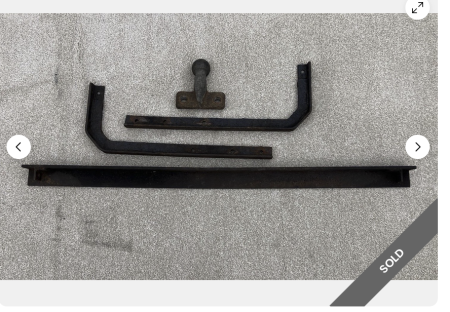
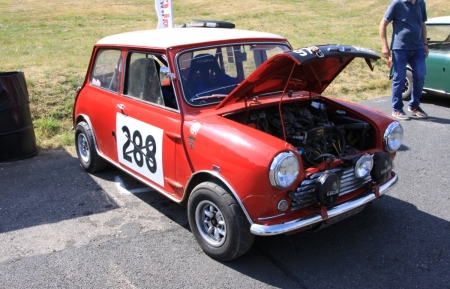
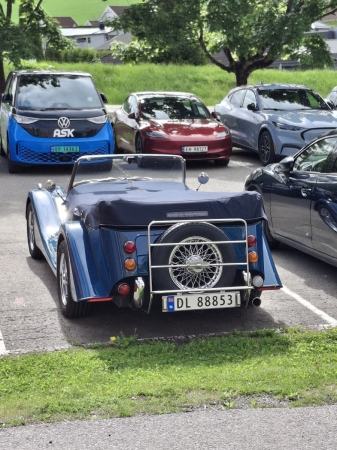


![[Linked Image]](https://i.ibb.co/NHHZ19f/20260309-164438-11.jpg)

![[Linked Image]](https://i.ibb.co/9Hj75C1c/Screenshot-20260309-212316-Firefox.jpg)
![[Linked Image]](https://i.ibb.co/Kc3pBwmV/20260309-183925.jpg)
![[Linked Image]](https://i.ibb.co/HTKCy1By/20260309-184344.jpg)
![[Linked Image]](https://i.ibb.co/FkVTfc6f/Screenshot-20260309-192803-Firefox.jpg)
![[Linked Image]](https://i.ibb.co/39dhHB37/20260309-164438-1.jpg)
![[Linked Image]](https://i.ibb.co/nsfJM20C/20260309-164438-5.jpg)
![[Linked Image]](https://i.ibb.co/DPR4LYg8/IMG-20260309-WA0014.jpg)


![[Linked Image]](https://i.ibb.co/Pz6B7dx1/Newman-High-Performance-Camshafts-to-suit-Ford-Duratec-2-0-2-3-Fiesta-ST150.jpg)
![[Linked Image]](https://i.ibb.co/rf6PFrH6/Caterham-Duratec-Intake-Plenum.jpg)
![[Linked Image]](https://i.ibb.co/7tvFRNdD/Fusion-Fabrications-Inlet.jpg)

![[Linked Image]](https://i.ibb.co/jZQYnSzT/Messenger-creation-9-C81-A26-E-67-D7-4-ADF-8276-1-AD2460732-E8.jpg)
![[Linked Image]](https://i.ibb.co/HL8JpjWf/Messenger-creation-C46-E9883-874-F-4-D4-A-96-C5-FD3-C29-F4-F604.jpg)
![[Linked Image]](https://i.ibb.co/C3CNPfPR/Messenger-creation-184-BD25-A-3-D57-4-F45-BAB9-96-C7-D77742-FE.jpg)



![[Linked Image]](https://www.talkmorgan.com/gallery/26/full/23823.jpg)
![[Linked Image]](https://www.talkmorgan.com/gallery/27/full/42483.jpg)

![[Linked Image]](https://i.ibb.co/KzF5B4gS/Screenshot-20260411-161538-Facebook.jpg)
![[Linked Image]](https://i.ibb.co/Gv9MwjxK/Screenshot-20260411-170024-e-Bay.jpg)
![[Linked Image]](https://i.ibb.co/ZZJhT3m/IMG-20260411-WA0012.jpg)
![[Linked Image]](https://i.ibb.co/HTZp55m6/IMG-20260411-WA0000.jpg)
![[Linked Image]](https://i.ibb.co/RpNtTySb/Muffler-2-5-full-flow-Stainless-steel-inside.png)
![[Linked Image]](https://i.ibb.co/zT2qJy1n/Screenshot-20260411-161032-Facebook.jpg)


![[Linked Image]](https://i.ibb.co/7J1y4MRf/20260411-192644.jpg)
![[Linked Image]](https://i.ibb.co/tpZwXV7P/Screenshot-20260411-201603-Whats-App.jpg)
![[Linked Image]](https://i.ibb.co/7dcyv1ZR/IMG-20260406-WA0006.jpg)


![[Linked Image]](https://i.ibb.co/bMhb0hPn/IMG-20260412-WA0002-1.jpg)
![[Linked Image]](https://i.ibb.co/ksT6VmPx/IMG-20260412-WA0000-1.jpg)
![[Linked Image]](https://i.ibb.co/ycL46x0k/IMG-20260412-WA0001-1.jpg)
![[Linked Image]](https://i.ibb.co/23xd7wYd/IMG-20260412-WA0003-1.jpg)
![[Linked Image]](https://i.ibb.co/mQ9ccGN/Messenger-creation-9-EB75-E62-BB78-4-D98-A046-8-D46-CF4-EE815.jpg)
![[Linked Image]](https://i.ibb.co/WWW0pJBF/Messenger-creation-8-ADD2-AA3-3-BF5-4-B4-B-AEFB-3259314195-C7.jpg)
![[Linked Image]](https://i.ibb.co/hrF1TGG/Messenger-creation-D499-CA18-B828-4-B9-E-83-B6-13-B49938-D733.jpg)
![[Linked Image]](https://i.ibb.co/Kc3NjGGY/Messenger-creation-FA2-B1-F26-2887-466-A-AD60-6-C9664447571.jpg)


![[Linked Image]](https://i.ibb.co/MynB1TpM/IMG-20260412-WA0004-1.jpg)


![[Linked Image]](https://i.ibb.co/NgJK1VB5/Screenshot-20260416-190037-Chat-GPT.jpg)
![[Linked Image]](https://i.ibb.co/Qjtvsx5M/Screenshot-20260416-191420-Chat-GPT.jpg)


![[Linked Image]](https://i.ibb.co/7JJHX7mQ/Screenshot-20260418-070829-Chat-GPT.jpg)


![[Linked Image]](https://i.ibb.co/ccrXCgmN/Messenger-creation-822-FAB5-B-F921-4-C46-A7-D7-3-E07-CB67652-A.jpg)


![[Linked Image]](https://i.ibb.co/9m2YgRbB/IMG-20260419-WA0010.jpg)
![[Linked Image]](https://i.ibb.co/zV60NtVj/IMG-20260419-WA0004.jpg)
![[Linked Image]](https://i.ibb.co/vCkwCBFY/IMG-20260419-WA0003.jpg)
![[Linked Image]](https://i.ibb.co/r2D2HN09/Mahle-MS-Ends.jpg)
![[Linked Image]](https://i.ibb.co/LwCfcHq/ARPBE05-Big-End-Bolts.jpg)
![[Linked Image]](https://i.ibb.co/mCV98RQT/IMG-20260408-WA0001.jpg)
![[Linked Image]](https://i.ibb.co/w2dcWVY/IMG-20260423-WA0012.jpg)
![[Linked Image]](https://i.ibb.co/gbnrkb7f/IMG-20260423-WA0013.jpg)


![[Linked Image]](https://i.ibb.co/tw1wj62g/Screenshot-20260414-142526-Facebook-1.jpg)
![[Linked Image]](https://i.ibb.co/HyZz4nr/IMG-20260412-WA0003.jpg)
![[Linked Image]](https://i.ibb.co/vx017P0Q/file-00000000e2bc720ab2ed54439ffd6ecd.png)
![[Linked Image]](https://i.ibb.co/r2cgrXxt/Screenshot-20260425-093358-Firefox.jpg)

![[Linked Image]](https://i.ibb.co/RGC4qtVx/images-8.jpg)
![[Linked Image]](https://i.ibb.co/Lhng2VhY/IMG-20260412-WA0003-2.jpg)
![[Linked Image]](https://i.ibb.co/tw2Dkbfc/IMG-20260425-WA0017.jpg)
![[Linked Image]](https://i.ibb.co/3ywNwNT6/Screenshot-20260427-082210-Chat-GPT.jpg)
![[Linked Image]](https://i.ibb.co/chcfcT21/file-00000000151471f48916bcf5156beab5.png)


![[Linked Image]](https://i.ibb.co/Swd2xZ1P/Messenger-creation-8-B073-C2-E-904-F-4047-9091-B8567763497-C.jpg)
![[Linked Image]](https://i.ibb.co/NgpMWm9B/Messenger-creation-05169-FA6-2612-4823-AA34-E161909-EDFC3.jpg)
![[Linked Image]](https://i.ibb.co/Xfr48Jbb/IMG-20260510-WA0008.jpg)

![[Linked Image]](https://i.ibb.co/fzfm2rMf/file-000000004c8c7246bb522eac6015e17d.png)

![[Linked Image]](https://i.ibb.co/nhFm0Rd/20260516-131443.jpg)
![[Linked Image]](https://i.ibb.co/jdG71vG/Screenshot-20260516-184948-e-Dash.jpg)
![[Linked Image]](https://i.ibb.co/wh2m7CfJ/image-1779055166534.jpg)
![[Linked Image]](https://i.ibb.co/99dDbFgp/image-1779056435868.jpg)
![[Linked Image]](https://i.ibb.co/cSp9ygfp/file-00000000f22871f4a69573004afdefb9.png)
![[Linked Image]](https://i.ibb.co/sJXQ74tv/20260517-154731.jpg)


![[Linked Image]](https://i.ibb.co/GfvmFfXM/cb-sc100.jpg)

![[Linked Image]](https://i.ibb.co/fYCNhZMy/Messenger-creation-8373-B9-D4-4-ED0-430-E-9685-A5-A78-EF16128.jpg)
![[Linked Image]](https://i.ibb.co/Xx6Gk37j/Screenshot-20260406-174910-Firefox.jpg)

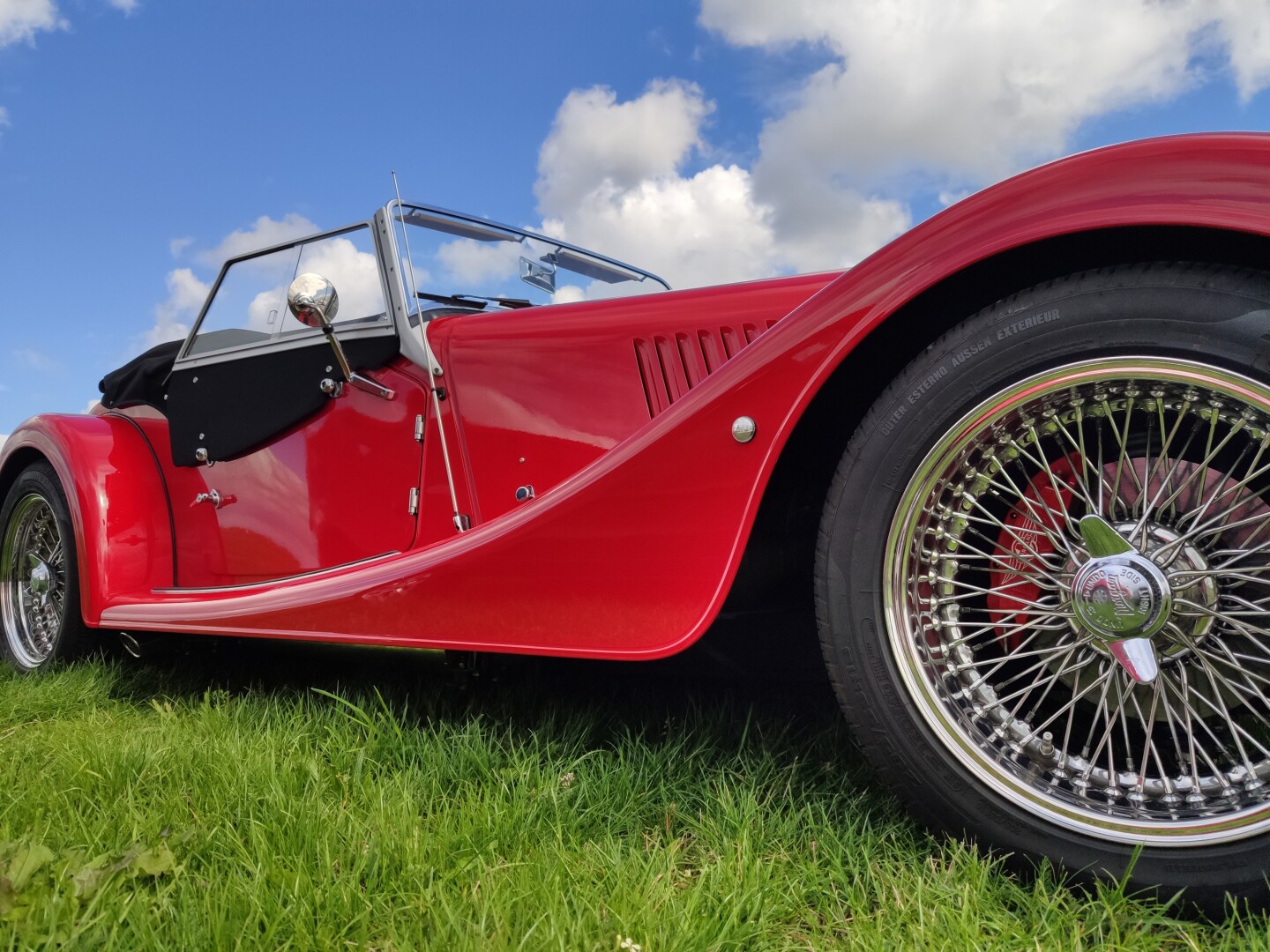

![[Linked Image]](https://i.ibb.co/ynXFYv9t/image-1779055166534-1.jpg)
![[Linked Image]](https://i.ibb.co/1GyX4qfs/file-0000000087a871f4a61d505f905e8d0d-1.png)

![[Linked Image]](https://www.tm-img.com/images/2026/05/21/coolfilter.jpeg)


![[Linked Image]](https://i.ibb.co/4ZPrmrys/20260522-073434.jpg)
![[Linked Image]](https://i.ibb.co/S7cVpqm9/20260522-080102.jpg)
![[Linked Image]](https://i.ibb.co/3Hr8rY0/Screenshot-20260522-080417-e-Bay.jpg)
![[Linked Image]](https://i.ibb.co/TMqv6TtR/Screenshot-20260522-080437-e-Bay.jpg)
![[Linked Image]](https://i.ibb.co/N2czFMvD/D007-A.jpg)
![[Linked Image]](https://i.ibb.co/6RpGxVcD/file-00000000f22871f4a69573004afdefb9.png)

![[Linked Image]](https://i.ibb.co/84RmBtfc/Screenshot-20260522-103040-Firefox.jpg)
![[Linked Image]](https://i.ibb.co/mVbhxBTK/Screenshot-20260522-110421-Firefox.jpg)
![[Linked Image]](https://i.ibb.co/YY8Nd43/Messenger-creation-16-DBE7-F8-05-F9-4-F56-AB19-CEE404076-BD8.jpg)
![[Linked Image]](https://i.ibb.co/Jwx9TknD/Screenshot-20260522-104029-Messenger.jpg)
![[Linked Image]](https://www.tm-img.com/images/2024/01/04/IMG_20230204_105802.md.jpeg)
![[Linked Image]](https://i.ibb.co/BHRT33rv/20260523-190254.jpg)
![[Linked Image]](https://i.ibb.co/XrnrTcBw/IMG-20260523-WA0009.jpg)
![[Linked Image]](https://i.ibb.co/qLBQpc1m/file-000000007cc872438d9cc503b3a2e14d.png)
![[Linked Image]](https://i.ibb.co/VppGZVq6/file-000000009c88720a9b7ecc3b27def815.png)
![[Linked Image]](https://i.ibb.co/PG89Yx3P/Messenger-creation-47-E5058-E-590-F-4639-86-C2-910-D2-FD3749-D.jpg)
![[Linked Image]](https://i.ibb.co/d0gy3hnn/Messenger-creation-88-F777-E7-89-BD-4316-9-C8-F-CDDA4-B0-EBD34.jpg)
![[Linked Image]](https://i.ibb.co/S44M9fMG/Screenshot-20260524-214208-Whats-App.jpg)



![[Linked Image]](https://i.ibb.co/8g6dJqYg/20260603-203752.jpg)



![[Linked Image]](https://i.ibb.co/j9HWHcNC/IMG-20260605-WA0007.jpg)
![[Linked Image]](https://i.ibb.co/3527GYLn/file-000000003da47246945d5dcf13a8f22e.png)
![[Linked Image]](https://i.ibb.co/sd2jPzmz/Screenshot-20260605-190209-Whats-App.jpg)
![[Linked Image]](https://i.ibb.co/ZRpDk4cv/Back-Home-10.jpg)
 It's been a very interesting and informative read throughout all the various stages of development you have put Monty through..........I'm waiting for all the aerodynamic aids and weight saving to start to influence Monty's drag co-efficient to help achieve the theoritical limits....those front overriders look heavy and must create turbulance.........
![[Linked Image]](https://i.ibb.co/NdwsvRj5/Screenshot-20260606-123013-Whats-App.jpg)
![[Linked Image]](https://i.ibb.co/KzFTHy3w/20260606-120439.jpg)
![[Linked Image]](https://i.ibb.co/Tx8gnYsy/lucas-oil-products-10063-engine-break-in-oil-additive-zinc-plus-30453882093655.png)
![[Linked Image]](https://i.ibb.co/4nqb5c3N/IMG-20260606-WA0029.jpg)
![[Linked Image]](https://i.ibb.co/d4KX0jZR/IMG-20260606-WA0030.jpg)
![[Linked Image]](https://i.ibb.co/Ps7sNcfF/IMG-20260606-WA0034.jpg)
![[Linked Image]](https://i.ibb.co/d4C3Cz10/file-000000002ea07243b515aee2c1ac185e.png)


![[Linked Image]](https://i.ibb.co/Y4w8TVnx/file-00000000a83871f4a60212a22034932a.png)
![[Linked Image]](https://i.ibb.co/gMBWnBB7/Montys-Rich-VE-Table.jpg)
![[Linked Image]](https://i.ibb.co/jkz6Jz6g/Montys-Rich-VE-Topograhy.jpg)
![[Linked Image]](https://i.ibb.co/FMxcPvF/Montys-Leaner-Corrected-VE-Table.jpg)
![[Linked Image]](https://i.ibb.co/r2rkvLST/Montys-Leaner-Corrected-VE-Topography.jpg)
![[Linked Image]](https://i.ibb.co/bMRVPwpK/Montys-Lambda-Target-Table.jpg)
 . This year with the DB killer fitted we recorded 94 db, so they do work!
![[Linked Image]](https://i.ibb.co/ns6Bq9rG/Screenshot-20260615-191302-e-Bay.jpg)

![[Linked Image]](https://i.ibb.co/bgCdTqqx/Screenshot-20260620-210338-Gallery.jpg)
![[Linked Image]](https://i.ibb.co/39QK0k5f/motion-photo-3626347739343573964-2.jpg)
![[Linked Image]](https://i.ibb.co/hxHS81tk/motion-photo-3626347739343573964-1.jpg)
![[Linked Image]](https://i.ibb.co/Z6rTgx2F/IMG-20260620-WA0012-1.jpg)
![[Linked Image]](https://i.ibb.co/6xnBcWm/Screenshot-20240210-165346-Whats-App-3-1.jpg)
![[Linked Image]](https://i.ibb.co/MkcHqJHb/IMG-20260620-WA0015-1.jpg)
![[Linked Image]](https://i.ibb.co/35hTvz4W/FF-Inlet-7-2.jpg)

![[Linked Image]](https://i.ibb.co/1fj4zf2T/motion-photo-3626347739343573964-2.jpg)
![[Linked Image]](https://i.ibb.co/8Dj12wsD/Screenshot-20260620-210338-Gallery.jpg)
![[Linked Image]](https://i.ibb.co/0VRmYF5h/IMG-20260101-WA0010.jpg)
![[Linked Image]](https://i.ibb.co/zHW8JM22/file-00000000c74871f49370047f4e976741.png)

![[Linked Image]](https://i.ibb.co/GQs7pvPD/Ninja-DBW-ITBs.jpg)

![[Linked Image]](https://i.ibb.co/4wL8VXHW/file-00000000c91471f4b120d8cfce8ec6ba.png)

![[Linked Image]](https://i.ibb.co/y3M9S7c/STAGE-2-vs-STAGE-3-MONTY.jpg)

![[Linked Image]](https://i.ibb.co/vNxQSN3/IMG-20260624-WA0010.jpg)
![[Linked Image]](https://i.ibb.co/sJchJHdg/file-00000000fe44724388923590f840004d.png)

![[Linked Image]](https://i.ibb.co/tpyTSwXL/Caterham-420-on-ITBs.jpg)


![[Linked Image]](https://i.ibb.co/mCRGgwpc/file-00000000d95871f4bdca2cc5e3b1a16e.png)
![[Linked Image]](https://i.ibb.co/PzvVRq7N/file-00000000f88c824694d5e6d0a2ca4412.png)
![[Linked Image]](https://i.ibb.co/Rpgp619P/file-0000000091fc81f4b1647450b8a62b83.png)
![[Linked Image]](https://i.ibb.co/mFGM2Xvx/20260830-074307.jpg)
![[Linked Image]](https://i.ibb.co/krRRWsC/Screenshot-20260830-120109-Whats-App.jpg)
![[Linked Image]](https://i.ibb.co/HLN10z3Z/Screenshot-20260830-150724-Adobe-Acrobat.jpg)
![[Linked Image]](https://i.ibb.co/8RVzYcd/Screenshot-20260802-110715-Temu.jpg)
![[Linked Image]](https://i.ibb.co/dJ6vJ6wp/Screenshot-20260802-100234-Temu.jpg)

![[Linked Image]](https://i.ibb.co/FqY4R6Vc/Screenshot-20260823-143148-Firefox.jpg)
![[Linked Image]](https://i.ibb.co/5WNL2vyy/Screenshot-20260830-120109-Whats-App-1.jpg)

![[Linked Image]](https://i.ibb.co/JW6xsm5Y/IMG-20260901-WA0011.jpg)
![[Linked Image]](https://i.ibb.co/rKPscp4x/20260903-163455.jpg)