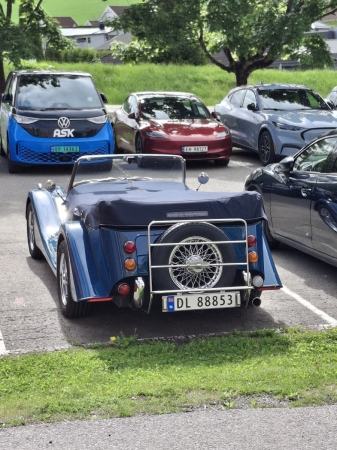
Done a little more research and AI came up with these potential areas for further investigation. I based the search on my car being a 2022 car, but equally applies to other years.
On the 2022 Morgan Plus 4 (CX-generation), isolating a drivetrain clonk with physical slop points to three highly probable areas: the main input flange/pinion nut, the differential mounting bushings, or—a classic Morgan quirk—the wheel hub splines themselves.
Because your car utilizes a BMW modern powertrain (B48 engine paired with a ZF 8-speed auto or 6-speed manual) housed insideMorgan's bonded aluminum chassis, you can narrow down the issue by checking these components in order
A worn propeller shaft universal joint (UJ) or excessive backlash in the BMW-sourced rear differential is causing the clonking and drivetrain slop in your 2022 Morgan Plus 4. Because the CX-generation platform uses a modern aluminum chassis and tightly packaged drivetrain, diagnosing and fixing this requires a specific approach.
Diagnostic Steps
Next Steps for Diagnostic Check
To narrow it down before turning a wrench: Jack up the rear end safely and secure it on stands. Grab one rear tire and rotate it back and forth.If the wheel moves a fraction of an inch but the brake rotor/hub does not move, it is a spline/wheel clamping issue.If the hub rotates but you hear a distinct click coming from the exact front face of the differential where the driveshaft enters, it is the BMW input pinion loose/backlash issue.Are you running wire wheels or alloy wheels on your Plus 4? If you can confirm whether the clonk happens exactly when letting the clutch out/putting the auto into gear, or if it happens over bumps, will tell you exactly which bolt or spline to target first.
Isolate the UJs:
Raise the car safely on a drive-on ramp or lift so the suspension is under normal load. Grab the propeller shaft and twist it firmly back and forth while watching the universal joints. Any visible movement or "slop" within the joint cups confirms a failed UJ.Check the Differential Backlash: Hold the input flange of the rear differential still and try to rotate the rear wheels. A tiny amount of play is normal, but excessive rotational free-play accompanied by a sharp metallic click means the internal gear backlash needs adjustment or rebuilding.Inspect the Center Support Bearing: Check the rubber housing around the driveshaft center support bearing (if equipped) for tears or degradation, which can also mimic a bad UJ clonk.
More detailed areas to investigate.
Morgan's bonded aluminum chassis, you can narrow down the issue by checking these components in order:
1. The BMW Differential Pinion Flange NutModern BMW-sourced differentials are highly susceptible to a specific "input clonk".The Issue: The large nut securing the input flange (where the propeller shaft mates to the front of the differential) can slightly back off or lose its factory preload. This introduces tiny amounts of back-and-forth rotational slop before the gears actually mesh, resulting in a sharp metallic "clonk" every time you accelerate or decelerate.
The Fix:
The propeller shaft must be unbolted from the diff flange. The central pinion nut must be checked, treated with high-strength thread locker (like Loctite 648), and torqued back to precise factory specification to restore internal preload.
2. Differential Mounting Bushings & BoltsThe CX-platform places immense torque load on the mounts holding the differential casing to the aluminum chassis frame.
The Issue:
If the front or rear differential mounting bolts back off even slightly, or if the rubber isolation bushings wear down, the entire differential casing will physically twist under load. This causing a heavy thud or "clonking" sound directly under the rear package shelf.
The Fix:
Safely raise the car and check all main differential mounting bolts. Use a pry bar to check for excessive vertical deflection in the rubber mounts.
3. Wire Wheel Splines (The False Differential Clonk)If your Plus 4 is fitted with traditional wire wheels, a notorious Morgan characteristic is for dry splines to perfectly mimic a failing differential or propeller shaft.
The Issue:
If the wheel splines or the conical contact taper at the back of the hub are dry or insufficiently tightened, the wheel will microscopically slip on the hub when you pull away or brake. The sound telegraphs straight down the half-shafts, making it sound identical to a broken differential.
The Fix
:
Remove the rear wheels completely. Scrupulously clean away old grit from the hub and wheel splines. Apply a generous layer of high-quality graphite or copper grease to the splines and the conical seating taper, reinstall, and tighten the spinners firmly using a proper dead-blow mallet. Many owners discover this entirely cures their drivetrain clonk.
Last edited by JohnHarris; 18/06/26 04:20 PM.