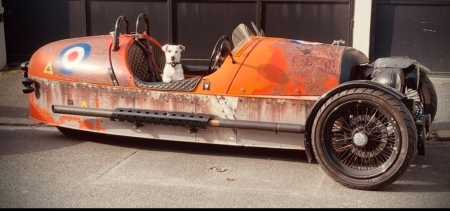
I've donw somef urther investigation and AI is suggesting the following explanations and potential fix regarding the types of clunk I hear
Slowing down to a junction or switching from forward to reverse isolates the problem specifically to drivetrain torque reversal. When you lift off the accelerator to coast toward a junction, the load on the drivetrain flips from engine pulling the wheels to wheels braking against the engine (overrun). Shifting from forward to reverse reverses this load direction entirely.The single "clonk" or thud you are experiencing during these exact transitions is caused by three specific mechanical culprits:
1. BMW Input Flange Spline Backlash
The most prevalent cause for a directional change clonk is micro-movement in the splines linking the driveshaft to the differential input flange.
The Mechanism:
Over time, factory adhesive on the mating splines can break free. When you reverse direction or transition to deceleration, the input shaft physically rotates a fraction of a millimetre before locking into the opposite side of the spline teeth, echoing a sharp metallic clonk.
The Fix:
BMW has a specific Service Information Bulletin (SIB) for this shared architecture. A mechanic must drop the driveshaft, clean the splines, apply a high-strength thread locker (like Loctite 648), and re-torque the pinion assembly.
2. Differential Backlash (Internal Gear Slack)Every differential requires a minute amount of mechanical clearance—known as gear backlash—between the crown wheel and the pinion gear so the assembly doesn't seize when hot.
The Mechanism:
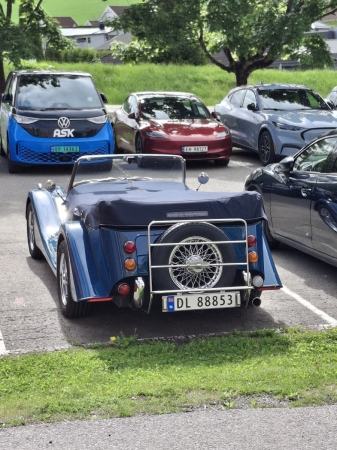
In a conventional insulated passenger car, you would never hear this play. However, because the Morgan Plus Four features an open cockpit sat directly on top of a rigid, uninsulated aluminum chassis, that tiny physical gap acts like a tuning fork. When the load direction swaps at a junction, the gears slam across that tiny gap, amplifying the clonk.
3. Front Differential Bushing DeflectionThe front mounting bolt takes the brunt of the rotational twisting force whenever torque shifts direction.
The Mechanism:
If the front rubber or polyurethane isolation bushing has slightly elongated, or if the mounting bolt has backed off even a fraction of a millimetre, the entire nose of the BMW differential housing will physically twist up or down during load transitions. When you hit reverse or coast down, the differential nose snaps violently back down against the chassis subframe.⚠️
The Non-Differential Alternative:
Dry Wheel SplinesBefore paying for drivetrain diagnostics, eliminate a classic Morgan quirk: dry center-lock wire-wheel splines.If your Plus Four has wire wheels, a lack of heavy grease between the wheel hub and the car's drive splines will cause the wheel to shift back and forth slightly under braking or reversing, perfectly mimicking a differential clonk.Quick Check: Remove the wheels, scrupulously clean off old residue, pack the splines and the internal conical seating area with high-quality graphite or copper grease, and torque the spinners down tightly with a dead-blow mallet.To help narrow down the next step, let me know:Does your car have wire wheels or alloy wheels?
Is it a 6-speed manual or the 8-speed automatic transmission?I can guide you on how to check the front mounting bolt or point you toward a local specialist.
Knowing the car has the ZF 8-speed automatic transmission narrows the focus directly down to the specific way this automated drivetrain behaves.Because an automatic transmission maintains a much more direct, pressurized connection between the engine and the rear wheels than a manual clutch, the mechanical forces are magnified during certain shifts.
The Core Cause:
Torque Loading and Internal "Backlash"The "clonk" when moving from Forward to Reverse (or vice versa), and when coasting down to a junction, is almost always down to mechanical backlash (free play) within the drivetrain.In a standard modern BMW, this tiny amount of play is masked by thick rubber subframe bushings and hundreds of pounds of acoustic insulation.
In the lightweight, uninsulated aluminum CX-chassis of your Morgan Plus Four, that same play is perfectly amplified straight into the cockpit.Here is how the automatic transmission interacts with the BMW differential to cause this:
The Forward-to-Reverse Clonk:
When you shift the ZF 8-speed from D to R, the internal transmission clutches instantly change the direction of the fluid pressure and mechanical rotation. This snaps the driveshaft from one edge of the gear teeth in the differential over to the completely opposite edge. The "clonk" you hear is the physical gap (backlash) closing instantly under hydraulic gear engagement.
The Junction Slow-Down Clonk:
As you brake or coast to a halt, the automatic transmission downshifts through its lower gears (usually 3rd to 2nd, and 2nd to 1st). During these slow downshifts, the car rapidly transitions from "overrun" (the wheels spinning the engine) to "drive" (the engine pulling the car). The sudden change in load causes the internal gears of the open BMW differential to slap across that tiny built-in clearance window.
How to Check the Assembly
Inspect the Front Differential Pinion Bolt: The torque specs on the automatic version are actually higher than the manual. Have a mechanic check that the main mounting bolt and the diff pinion nut haven't slightly backed off from factory settings. If it has any play, the differential housing will rock when shifting between D and R.
Apply the BMW Spline Fix:
If the mounting hardware is perfectly tight, the clonk is coming from the splines connecting the driveshaft to the differential input flange.
The fix requires applying a high-strength retaining compound (like Loctite 648) to the splines to eliminate the minute rotation gap.
A Quick Driving Habit Check
Because you are driving an automatic, try pulling the handbrake tightly before shifting out of Drive or Reverse on an incline. If the car rolls even a few millimetres against the internal transmission park pawl or gear sets, it pre-loads the differential. Shifting it out of that pre-load will cause a loud, alarming snap.To rule out the easiest external factor, do you happen to know if your Plus Four is fitted with wire wheels or alloy wheels? (Wire-wheel splines are notoriously famous for shifting and clonking in exactly this way).
Last edited by JohnHarris; 27/06/26 09:30 PM.